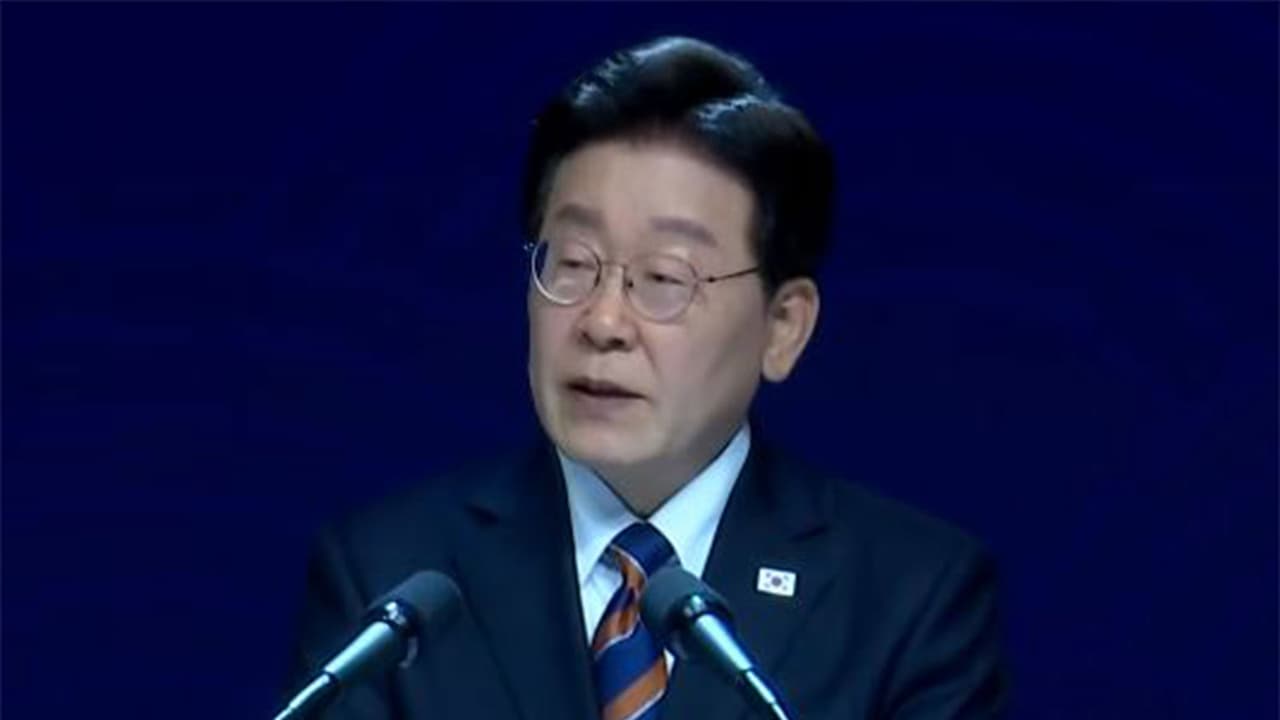
South Korean and American tech companies have signed a $950 billion semiconductor and manufacturing partnership. The deal signed at the San Francisco AI Summit aims to advance semiconductor, AI data center and physical AI projects.
South Korean and US technology giants have agreed to invest $950 billion in semiconductor supply and manufacturing partnerships over the next five years, according to a news report by The Korea Herald. A major series of these deals were unveiled at the San Francisco AI Summit.
These partnerships, announced during President Lee Jae-Myung’s visit to San Francisco, are aimed at advancing the Lee administration’s major megaprojects such as semiconductors, AI data centers and physical AI, the report said.
Focus on three big megaprojects
“We have developed concrete investment and cooperation plans with global partners in every core area of the three megaprojects, ranging from semiconductors and AI data centers to physical AI,” presidential policy chief Kim Yong-beom said at a briefing Saturday after the summit.
“On the chip front, Korean companies and global big tech firms have agreed to pursue cooperation totaling $950 billion, or 1,375 trillion won,” Kim said.
$950 billion cooperation in semiconductor
Samsung-Broadcom’s $200 billion MOU
Kim said Samsung Electronics and Broadcom have signed a memorandum of understanding (MOU) worth $200 billion, or about 290 trillion won, for advanced memory-chip supply and foundry cooperation for AI chip production over the next five years.
SK Group’s $750 billion partnership
Over the same period, SK Group has agreed to pursue a $750 billion long-term advanced memory-chip supply partnership with Nvidia and other global technology companies.
Kim said semiconductor cooperation focuses on long-term purchase agreements of five years.
“These are advance contracts – advance orders for memory chips at that scale. This is not an investment. The agreements are commitments that say, ‘If you produce memory chips, we will buy them in those increased quantities’,” Kim said. He added, “Our companies have won long-term supply contracts, which will allow them to plan production with much greater stability.”
Big investment in AI data centers
On the data center front, Kim said South Korean companies and global tech giants have agreed to pursue investment partnerships in large-scale AI data centers with a combined power capacity of about 5 gigawatts and about 2 million graphics processing units (GPUs).
Anthropic expressed willingness to invest further
Kim said Anthropic CEO Dario Amodei had hinted at the possibility of further investment during a one-on-one meeting with President Lee on Friday. According to Kim, Amodei described South Korea as “currently the best place to build an AI data center in a short period of time.”
“He said, ‘The more, the better,'” Kim said. “Feeled they could go further – up to 2 or 3 gigawatts.”
Anthropic’s CEO emphasized that the speed of government approvals will be critical to building more AI data centers. According to Kim, Amodei stressed that “regulatory approvals are important” and told Lee, “Please help us secure them quickly.” Lee responded, “Speed is something I’m known for.”
Big plans of SK Telecom and Never
According to Kim, SK Telecom will conduct investment cooperation with Anthropic on a gigawatt-scale AI data center project in South Korea. SK Telecom also agreed with Nvidia to build and expand AI data centers with a capacity of up to 2 gigawatts. Nvidia will support the projects and provide the South Korean telecom operator priority access to its latest Vera Rubin systems.
Separately, the company agreed to expand its existing partnership with Amazon Web Services (AWS) on an AI data center in Ulsan to other key centers across the country to secure gigawatt-scale AI computing capacity.
According to Kim, Naver plans to jointly build a $10 billion global “AI factory” through a strategic investment agreement with Nvidia and an infrastructure supply deal with global investment firm Brookfield. Naver will receive a $1 billion investment from Nvidia to expand GPU supply and technical support. Brookfield will provide up to $9 billion in support to jointly establish the stable infrastructure and supply chain needed to operate a gigawatt-scale AI factory.
Physical AI and Talent Development
In the fields of physical AI, services and talent development, Hyundai Motor Group and Nvidia agreed to jointly establish a standardized “robot reference platform” for the development and testing of AI-powered robots. The platform will help universities and startups develop a wide range of robotic systems. Hyundai also unveiled an “autonomous vehicle foundry” plan with Waymo, while Samsung SDS and Anthropic signed a strategic partnership to jointly develop new AI markets and train AI engineers.
Highlights of San Francisco AI Summit
Lee attended the San Francisco AI Summit on Friday after holding separate meetings with Nvidia CEO Jensen Huang, Broadcom CEO Hock Tan, OpenAI CEO Sam Altman and Amodei. Kim said the face-to-face meetings “further expanded the scale of the three megaprojects for Korea’s next great leap forward by turning cooperation between Korean companies and global big tech firms into concrete plans and strengthening their implementation.”
The summit featured four U.S. technology executives as well as some of South Korea’s most prominent business leaders, including Samsung Electronics Executive Chairman Lee Jae-yong, SK Group Chairman Chae Tae-won, Hyundai Motor Group Executive Chairman Chung Euisun and Naver Founder and Chairman of the Board Lee Hae-jin. According to Kim, around 230 business leaders, researchers, startup founders, investors and students also attended.
During the summit, Lee unveiled the San Francisco Declaration on AI, which claimed an essential role for South Korea in the global AI economy. Their vision sees Korea as a place where AI is created and supplied, rapidly harnessed and taken to new markets – turning its benefits into opportunities for all with responsible, human-centered development.
After the summit, Lee joined Huang, Tan, Rani Borkar, president of Azure Hardware Systems and Infrastructure at Microsoft, and South Korean business leaders for dinner at a nearby restaurant, where they had a candid discussion.
Kim said that in a relaxed atmosphere, participants raised their beer glasses and Lee said, “We are–” and guests responded, “Family”, pledging to work together to strengthen the global AI supply chain. Huang and other US officials said that developing AI technology was difficult, but by no means impossible. He expressed confidence that investment in Korea can produce a top-tier frontier AI model in a short period of time. According to Kim, he also said that although Korea can use AI models developed elsewhere, the country needs to create its own AI models.
What is the importance of this tour?
Kim underlined the importance of Lee’s San Francisco stop ahead of his visit to Brazil, Chile and Argentina.
“The purpose of the visit was to demonstrate at home and abroad that the three megaprojects announced last month are a major global initiative that Korea has developed together with its powerful semiconductor industry and large tech companies seeking strategic investment partnerships,” Kim said. He added, “It was also designed to generate investment partnerships across the entire AI stack by combining the technology and capital of global big tech firms with Korea’s capabilities not only in semiconductors but also in the broader AI ecosystem.” (ANI)
(Except for the headline, this story has not been edited by Asianetnews Editorial staff and is published from a syndicated feed.)