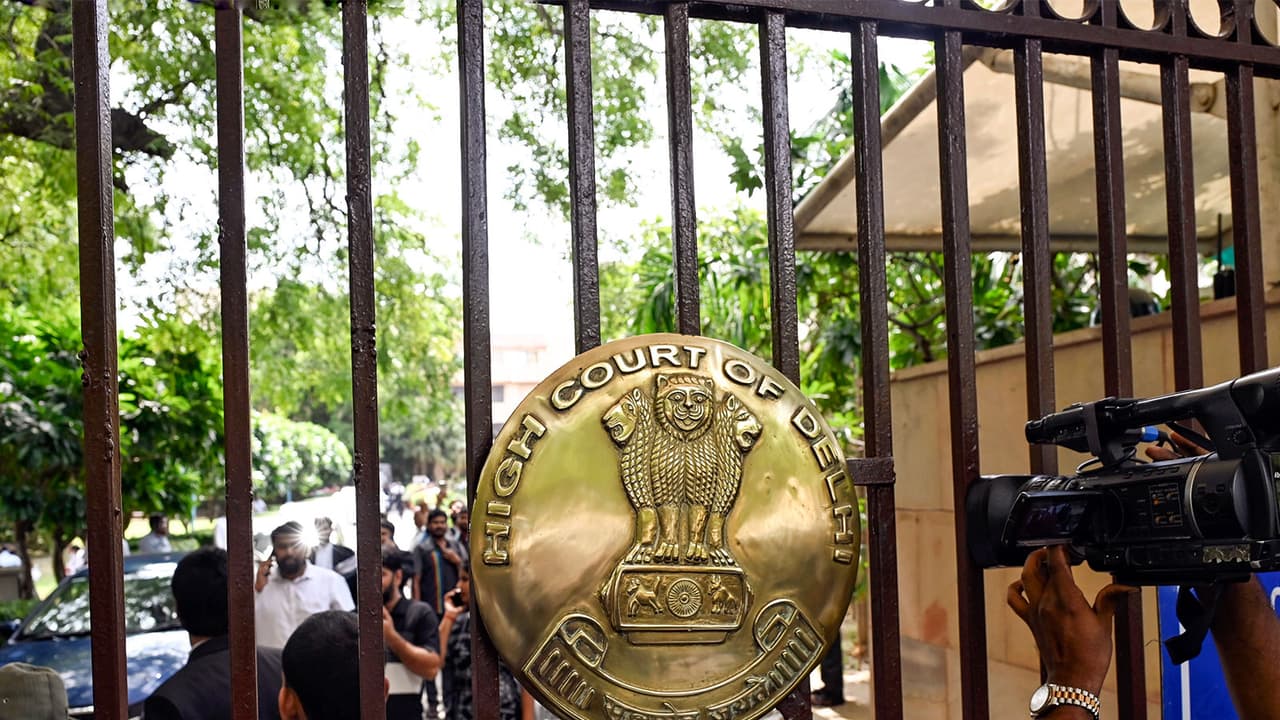
Delhi HC allowed eviction proceedings in the Sujan Singh Park case to continue with video recording after the petitioner alleged unfairness. The court will hear the jurisdiction issue on Aug 5, while the main petition is listed for Aug 17.
The Delhi High Court has allowed the proceedings before the Estate Officer in the Sujan Singh Park (North) eviction dispute to continue and directed that they be video-recorded after Sir Sobha Singh and Sons Private Limited alleged that the proceedings were not being conducted fairly.
Justice Harish Vaidyanathan Shankar passed the order while hearing applications filed by Sir Sobha Singh and Sons Pvt. Ltd. seeking an urgent hearing and interim relief against the eviction proceedings initiated under the Public Premises (Eviction of Unauthorised Occupants) Act, 1971.
Petitioner’s Arguments
Senior Advocates Neeraj Kishan Kaul, Parag Tripathi and Sanjiv Sen appeared for the petitioner. Senior Advocate Sudhir Nandrajog appeared for the Residents Welfare Association, Sujan Singh Park (North), while Central Government Standing Counsel Ashish K Dixit represented the Union of India.
Appearing for the petitioner, Kaul submitted that the proceedings before the Estate Officer had been “unsatisfactory”. He argued that the Estate Officer appeared to be acting as a “mouthpiece” of officials of the Land and Development Office (L&DO) and that the petitioner’s counsel was not given a proper opportunity to make submissions. He urged the High Court to intervene and defer the proceedings.
Kaul further argued that the Estate Officer had no jurisdiction to continue with the proceedings because there was a bona fide dispute regarding the ownership and legal status of the property. Relying on the Supreme Court’s decision in Kaikhosrou (Chick) Kavasji Framji v. Union of India, he submitted that such disputes should be decided through regular civil proceedings and not under the summary procedure provided in the Public Premises Act.
He also submitted that the showcause notice referred to certain documents, including a plaint, copies of which had not been supplied to the petitioner. According to him, this violated the principles of natural justice and justified the petitioner’s request for the High Court to intervene.
Court’s Directions
Opposing the plea, CGSC Ashish K Dixit argued that the writ petition was premature and not maintainable as it challenged only a show-cause notice. However, he told the Court that the respondents had no objection if the proceedings before the Estate Officer were video-recorded in view of the allegations made by the petitioner.
After hearing the parties, the High Court observed that, prima facie, the writ petition appeared to be maintainable in light of the Supreme Court’s decision in Kaikhosrou (Chick) Kavasji Framji. The Court, however, clarified that it had not expressed any opinion on the allegations made by the petitioner and that the direction for videography was issued only to allay the petitioner’s apprehensions regarding the conduct of the proceedings.
The Court directed the Estate Officer to take up the issue of maintainability and jurisdiction on August 5, after the parties complete their pleadings, and thereafter pass appropriate orders in accordance with law. It also granted liberty to both sides to raise all legal objections available to them. The interim applications were disposed of.
The main writ petition has been listed for further hearing on August 17. The Court also permitted the parties to complete their pleadings and file written submissions, not exceeding three pages, at least 48 hours before the next date of hearing. (ANI)
(Except for the headline, this story has not been edited by Asianetnews Editorial staff and is published from a syndicated feed.)