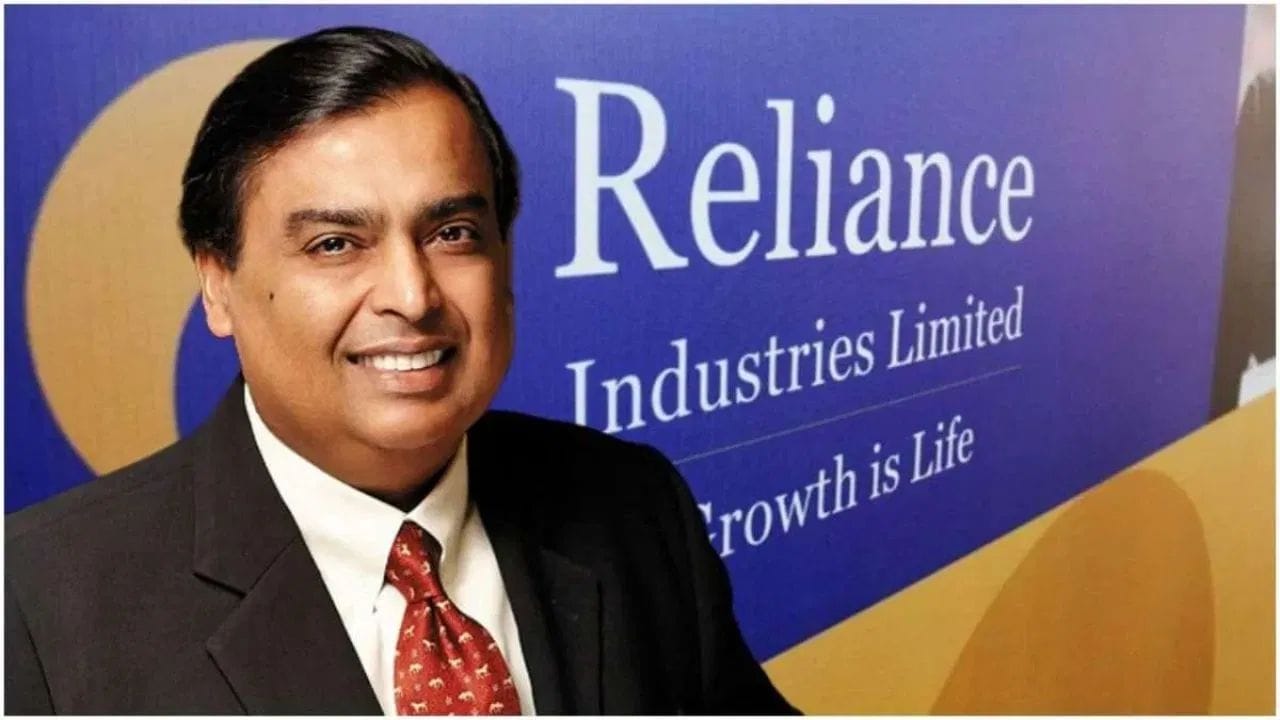
Reliance Industries Mukesh Ambani
Reliance Industries, one of the biggest giants of the Indian stock market, was aggressively investing huge capital (Capex) in 5G network, retail expansion, and new energy for the last three years. Now this ‘Investment Phase’ is coming out of its peak and the company is entering the ‘Payoff Phase’ i.e. the phase of getting the fruits of investment. According to recent reports from global and domestic brokerage firms (such as Motilal Oswal, Ambit Capital, Morgan Stanley), Reliance can generate cumulative free cash flow (FCF) of about Rs 90,000 crore between financial years 2026 to 2028 (FY26-FY28). Let us understand in simple language how this big change in free cash flow is happening, which businesses of Reliance will drive it and what it means for investors.
Journey from ‘Capex Spree’ to ‘Cash Generation’
In the last three-four years, Reliance made aggressive investments in its various businesses:
- Jio’s 5G network rollout across India
- Reliance Retail’s store network and quick-commerce expansion
- New Energy Gigafactories in Jamnagar
Due to this huge investment, the company’s ‘free cash flow’ remained negative. However, now the situation is changing. Although the annual consolidated Capex will still be around Rs 1.3 lakh crore, but with the completion of major infrastructure work like 5G, cash savings have started.
First quarter (Q1) results indicated turnaround
The recently released first quarter (Q1) results proved that the huge investment has started bearing fruit:
4 big growth engines of Reliance
Traditional Energy: Immediate Support
Refining margins remain strong. According to Morgan Stanley, refining margins in the June quarter were $14.5 per barrel, which is 25% higher than the mid-cycle level. This traditional energy business is immediately providing strong cash flow to Reliance.
Jio Platforms: Earnings Machine and Possible IPO
Average revenue per user (ARPU) is increasing due to increase in rates of mobile services. Also, the upcoming IPO of Jio Platforms will help the company in unlocking its value, which will reduce the pressure on the balance sheet.
Reliance Retail: Quick Commerce and expansion
Although there appears to be short-term pressure on retail margins due to investments in quick-commerce, dark stores and logistics, the company aims to double operating EBITDA in the next three years.
Reliance 3.0: A long-term bet
Reliance is now laying the foundation of its next innings in AI infrastructure, data centres, giga-factories and green energy.
According to the report of Ambit Capital, Reliance is now entering a strong earnings upcycle after years of investment strain. We believe that Jio’s IPO and mobile tariff hike will prove Reliance’s platform investing model.
What are the challenges for investors?
The cash flow estimate of Rs 90,000 crore is very positive, but there are some challenges:
- Cost of Retail and Quick Commerce: The profit margin of the retail segment may remain a bit sluggish in the near future due to the expenditure on dark stores and increasing delivery speed.
- New directions of Capex: Even though capex may have reduced in telecom, new investment in data centres, AI and new energy will continue.
- Crude Oil Prices: Fluctuations in refining margins due to global uncertainty may impact O2C segment results.
Mukesh Ambani’s strategy has always been based on building infrastructure on a large scale and then generating cash from it over a long period of time. The same model was seen in the initial phase of Jio also. Now Reliance Industries is standing at a point where the phase of heavy investment (Capex) of the last 3 years is coming to an end and the company is on the threshold of generating free cash flow of Rs 90,000 crore. The early support from the energy sector, Jio’s upcoming IPO and future bets in AI/new energy indicate that Reliance is going to usher in a new growth cycle for its shareholders in the coming years.