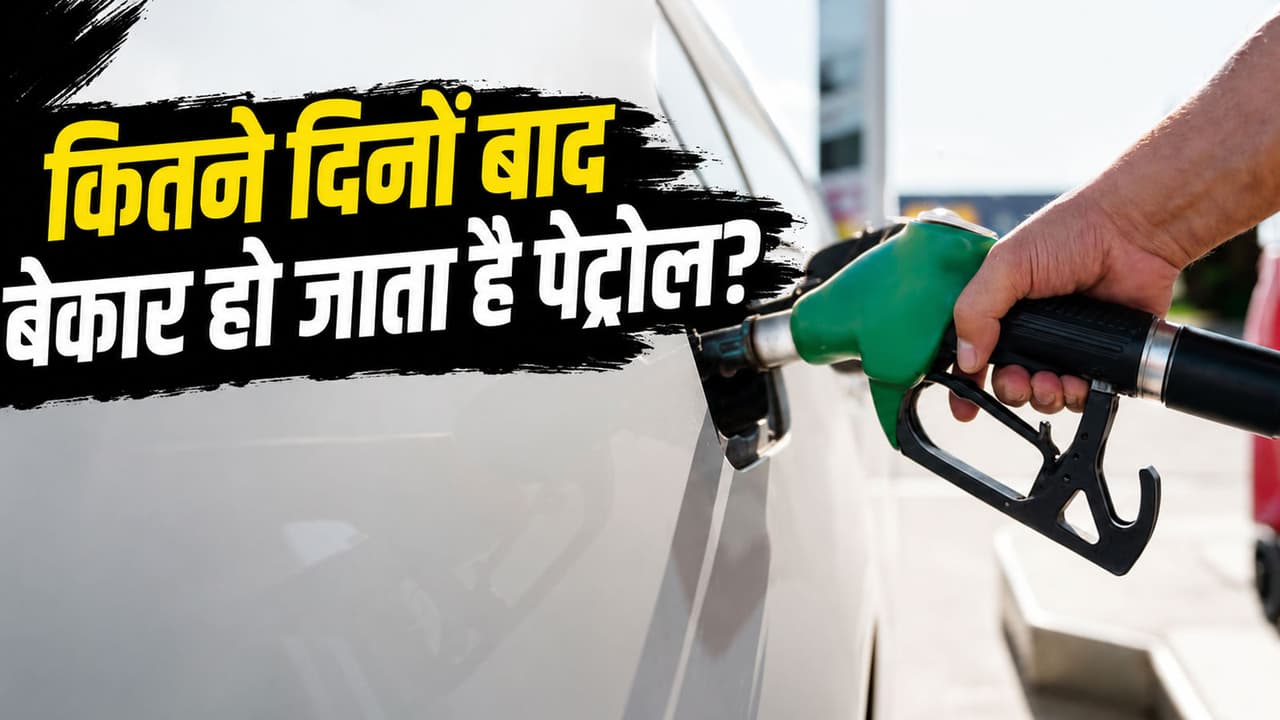
Petrol Expire After How Many Days: Does petrol also have an expiry date? Does petrol get spoiled while lying in your car or bike? After all, how can bad petrol be identified?
Petrol Shelf Life: These days, petrol and diesel are in the headlines every day due to America-Iran tension. Recently, due to increase in oil prices, people’s tension has also increased. At many petrol tanks, people are crowding to get the tank filled, so that there is no problem in future, but do you know that the petrol we put in the car also starts spoiling after some time. Does it also have an expiry date? Let us know how long is the life of petrol and after how many days does it start getting spoiled…
Does petrol really go bad?
Yes of corse! Like milk, bread or medicines, petrol also spoils after some time. Petrol is not a single liquid, rather it is made by mixing many types of chemicals, hydrocarbons and ethanol. When petrol remains cool inside the tank for a long time, it starts evaporating due to coming in contact with air and moisture. Its light and flammable chemicals evaporate, causing the petrol to become hard and thick.
Does petrol also have expiry date?
Yes, petrol doesn’t last forever. Its quality starts decreasing with time. Petrol is a chemical mixture, some of the elements present in which start changing slowly when exposed to air, temperature and moisture. This is the reason that if left for a long time, the efficiency of petrol may decrease and the performance of the engine may be affected.
In how many days does petrol expire?
How many days does petrol take to spoil depends on where and in what condition the vehicle is parked. If the vehicle is parked in normal temperature, the petrol inside the tank starts losing its quality within 30 to 60 days (1 to 2 months). Nowadays 20% ethanol mix (E20 Fuel) petrol is available in India. Ethanol absorbs moisture from the air very rapidly. Because of this, this petrol can start spoiling in just 3 to 4 weeks.
Why does petrol lying in the car go bad?
When petrol is not used for a long time, the lighter elements (Volatile Compounds) present in it slowly start evaporating. Apart from this, the process of oxidation can start due to exposure to oxygen. The viscosity and impurities in petrol can also increase over time. Due to this, sometimes there is difficulty in starting a vehicle that is parked for a long time or the smoothness of the engine reduces.
What is the identity of bad petrol?
After expiry, the color of petrol becomes light yellow or brown and instead of the strong smell like normal petrol, a strange rotten smell starts coming from it. In such a condition, it should be understood that there is no petrol left worth using.
What harm does bad or expired petrol do to the vehicle?
Engine Seizing: Bad petrol thickens and becomes like ‘Gum/Varnish’. This can jam the engine’s pistons and valves, causing permanent damage to the engine.
Fuel Pump and Injector Blockage: Thick and dirty petrol completely blocks the fuel pipeline, carburettor or fuel injector.
Frequent vehicle shutdown: Even if the car starts, it will jerk while moving, misfire and betray you at any time on the way.