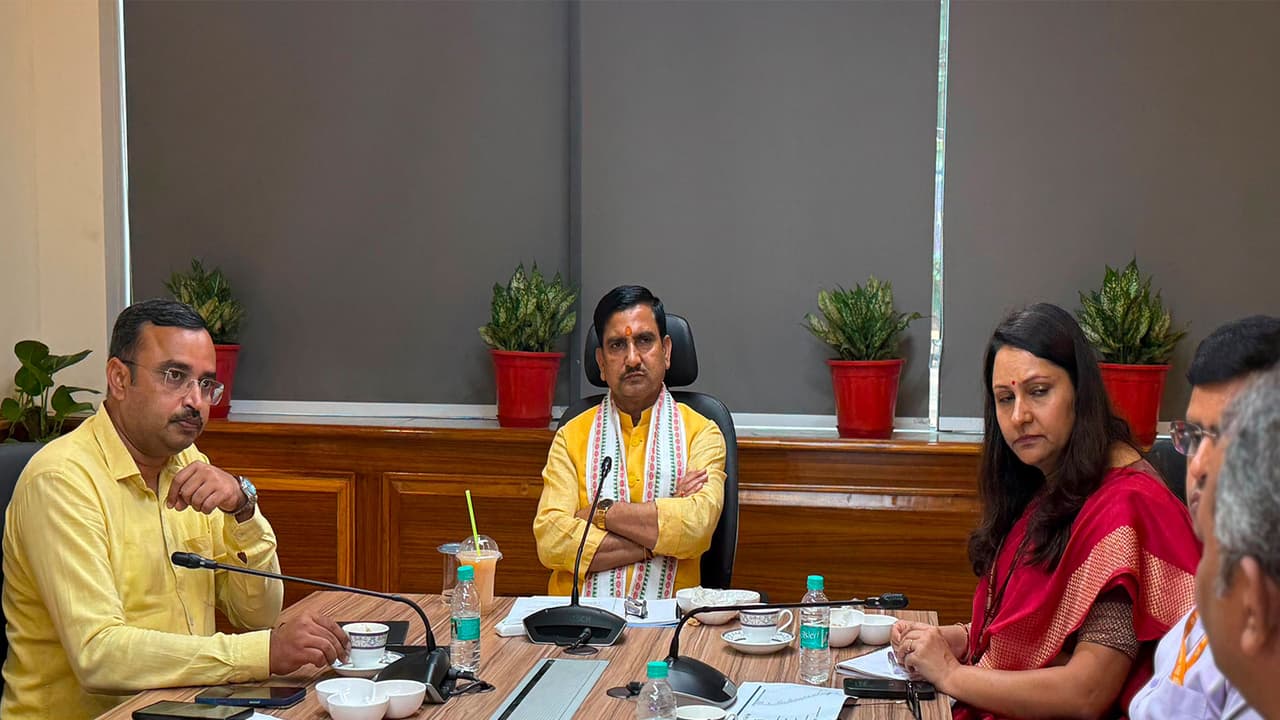
Minister of State for Housing and Urban Affairs Tokhan Sahu reviewed urban water management under the ‘Catch the Rain’ campaign. The meeting discussed strengthening groundwater recharge in 75 urban bodies through the SAM program of AMRUT 2.0.
New Delhi [भारत]July 23 (ANI): Strengthening the commitment of the Government of India to water conservation and sustainable urban water management under the ‘Catch the Rain’ campaign, Minister of State for Housing and Urban Affairs Tokhan Sahu on Thursday chaired a review meeting with officials of the AMRUT Mission and representatives of the National Institute of Urban Affairs (NIUA) at Sankalp Bhawan, New Delhi.
During the meeting, Sahu reviewed the contribution of the Ministry of Housing and Urban Affairs to the nationwide ‘Catch the Rain’ campaign through the Shallow Aquifer Management (SAM) program under AMRUT 2.0. Under this, the Ministry is supporting 75 Urban Local Bodies (ULBs) across the country in planning and implementing scientific groundwater recharge interventions to strengthen urban water security and reduce the risk of urban floods.
The meeting was attended by Isha Kalia, Joint Secretary, Ministry of Housing and Urban Affairs, Director, AMRUT Mission and Program Specialist (Water and Environment) from National Institute of Urban Affairs (NIUA). Officials briefed the Minister on the outcomes of the National Dialogue with 75 SAM Cities held on 20 July 2026 and presented key lessons and progress from cities implementing the programme.
SAM 1.0 pilot success
Sahu also reviewed the achievements and learnings of SAM 1.0, which was implemented as a pilot initiative in ten AMRUT cities between 2022 and 2024. This pilot program demonstrated the effectiveness of scientific groundwater management through improved groundwater levels, enhanced institutional capacity and increased public awareness on sustainable water conservation practices, laying the foundation for nationwide expansion of the program under SAM 2.0.
Progress in SAM 2.0
During the review, it was observed that under SAM 2.0, a total of 870 sites have been mapped for key groundwater features, while 539 Detailed Project Reports (DPRs) with an estimated project value of more than Rs 28 crore have been prepared to facilitate the implementation of groundwater recharge structures in the participating cities.
Emphasis on mass movement and community participation
Lauding the progress made under the programme, Sahu emphasized that India’s approach to water conservation should combine traditional knowledge with scientific innovation. He encouraged officials to document and promote modern groundwater recharge technologies as well as indigenous, community-based water conservation practices that have sustained local ecosystems for generations.
Emphasizing Prime Minister Narendra Modi’s vision that water conservation should become a “people’s movement”, Sahu directed officials to strengthen community participation by actively involving local communities, Self-Help Groups (SHGs), Resident Welfare Associations (RWAs), educational institutions and other grassroots organizations in the implementation of groundwater recharge initiatives.
Instructions on monitoring and best practices
The Minister stressed that public participation will be crucial in ensuring the long-term sustainability and success of the programme. He also directed officials to ensure regular monitoring of SAM projects, document the best performing cities, prepare a compendium of best practices, accelerate the construction of groundwater recharge structures during the ongoing monsoon season, and identify innovative, scalable models that can be replicated across urban India.
Reaffirming the government’s commitment to building climate-resilient cities, Sahu said integration of scientific groundwater management, modern technology and active community participation under the SAM program will play an important role in strengthening urban water security and furthering the objectives of the ‘Catch the Rain’ campaign. (ANI)
(Except for the headline, this story has not been edited by Asianetnews Editorial staff and is published from a syndicated feed.)