For generations, India’s legal profession has largely been shaped by men occupying the loudest spaces – arguing the biggest cases, commanding the biggest chambers and dominating the traditional power circles of the courtroom.
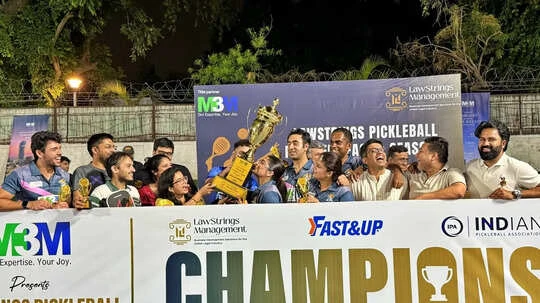
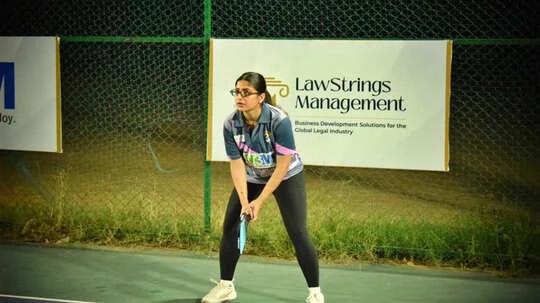
But at the LawStrings Pickleball Premier League – Lawyer’s Edition 2, the narrative quietly shifted. The men came armed with strategy, reputation and arguments. The women left with the trophy and the last word. With Sanjivani Patjoshi captaining the title-winning Pahwa Panthers and Rimali Batra emerging as another prominent female leader through the Pickle Pleaders, the tournament became far bigger than just a weekend sporting event. It became a reflection of a changing legal ecosystem in India, one where women are no longer merely expected to participate gracefully, but are increasingly leading, competing and winning on their own terms.
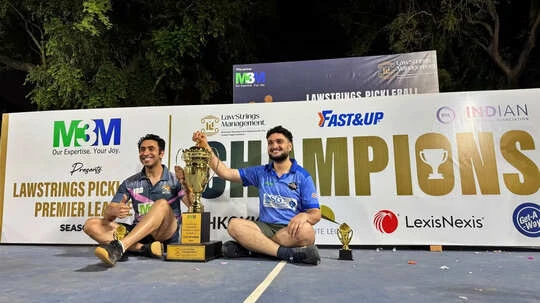
The event wasn’t just about forehands and scorelines. It became a fascinating glimpse into how India’s legal ecosystem is quietly discovering a new culture of networking, competition, therapy and even gender representation. One rally at a time. Leading the charge were the Pahwa Panthers, who defeated Mo-hitters 3-1 in the final of the team-based competition, where every tie carried momentum swings resembling a courtroom battle. The final results read like dramatic legal exchanges.
Pahwa Panthers’ Rishabh Parekh defeated Mo-hitters’ Kartik 15-12 in Men’s Singles after staging a stunning comeback from 4-12 down. Sanjivani then dominated Apoorva 15-8 in Women’s Singles before Mo-hitters bounced back through Jatinder and Amarbir, who beat Kuber and Shvabh 15-8 in Men’s Doubles. The title was eventually sealed when Sanjivani and Divya comfortably won the Women’s Doubles 15-8 against Apoorva and Shivangi.
Yet perhaps the biggest statement of the tournament wasn’t tactical.
It was symbolic. Because in this league, women weren’t merely participating to fill mandatory slots on teams.
A Step in the Right Direction for Pickleball
“Symbolically, it is a big moment to reflect on the reality of our profession and how much its composition is changing. It’s not an old boys club anymore – it’s people of all genders, across ages and ethnicities, coming to compete for the same opportunities that were earlier only accessible to a select few. Having said that – it is important to acknlowdge that this is simply a stepping stone in the right direction, not the end of the journey, and I can’t wait for what’s to come next!,” Sanjivani said during an exclusive interaction with Pickleball Now, reflecting on how rapidly the profession’s composition is changing.
And that sentiment echoed far beyond pickleball.
Because this wasn’t simply about who lifted a trophy. It was about what modern professional spaces in India are beginning to look like – younger, more inclusive, less hierarchical and increasingly collaborative. What made the LawStrings league stand out even more was its structure. Every player had to participate, and teams were mandated to field women players, a subtle but significant shift in a culture where women’s participation in competitive sporting ecosystems is often secondary.
“The two things which really stood out for me is the fact that number one, all 10 players had to play, which means no one gets left behind. You know, you’re not here just for the sake of it. And the second that there are two female players mandatory, which ensures greater female participation in sports, which is usually much more male driven, as you can see in the cricket or the futsal tournaments,” she emphasised.
First-Of-Its-Kind Pickleball Event in Delhi
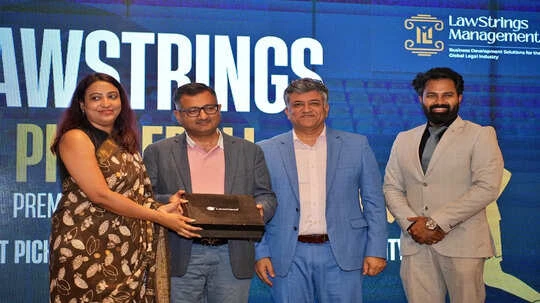
The two-day event, the brainchild of Shubham Malhotra, founder of LawStrings Management, a business development consultancy for the global legal industry, has brought together lawyers and senior advocates from across the country’s legal spectrum. The tournament itself carried a fascinating energy. Former Supreme Court judge Justice Hrishikesh Roy attended the event. Senior lawyers mingled casually. Young associates who normally spend their days buried under files suddenly became teammates, rivals and doubles partners.
“Shubham had done a wonderful job. He also had an auction model this time, which was great fun, you know, on a Sunday, all the lawyers came together, former Justice Rishikesh Roy was there. It was a great event for everyone to interact, bid on players, and it was a first-of-its-kind,” she highlighted.
Those human moments, Sanjivani believes, are what make the sport special.
“You see senior lawyers celebrate a point or feel embarrassed about missing a shot,” she laughed. “These are moments you’ll never experience inside courtrooms.” And maybe that is exactly why pickleball is exploding within India’s professional circles.
“I think pickleball is the next golf,” she said. “In fact, it may surpass golf because it’s far more accessible and social.”
That statement feels increasingly believable. Golf historically became the networking sport of corporate India because business conversations flowed naturally outside boardrooms. however, offers something broader, which is accessibility. Courts are popping up across Delhi NCR, games are organised over WhatsApp groups within minutes, and the barriers to entry are dramatically lower.
In a profession as emotionally draining as law, the sport is also becoming a release.
A Win To Remember On Court
“Courtrooms are built on pressure,” Sanjivani said. “So it’s the best way to beat the stress of your day – just bash it out on the court that you actually can.”
“I’m not sure of how much the society’s perspective changes, but what I can say with conviction is that leading my wonderful, spirited team and eventually winning the tournament reinforced my self-esteem and faith in my abilities – especially since it was my first time captaining a team at all! So I would definitely urge even more women to join in, in the next round – it is truly a great confidence & team building experience,” she further added.
And perhaps that’s why the feels strangely poetic for lawyers. Momentum shifts quickly. One point changes everything. One mistake alters the balance entirely. Much like litigation itself.
Sanjivani referenced Rishabh Parekh’s dramatic comeback in the final as the perfect metaphor for courtroom unpredictability.
“Kiska palla bhaari kab ho jayega, kisi ko nahi pata,” she smiled.
Only now, India’s legal fraternity is discovering that some of its most meaningful battles – and perhaps its most human moments – are no longer happening inside courtrooms alone.