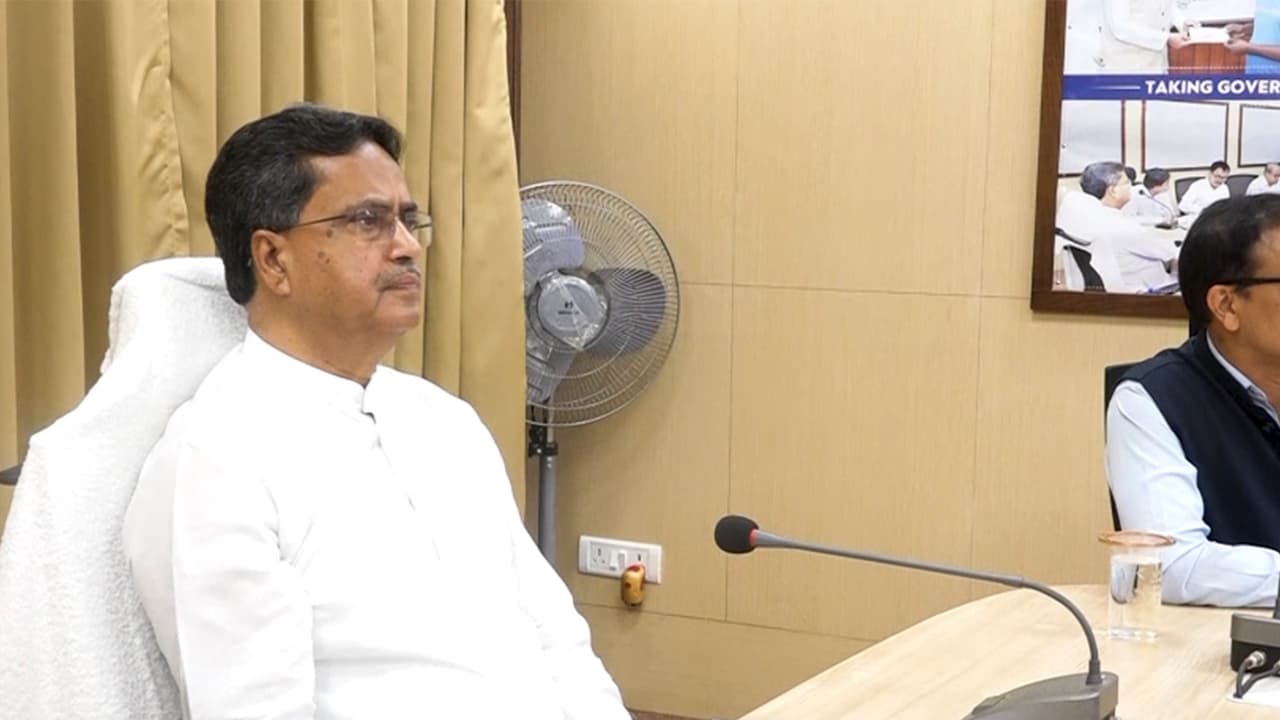
Tripura CM Manik Saha inaugurated the week-long Kharchi Puja, a major festival celebrating the 14 ancestral deities (Chaturdasha Devata). The event in Old Agartala is a symbol of the state’s rich heritage, unity, and communal harmony.
Tripura Chief Minister Manik Saha today inaugurated the traditional and widely celebrated Kharchi Puja, marking the commencement of one of the state’s largest religious and cultural festivals. The inauguration ceremony was attended by Agartala Mayor Deepak Majumder, local MLA, Tripura BJP President, and several other prominent leaders and public representatives.
The festival is regarded as a symbol of Tripura’s rich heritage, communal harmony, and unity among people from all sections of society. The Chief Minister extended his greetings and best wishes to all devotees and visitors participating in the week-long celebrations. Thousands of devotees, tourists, and local residents attended the inaugural programme, offering prayers and taking part in various traditional rituals and religious ceremonies. The administration has made extensive arrangements to ensure the smooth conduct of the festival and the convenience of visitors.
Kharchi Puja, one of Tripura’s most revered festivals, attracts a large number of devotees and visitors every year. It also serves as an important platform for showcasing the state’s rich cultural traditions and religious heritage.
The Legend of Kharchi Puja
Kharchi Puja is centred around the worship of Chaturdasha Devata–the 14 deities who are regarded as the ancestral deities of Tripura’s royal family and are deeply venerated by the indigenous tribes of the state. Rooted in centuries-old traditions, the festival transcends religious boundaries, emerging as a vibrant celebration of faith, heritage, and cultural unity.
According to Hindu mythology, a demon king named Tripur ruled the land. His son, Maharaja Tripur, became a tyrant, causing immense suffering to his subjects. The people prayed to Lord Shiva, who ultimately vanquished Tripur with his trident. After his death, Queen Hirabati assumed the reins of the kingdom. Worried about the kingdom’s future, the people once again invoked divine help. It is said that while bathing in a river, Queen Hirabati saw 14 deities hiding in fear atop a silk cotton tree, frightened by a wild buffalo. To protect them, the queen threw her breast cloth at the beast, rendering it motionless. She then brought the deities to the royal palace and began worshipping them. With their blessings, she later gave birth to a son, Trilochan, marking the continuation of the royal lineage. From then on, the 14 deities became the royal family’s patron gods.
Worship of the Chaturdasha Devata
A grand temple was later constructed at Udaipur, and today’s prominent Chaturdasha Devata Temple was built by King Krishna Kishore Manikya (1760-1783) in Old Agartala (Puratani Haveli) after shifting the capital due to repeated Mughal invasions. The main priest of the temple is called ‘Chantai’, who oversees the rituals for the 14 deities, known in the tribal language as Mithaikotor, Akhata-Bikhata Lampra, Sangrongma, Tuima, Mailuma, Khuluma, Burasa, Thumnairung, Bonirung, Noksu, Garia, Haichukma, Sikal (Birirung), and Sriyamadu.
In the Bengali tradition, they are equated with gods and goddesses such as Shiva, Uma, Vishnu, Lakshmi, Saraswati, Kartikeya, Ganesha, Brahma, Prithvi (the Earth), Samudra (the Ocean), Ganga, Agni (Fire), Kamadeva, and Himadri. Notably, the worship includes both natural forces and mythological deities, showcasing a blend of Vedic, tribal, and Puranic elements. During Kharchi Puja, these 14 deities are worshipped together only once a year–on the eighth day (Ashtami) of the waxing moon in the month of Ashadha, in the old. palace complex at Khayerpur. Typically, only Shiva, Uma, and Vishnu are worshipped daily. (ANI)
(Except for the headline, this story has not been edited by Asianetnews Editorial staff and is published from a syndicated feed.)