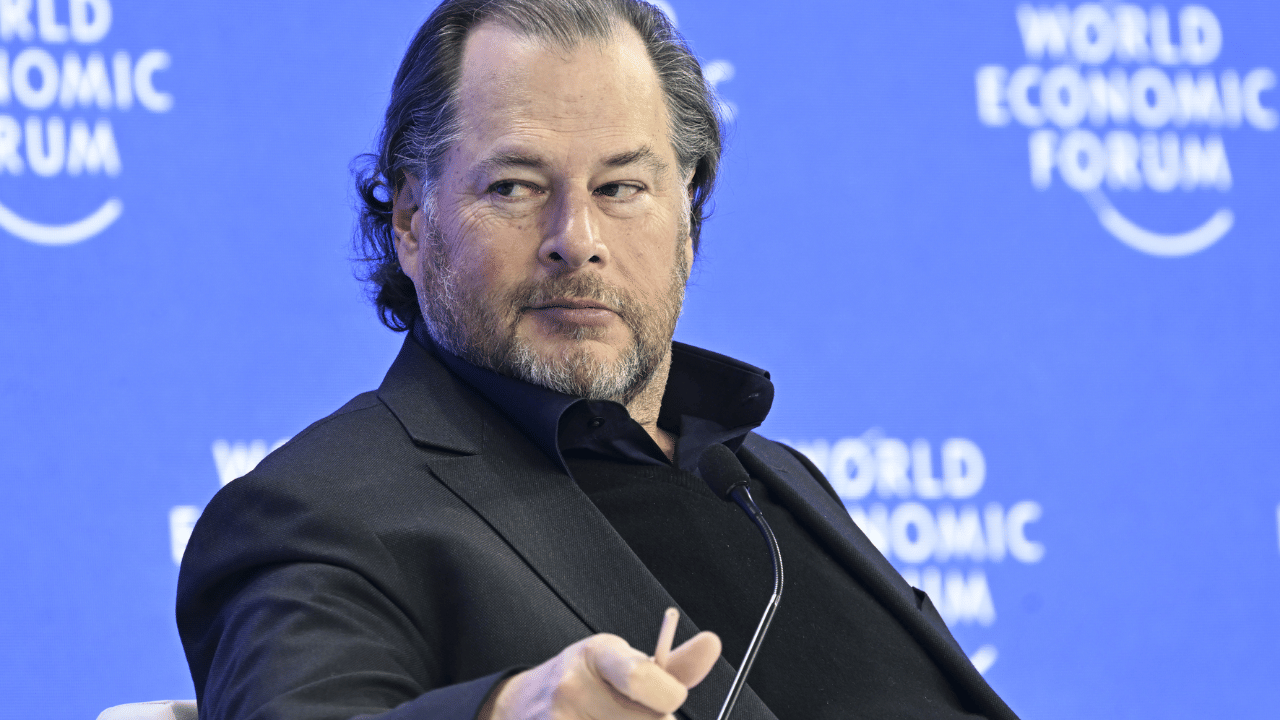
New Delhi: Salesforce is preparing to spend nearly $300 million on Anthropic tokens in 2026 as the enterprise software giant deepens its investment in artificial intelligence tools while continuing its freeze on software engineer hiring. The shift reflects the growing trend of technology giants investing in AI-driven coding systems and automation tools instead of increasing their engineering workforce.
In a recent interview with the All-In podcast, Salesforce Chief Executive Marc Benioff stated that a significant portion of Salesforce’s planned investment in AI would go toward enabling AI agents and large language models to code. AI coding tools are “awesome” and are helping to make software development faster and more cost-effective, Benioff said. The comments follow a series of new AI features that Salesforce is adding to various products, such as Slack and Agent Force.
Salesforce ties hiring freeze to AI productivity gains
In 2024, Salesforce revealed its plans to end all software engineer hiring in 2025 following improvements in productivity of over 30 per cent with the use of AI. He said that he was impressed by the efficiency gains engineering teams achieved with tools like Agentforce and other AI systems.
“We’re not adding any more software engineers next year because we have increased the productivity this year with Agentforce and with other AI technology that we’re using for engineering teams by more than 30%,” Benioff had said earlier.
Even as engineering hiring came to a halt, Salesforce kept expanding their hiring in other departments. In an earlier statement, Benioff announced that it would be adding 1,000 to 2,000 sales staff to educate customers about AI products and how they can be used in their businesses.
Engineers now work alongside AI agents
Nevertheless, Salesforce doesn’t believe that AI can replace software engineers completely just yet, clarified Benioff. Instead, the company’s engineering staff is now increasingly collaborating with AI coding assistants and self-governing software agents.
Today, Salesforce has about 15,000 developers across the company who are leveraging AI capabilities like the Anthropic models, OpenAI Codex, Cursor and AgentForce systems. These engineers are slowly moving into more supervisory positions, managing coding processes powered by AI and handling software generated by AI systems, Benioff said.
“When they start to use these models, they’re now working not only with the AI but also agents to help them code,” Benioff said on the podcast.
The AI systems are not capable of running themselves at this time, he said, and they still need human oversight. He added that they are not at that point with AI quite yet, but Salesforce’s engineering team has increased its efficiency by almost 30 per cent.
Anthropic partnership grows across Salesforce products
The token spending is also part of Salesforce’s growing collaboration with Anthropic. Salesforce has already spent over $300 million on the AI startup and is said to be a shareholder in the firm.
Claude AI models are now being added to a number of Salesforce products and services, such as Salesforce Agentforce and enterprise AI workflows, as well as Salesforce Slack. Salesforce is also working on systems that can direct requests to both big and small AI models based on the complexity of the task and the cost of the operations, Benioff said.
The approach aims to enhance the efficiency and reduce the costs of infrastructure associated with AI implementation.
AI becomes a major revenue driver for Salesforce
Salesforce’s AI-powered business division, Agentforce, has grown rapidly to become a significant growth driver for the company. The business already generates some $800 million in annual recurring revenue, says Benioff.
Benioff has frequently called the shift toward AI in general a “digital labour revolution”. He also claimed artificial intelligence now accounts for between 30 per cent and 50 per cent of Salesforce’s overall workload.
As AI systems continue to transform software development, boost efficiency, and change the way businesses approach their talent strategies, the company’s evolving strategy aligns with a broader shift in Silicon Valley’s tech industry.