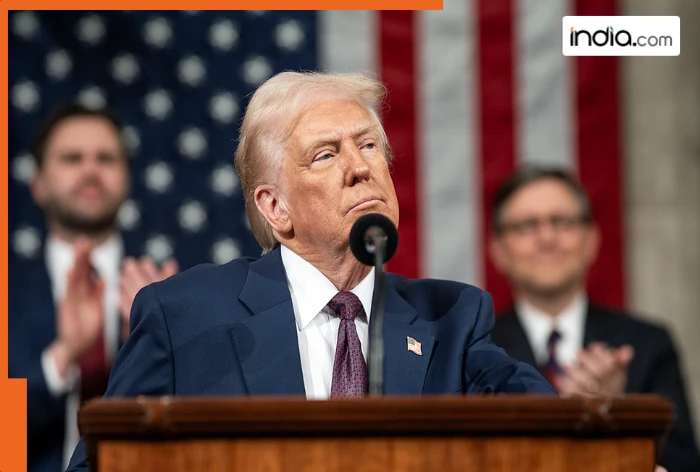
Trump took to his social media platform Truth Social and wrote, “For Iran, the Clock is Ticking, and they better get moving, FAST, or there won’t be anything left of them. TIME IS OF THE ESSENCE!”
The US President’s sharp remarks came just hours after Iranian media revealed Washington’s core conditions for resuming negotiations. According to Iran’s Fars News Agency, the US wants Iran to surrender 400 kilograms of enriched uranium, keep only one nuclear facility active, drop demands for war compensation, accept that most frozen Iranian assets will remain blocked and end the war on all fronts only after negotiations are completed.
Iran’s reply
In a swift counter-response, Tehran laid out its own five preconditions for talks. According to Iranian media reports, Iran said it would only return to negotiations if military operations across the region, particularly in Lebanon, come to an end, sanctions on Iran are lifted and its frozen overseas assets are released.
Furthermore, Iran demanded compensation for war damages and recognition of its sovereignty over the Strait of Hormuz. Lashing out at external adversaries, Iranian President Masoud Pezeshkian accused the US and Israel of trying to destabilise Iran during the conflict. He alleged that their objective was to create insecurity inside the country by backing “terrorist groups”.
President Pezeshkian made the remarks during a high-stakes meeting in Iran with Pakistan Interior Minister Mohsin Naqvi amid escalating tensions across the region. According to Iranian media, Pezeshkian claimed the plan ultimately failed because neighbouring countries did not allow their territory to be used against Iran.
The Iranian President also thanked Pakistan, Afghanistan and Iraq for refusing to let the US or Israel use their land for attacks targeting Iran, state-linked media reported. Meanwhile, the Strait of Hormuz remains a core flashpoint in the crisis. Iran has tightened control over shipping movement through the strategic route, while the US has increased pressure on Iranian ports and maritime trade through a sweeping naval blockade.
Iran and US war
These geopolitical tensions have continued to simmer despite a ceasefire reached earlier this year through Pakistani mediation. Although the temporary truce stopped large-scale fighting between the sides, it failed to yield a long-term political agreement. The US President, on multiple occasions, made clear that he agreed to a ceasefire with Iran as a favour to Pakistan and ruled out any further bombing of the Persian Gulf nation, with which Washington has been at odds for several decades.
“We did the ceasefire as a request from another nation. I would have really benefited from it, but we did it as a favour to Pakistan. They are terrific people, the Field Marshal and the Prime Minister,” Trump said. However, Pakistan’s mediation role came under heavy scrutiny after a CBS News report claimed Iran moved several military aircraft to Air Force Base Nur Khan near Rawalpindi shortly after Trump announced the ceasefire in early April.
Among the assets reportedly stationed there was an Iranian Air Force RC-130 reconnaissance plane, a specialised surveillance variant of the Lockheed C-130 Hercules transport aircraft. Diplomatic tracks aimed at ending the war have been entirely on hold since last week, when Iran and the US rejected each other’s most recent proposals.