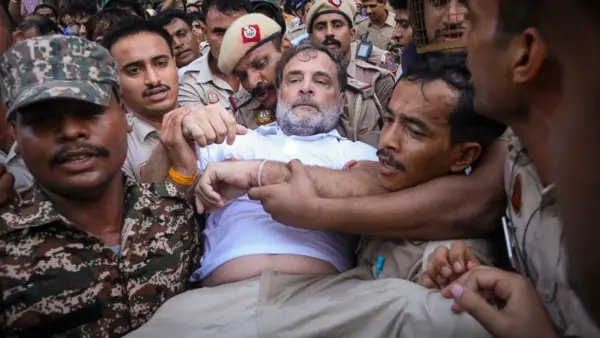
The detention of Leader of Opposition Rahul Gandhi and several Opposition MPs during a protest in Delhi has sparked a fresh debate over the rights and legal protections available to Members of Parliament (MPs).
The incident has raised several questions. Can an MP be detained while Parliament is in session? Does the police need the Speaker’s permission before taking action? Do parliamentary privileges protect MPs outside Parliament as well?
The Constitution and parliamentary rules provide certain privileges to MPs so they can perform their duties without unnecessary interference. However, these privileges are not unlimited and do not place MPs above the law. Here’s what the rules say.
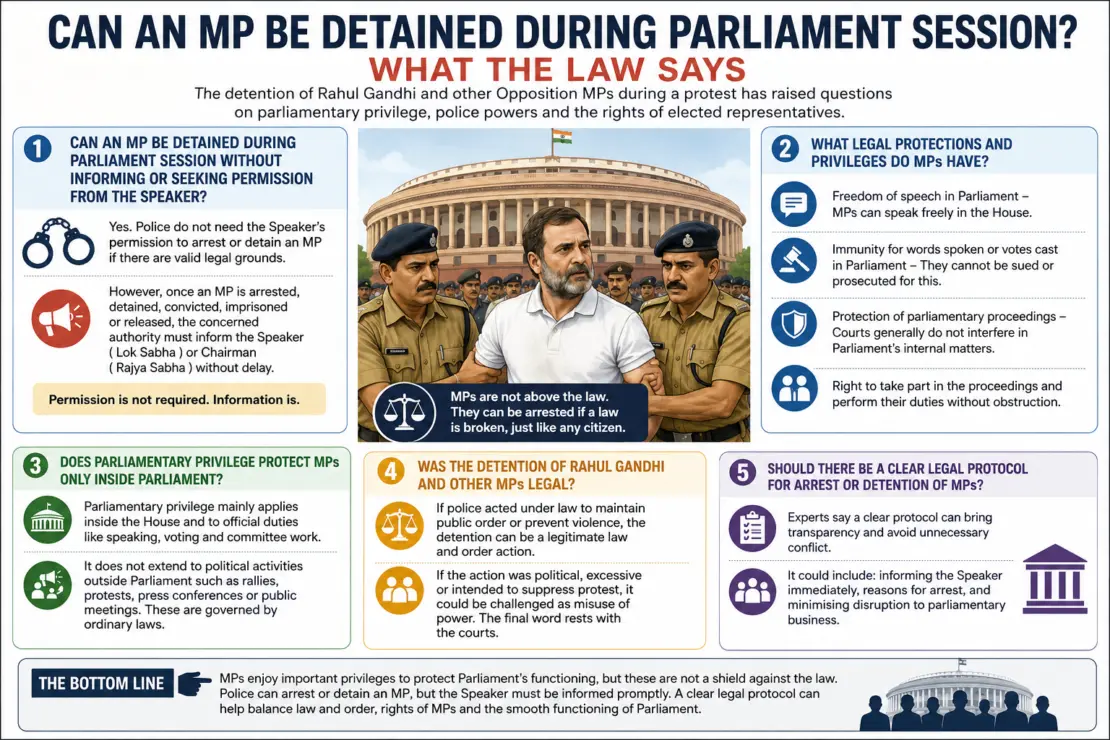
Can an MP be detained during a Parliament session?
Yes. An MP can be arrested or detained during a Parliament session if the police believe there are valid legal grounds to do so.
There is no constitutional rule that requires the police to obtain the Speaker’s permission before arresting or detaining a Member of Parliament.
However, once an MP is arrested, detained, convicted, imprisoned or released, the concerned authority is expected to inform the Speaker of the Lok Sabha or the Chairman of the Rajya Sabha without delay. This requirement exists so that Parliament is officially informed about why one of its members cannot attend proceedings.
In other words, the Speaker does not give permission for the arrest, but must be informed after the action is taken.
What legal protections do MPs have?
The Constitution grants MPs certain parliamentary privileges under Articles 105 and 122. Some of the key protections include:
MPs enjoy complete freedom of speech inside Parliament, subject to the rules of the House. They cannot be sued or prosecuted in court for anything they say or any vote they cast in Parliament. Parliament has the power to protect its functioning if any action interferes with its work.
These privileges exist to protect the institution of Parliament, not to provide personal immunity to MPs.
Do parliamentary privileges apply outside Parliament?
Generally, no. Parliamentary privilege mainly protects MPs while performing their official parliamentary duties, such as speaking, voting or participating in committee work.
Political rallies, protests, press conferences and public meetings held outside Parliament are generally governed by the same laws that apply to every other citizen.
If an MP participates in a protest outside Parliament and the police believe that laws have been violated, parliamentary privilege alone does not prevent police action.
Are MPs immune from arrest?
No. Unlike some constitutional authorities, MPs do not enjoy blanket immunity from arrest or detention.
If a criminal law is allegedly violated, police can take action against an MP just as they would against any other individual, provided the action follows the law.
The only additional procedural requirement is that the presiding officer of the concerned House should be informed after the arrest or detention.
Was the detention of Rahul Gandhi and other MPs legal?
Whether the detention was lawful depends on the facts of the case. If the police acted under valid legal provisions to maintain public order or prevent violence, they are likely to argue that the detention was within their powers.
On the other hand, the Opposition may argue that the police action was unnecessary, excessive or intended to prevent elected representatives from carrying out their democratic role.
These are issues that courts can examine if legal challenges are filed.
It is important to distinguish between the legality of police action and parliamentary privilege. A dispute over whether police used excessive force is different from a claim that parliamentary privilege was violated.
Should the Speaker be informed?
Yes. Although prior permission is not required, parliamentary practice requires the police or the concerned authority to promptly inform the Speaker or the Chairman whenever an MP is arrested, detained, convicted, imprisoned or released.
This communication helps Parliament keep track of its members and ensures that the House is aware of the reason for an MP’s absence.
Is there a need for clearer rules?
Legal experts have often argued that clearer guidelines could help avoid confusion when MPs are detained during Parliament sessions, especially during protests or political demonstrations.
However, any new protocol would still have to recognise two important principles: MPs have constitutional privileges while performing parliamentary functions, but they are not above the ordinary law of the land.