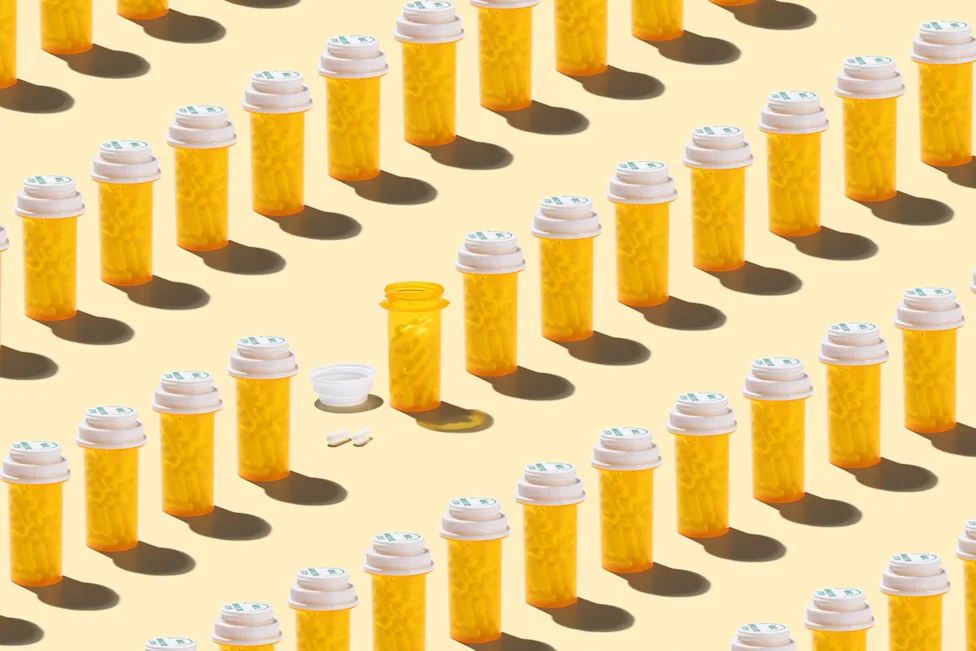
Antidepressants are facing new scrutiny after Robert F. Kennedy Jr. announced a U.S. Health and Human Services campaign aimed at reducing prescriptions of the popular medications. Health officials instead want doctors to encourage their patients to try lifestyle interventions — including diet and exercise — to treat their symptoms. It’s an effort, HHS said, to “curb psychiatric overprescribing.”
Though he previously outright, Kennedy emphasized that no one taking an antidepressant would lose access to their medication. But the announcement was nonetheless met with mixed reactions online. Some , with comments like, “Thank God, so people don’t have to risk their lives through trial and error!” But others worried the move could have grave consequences. “These medications kept my son from taking his life,” one Yahoo commenter.
Antidepressants are nothing new. They’ve been around for about 70 years, and tens of millions of Americans are on them. And yet they’re still the subject of controversy and confusion. To help answer some of the most common questions — and misconceptions — about these medications, we spoke to two psychiatrists.
What exactly are antidepressants?
“Antidepressant” is an informal name for a group of medications that are used to treat depression, as well as psychiatric problems, including obsessive-compulsive disorder, anxiety and eating disorders.
But they’re not a monolith. There are about 30 antidepressants approved by the Food and Drug Administration. Most are pills, though a few come in dissolvable tablet or patch forms. The majority of antidepressants are taken once daily, but some are taken a few times each day. And each medication has different uses and side effects, which vary from person to person. While these drugs fall into several different categories, the most commonly prescribed ones are selective serotonin reuptake inhibitors (SSRIs), which Kennedy has expressed specific interest in limiting. These include popular medications like Zoloft, Lexapro and Prozac.
The drugs work by helping the brain hold on to more serotonin, a neurotransmitter that helps regulate mood. Studies have consistently shown that many — though not all — patients’ symptoms improve when they take SSRIs, and that treatment results in helpful brain changes.
But it’s really difficult to test the direct effects of any drug on the brain of a living person. And ultimately, experts don’t know exactly how SSRIs work. Their use is based on a 50-year-old theory that low serotonin levels cause depression. Scientists now believe depression is much more complicated than that. That’s led to the creation and prescription of newer medications that act on other chemicals in the brain, instead of or in addition to serotonin.
Still, this uncertainty can complicate people’s perceptions of antidepressants, says psychiatrist . “It’s hard for people to accept that mental health conditions are health conditions … even though literally our brains are a part of our body,” she tells Yahoo. When someone has their blood pressure taken, there’s an immediate number on the cuff that shows whether it’s high enough to warrant treatment. “We just do not have an objective measure like that for mental health,” Simone says. “So it’s even more like a gray area for people.”
Are they overprescribed?
That’s hard to pin down. But the answer is that these medications are likely both under- and overprescribed. Depending on which study you consult, between and nearly of Americans take antidepressants. How many of them should not be taking the drugs is harder to say. estimated that one in five antidepressant prescriptions was unnecessary. in older adults found that the vast majority of people 65 and older on antidepressants didn’t meet the criteria for major depressive disorder (though it’s worth noting the drugs are for the treatment of other conditions too). Other research published in 2017 found that a 12 and older on antidepressants had been taking them for 10 years or more.
At the same time, the 2015 study found that some groups who met the diagnostic criteria — namely Black and Asian Americans — were under-prescribed medication, at about half the rate of white Americans. Plus, “many people don’t even realize that what they’re experiencing is a mental health condition, so they don’t end up going to the doctor and asking for help,” says Simone.
Despite rising levels of awareness and understanding of mental health conditions, there’s still a stigma hanging over treatment for these disorders, she says. Even patients who come to Simone because they’re depressed “still struggle with accepting the fact that they need to be on an antidepressant.”
Can diet and exercise treat depression?
The short answer is yes. Both Simone and psychiatrist say they routinely see patients with whom they decide it’s not yet time to try medication, and instead urge them to continue working on healthier lifestyle habits, going to therapy or both. While training to become psychiatrists, both doctors were taught to encourage lifestyle interventions, including diet and exercise, when counseling patients with depression. Exercise is even included in the American College of Physicians’ . And, in some cases, a recent study found. “But the problem is when people are depressed, they’re not very motivated,” says Simone, noting that a lack of “motivation is one of the symptoms” of the disorder.
Hamdani says it can feel dismissive to suggest that people dealing with depression aren’t already aware that healthy routines help. “These are not unintelligent people — they understand lifestyle modifications, and have tried them,” she says. “If you’re so depressed you can’t get out of bed, you’re not going to get out of bed to do 90 minutes of exercise a day.”
Patients often arrive in the offices of psychiatrists like Hamdani and Simone only after trying multiple other ways to treat depression. Without these medications, Hamdani says that patients who can’t do behavioral interventions or don’t benefit enough from them would be left without viable options. Instead, the relief that many people get from antidepressant drugs often gives them a window of opportunity to start those mood-boosting, healthy habits.
Do people have to stay on antidepressants for life?
In most cases, no. Most antidepressants take about to start working. After that, there is no one-size-fits-all standard from the American Psychiatric Association. But most people are on them for six months to a year, says Simone. If a patient is doing well, that’s typically when Simone has a conversation with them about whether they want to continue taking the medications or slowly wean off of them. “The majority of them end up wanting to stay on them because they’re doing well and they’re not having side effects or other problems,” she says.
Hamdani notes that age also matters. The brains of people in their 20s and younger are still changing and malleable, or “neuroplastic,” explains Hamdani. A short course of treatment coupled with the development of healthy routines can set young people on a less depressive path, often long-term (though Simone says that some people are simply genetically predisposed to depression, and may struggle with it on and off for life). Older adults have less neuroplasticity. “I tell them an antidepressant prescription is not a sentence for the rest of their life,” says Hamdani. Some get off and stay off antidepressants, others decide to remain on them, while still others may find they need them again down the road. “It’s a variable course,” over each person’s lifetime, she adds.
What about side effects?
The most common side effects of antidepressants are nausea, headache, sexual dysfunction, weight gain, excess sleepiness or insomnia and dry mouth. Older antidepressants such as Paxil and Effexor are more likely to cause more significant side effects, according to Simone and Hamdani. That is one of the main reasons that they’re less frequently prescribed now.
The side effects vary a lot depending on what drug someone is taking, but they’re not uncommon. found that 38% of people on antidepressants experienced at least one side effect, though only a quarter of those said they had “very bothersome” or “extremely bothersome” effects. Other research suggests that — an issue that’s garnered particular concern from Kennedy However, it’s worth noting that between 35% and 50% of people with major depressive disorder report sexual dysfunction before treatment, according to .
Both sexual dysfunction and — a reduced ability to feel emotions fully — are side effects that can hamper patients’ quality of life, but, in her practice, Simone says they’re not commonly reported by her patients.
Are antidepressants addictive?
The short answer is no. Kennedy has compared quitting antidepressants to withdrawals from opioids, “which I know because I was ” he said. But experts say it’s not an accurate comparison. “That is such a wild thing to say,” says Hamdani.
not only by withdrawal symptoms, but by cravings and problematic behaviors — such as seeking the addictive substance at all costs and a loss of control. This is not what happens when people stop taking antidepressants, which don’t act on the reward centers of the brain known to lead to addiction. And opioid withdrawal, in particular, can be severe and even deadly (though ). “I have seen opioid withdrawal in the ER. … It is horrifying,” says Simone.
While they’re not considered addictive, people can become dependent on antidepressants, which means the body adapts to the drug and experiences withdrawal symptoms in its absence. It’s called antidepressant discontinuation syndrome and can cause nausea, insomnia, fatigue and achiness as well as ,” irritability and a return of symptoms. Hamdani says that for most patients, it’s “like your brain is buffering,” and just not working at full capacity. About who come off their antidepressants go through withdrawals, and about 3% of them have severe symptoms. “I don’t want to discount people who have actually experienced SSRI discontinuation syndrome or withdrawal,” says Simone. “It does sound terrible, but heroin is just another level of severity.”
The worst of these withdrawal symptoms can typically be avoided by slowly tapering a patient’s dose down over months, rather than quitting cold turkey, which is not medically advisable, the psychiatrists say.
So while withdrawal is real, the comparison to heroin and the suggestion that people should avoid taking antidepressants to prevent the challenges of quitting them down the road “is not only reductive, it’s fear-mongering,” says Hamdani. “Antidepressants, for so many, have been a life-changing tool.”
Both Simone and Hamdani agree that, in some cases, there’s truth to Kennedy’s assertion that the drugs are likely overprescribed. But Hamdani says the stakes can be far riskier when a patient foregoes needed medication for depression in favor of lifestyle interventions alone. “For some people, being able to have control of depression and anxiety from a neurochemical perspective has allowed them to hold jobs, to be parents and caretakers and to quite literally stay alive,” she says.