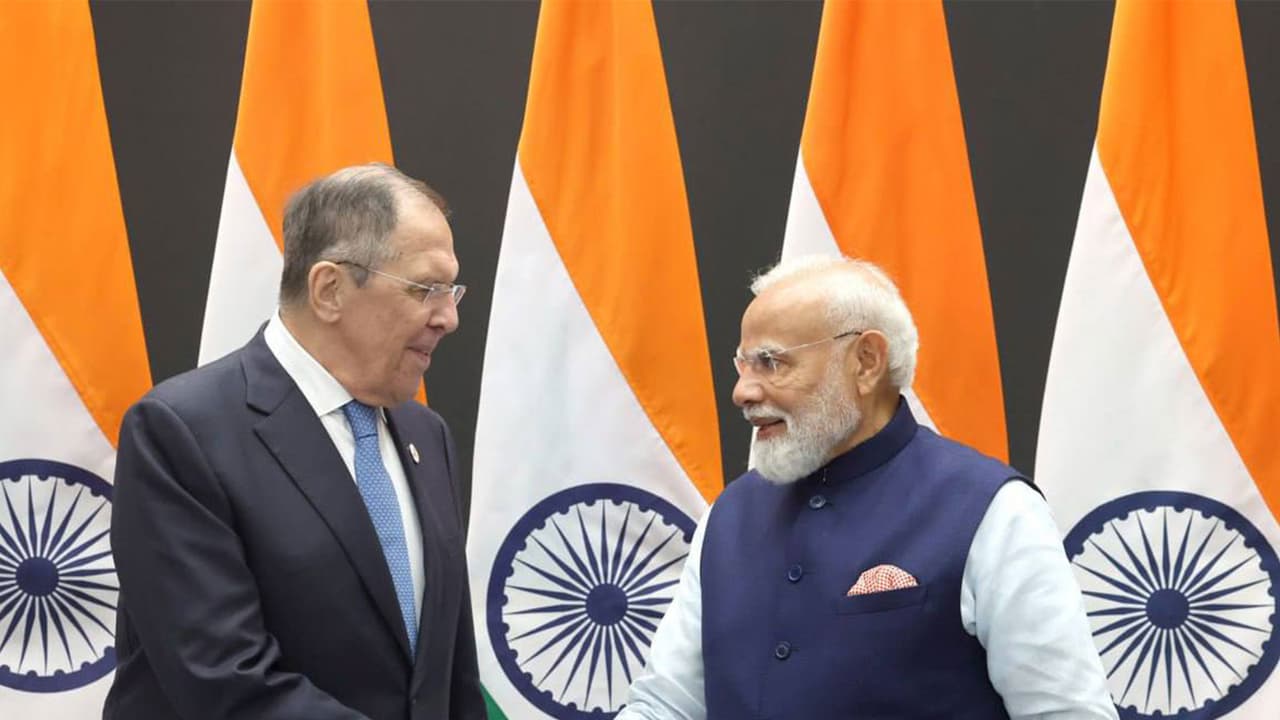
Russian FM Sergei Lavrov visited India for a BRICS meeting, holding talks with EAM S Jaishankar on the bilateral strategic partnership. He also met PM Modi, discussing cooperation, Ukraine, and West Asia, with India reiterating its call for diplomacy.
The Foreign Minister of Russia, Sergei Lavrov, visited India for the BRICS Foreign Ministers’ meeting, and held a bilateral meeting with External Affairs Minister S Jaishankar on May 13, a statement by the Ministry of External Affairs said. “The two sides discussed various aspects of the India-Russia Special and Privileged Strategic Partnership, including trade and investment, energy and connectivity, science and technology, as well as facilitating mobility of skills and talents. Global and multilateral issues of mutual interest were also discussed,” the statement said on Friday. https://x.com/mfa_russia/status/2055277335650160736?s=20
Lavrov calls on PM Modi
During the visit, FM Lavrov also called on Prime Minister Narendra Modi on May 14. He briefed PM on the progress in bilateral cooperation since the last Annual Summit meeting between India and Russia in December 2025. The discussions also covered regional and global issues of mutual interest, including the situation in Ukraine and West Asia/Middle East. PM reiterated India’s consistent stand in favour of dialogue and diplomacy, as per the MEA.
BRICS Foreign Ministers’ Meeting Outcome
The Ministers in the Chair’s Statement and Outcome Document at BRICS Foreign Ministers’ Meeting acknowledged that BRICS members represent a broad diversity of societies and civilisations which are affected differently by unjustified unilateral protectionist measures inconsistent with WTO rules, and that BRICS should focus on promoting a just and fair, stable and predictable environment for mutually beneficial sustainable development.
Emphasising the importance of creating more resilient, reliable and stable supply chains, they agreed that BRICS should work towards broader and more equitable participation of developing economies in higher-value added segments of global manufacturing and production, including through trade and investment initiatives, industrial cooperation, development of complementary production capacities and technology transfer on mutually agreed terms based on national priorities. These initiatives will contribute to economic resilience and help mitigate the impacts of multiple economic disruptions. (ANI)
(Except for the headline, this story has not been edited by Asianet Newsable English staff and is published from a syndicated feed.)