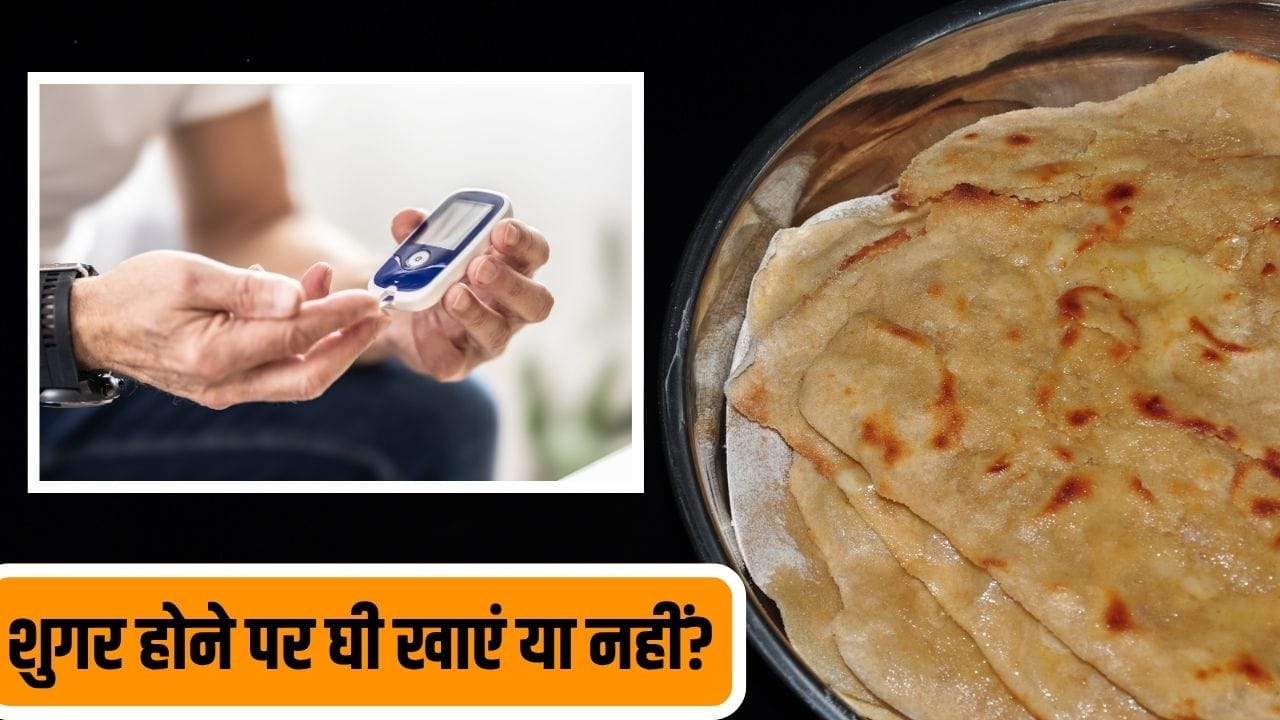
Should diabetic patients eat bread with ghee applied on it or not?Image Credit source: Getty Images
Diabetes is a disease whose presence is detected late by most of the people. Among those who suffer from diabetes, usually everyone has to depend on medicines. But many questions arise on what these patients should and should not eat in their diet. Now the question is whether such people can apply ghee on the bread they eat daily. If someone has diabetes, he should eat his food keeping his sugar level in mind. It is believed that ghee not only contains healthy fats but it also has high calories. For this reason, a myth persists on whether a diabetic patient should consume it or not. If diabetes is not kept under control, then even the organs of the affected person get damaged.
It is believed that the sugar level of people affected by this disease should be 80 to 120 mg/dl on an empty stomach. After eating food or breakfast it should be within 180 mg/dl. In this article, know from the experts whether diabetes patients should eat bread with ghee applied on it or not.
Should ghee be applied on roti or not?
Dr. Gulab Gupta (MBBS, MD- Internal Medicine) says that diabetes patients should eat without applying ghee. It would be better if you grind gram, barley, ragi with wheat and grind it into flour. Experts say that ghee and oil should be used in limit. Such fats should be used only for sautéing vegetables.
Disadvantages of ghee. Side Effects of Desi Ghee
Experts say that desi ghee does not cause any harm at all but it is important to keep the limit in mind while eating it. People who have cholesterol, obesity and heart problems along with blood sugar should take special care of it.
What happens if you eat more ghee than the limit?
Complaint of weight gain- It is said that obesity in type 2 diabetes patients can worsen the blood sugar level excessively. Desi ghee is high in calories and fat and eating it can lead to rapid weight gain.
Risk of increasing bad cholesterol
Actually, ghee contains saturated fat and if it is not consumed properly, it can increase LDL i.e. bad cholesterol. People suffering from diabetes are considered to be at higher risk of heart disease. Therefore, ghee should be consumed in right quantity only so that the risk of heart disease does not increase.
Insulin resistance may increase
Too fatty diet can reduce the effect of insulin in the body. This can make it difficult to control blood sugar level. Apart from this, if one has fatty liver along with diabetes then consuming too much ghee can put extra pressure on this part of the body.