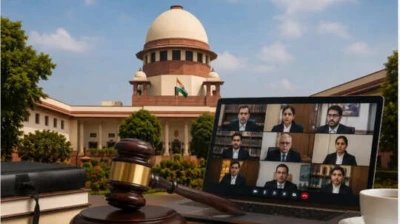
India’s fuel-conservation push has now reached the country’s highest court. The Supreme Court of India has announced that hearings on Mondays and Fridays will now be conducted exclusively through video conferencing as part of a wider fuel-saving and efficiency drive.
The decision was communicated through an official circular issued by the Supreme Court Registry on May 15, following a Government of India office memorandum issued by the Department of Personnel and Training (DoPT).
Virtual Hearings, Carpooling And Work From Home
The circular states that all matters listed on miscellaneous days during the court’s partial working days “shall be heard by video-conferencing only”. The Registry has also been directed to ensure stable video-conferencing systems and provide timely technical support to avoid inconvenience during proceedings.
In another notable measure, Supreme Court judges have “unanimously resolved” to encourage carpooling arrangements among themselves “to ensure optimum utilisation of fuel”, according to the circular. The top court has additionally permitted up to 50% of Registry staff in every branch or section to work from home for up to two days a week until further orders, while ensuring uninterrupted court functioning.
Employees allowed to work remotely have been instructed to remain available over telephone and report to office whenever required.
Judiciary Mirrors Wider Govt Fuel-Cut Measures
The Supreme Court’s move comes amid broader fuel-conservation measures being rolled out across government departments as India grapples with rising energy pressures linked to the ongoing global oil and shipping crisis. The latest concerns have been intensified by disruptions around the Strait of Hormuz following the Iran-US-Israel conflict, which has shaken global energy markets and pushed governments to adopt fuel-saving mechanisms.
While the apex court has not reduced judicial working days, the transition to online hearings twice a week marks one of the clearest signs yet that fuel-curb measures are beginning to reshape the functioning of major public institutions.
The decision also signals a partial return to the virtual hearing model that became central to judicial functioning during the COVID-19 pandemic.
The Supreme Court had built extensive digital infrastructure during the pandemic years, allowing lawyers and litigants to appear remotely through hybrid and virtual hearings. The new circular appears to leverage that system once again, this time not due to a health emergency, but because of fuel and mobility concerns.