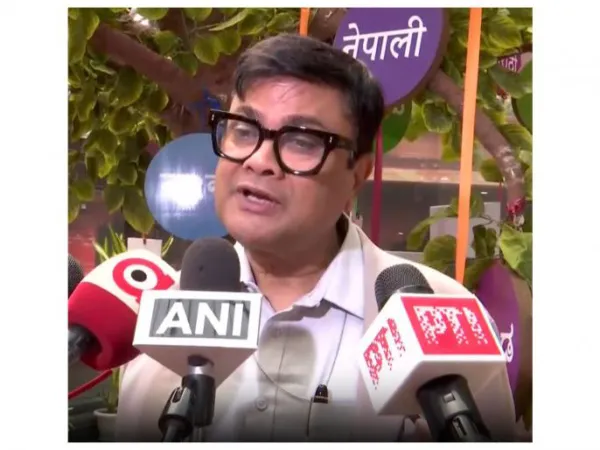
The dip in the Central Board of Secondary Education’s (CBSE) Class 12 pass percentage this year is a reflection of changes introduced in the assessment scheme, School Education Secretary Sanjay Kumar said on Wednesday after the Board declared results for the 2026 examinations.
The overall pass percentage stood at 85.20 per cent this year, down by 3.19 percentage points from last year’s 88.39 per cent.
Of the 17,80,365 students who registered for the examination, 17,68,968 appeared and 15,07,109 passed.
This year also saw CBSE adopt full-scale On-Screen Marking (OSM) for Class 12 answer-sheet evaluation, with 98,66,622 answer books assessed digitally in what the Board described as its biggest OSM exercise so far.
“There is some difference in the percentage of marks this time, but that is quite natural because this time the scheme for assessment has changed. So, it shows in the results,” Kumar said, adding that students should not lose heart over marks.
“I would take this opportunity to congratulate all the children and all those who have done well. To some, who may not have done that well, I would say not to lose their heart,” he said.
The Class 12 examinations were conducted from February 17 to April 10, while results were declared on May 13.
Girls once again outperformed boys in the examination. The pass percentage among girls stood at 88.86 per cent, compared to 82.13 per cent among boys a gap of 6.73 percentage points. Transgender candidates recorded a 100 per cent pass percentage.
Among regions, Trivandrum emerged as the top performer with a pass percentage of 95.62 per cent, followed by Chennai at 93.84 per cent and Bengaluru at 93.19 per cent. Vijayawada and Delhi West rounded out the top five with pass percentages of 92.77 per cent and 92.34 per cent, respectively.
Prayagraj recorded the lowest pass percentage at 72.43 per cent, followed by Patna at 74.45 per cent. Noida and Bhopal reported pass percentages of 79.02 per cent and 79.43 per cent, respectively.
Delhi recorded an overall regional pass percentage of 91.97 per cent, with Delhi West at 92.34 per cent and Delhi East at 91.73 per cent.
The number of schools participating in the examination increased from 19,299 last year to 19,967 in 2026. Examination centres also rose from 7,330 to 7,573.
CBSE said the digital evaluation process reduced manual intervention and eliminated errors related to totalling, posting and uploading of marks. The Board added that the system enabled remote evaluation without physical transfer of answer sheets, improving secrecy, transparency and efficiency in line with reforms envisaged under the National Education Policy (NEP).