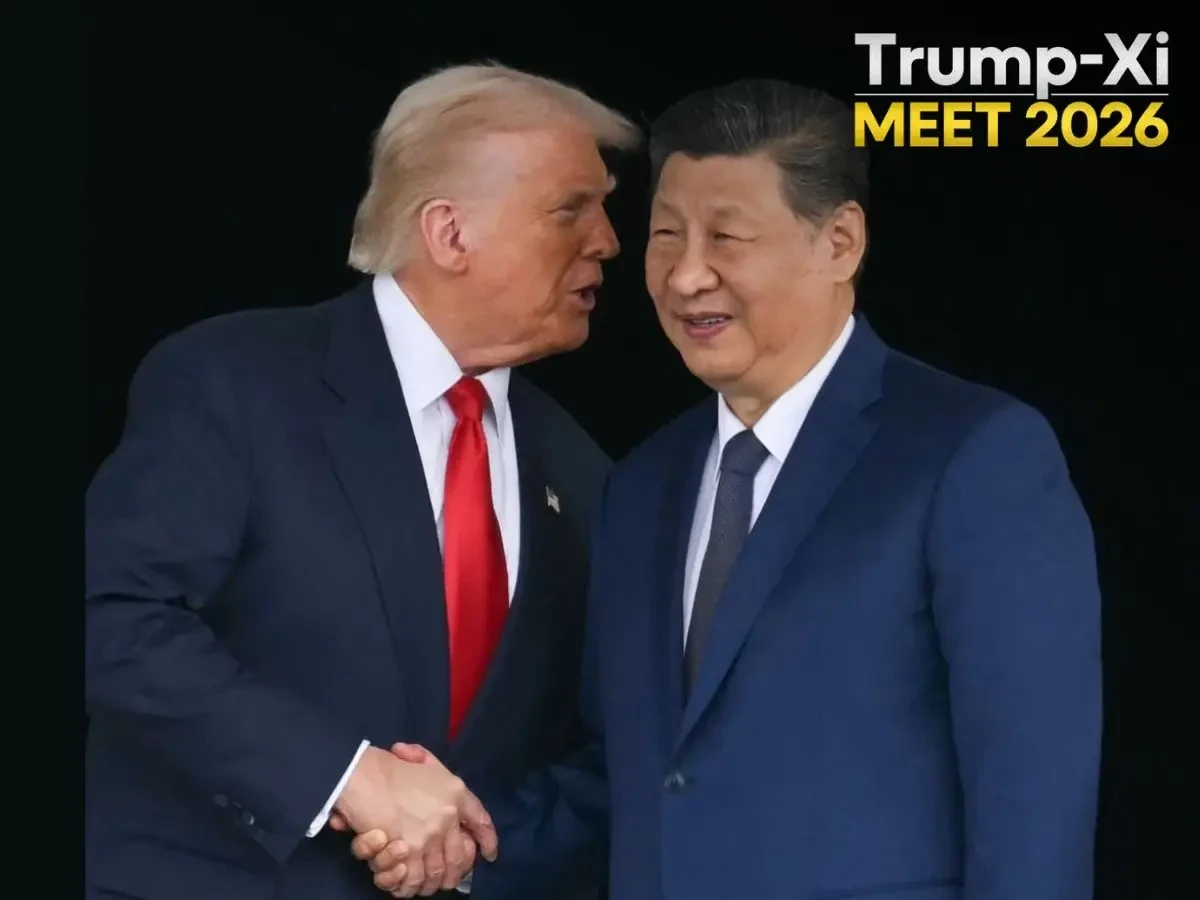
The US and China are likely to inch toward a managed trade mechanism for non-sensitive goods at the summit in Beijing, with each side possibly identifying some $30 billion worth of goods on which they could reduce tariffs and sell to each other without crossing national security red lines.
The so-called ‘Board of Trade’ was first broached by US Trade Representative Jamieson Greer in March as a key deliverable agreement for the high-stakes summit between President Donald Trump and Chinese President Xi Jinping.
Both countries will focus on numerical trading targets in non-strategic sectors while retaining broad tariffs and export controls on national security-sensitive technologies.
“It’s not really a situation where we go and get China to change the way they govern, the way they manage their economy,” Greer told Fox Business Network. “That’s all baked into their system, but I think there is a world where we find out where can we optimise trade between China and the United States to achieve more balance.”
Greer likened the mechanism to a plug “adapter” that can help connect two incompatible economic systems.
US Treasury Secretary Scott Bessent and Chinese Vice Premier He Lifeng met for three hours in Incheon, South Korea, on Wednesday to lay final groundwork on proposals for Trump and Xi to discuss.
People familiar with the Trump administration’s objectives said they expected a $30 billion-for-$30 billion trade-
barrier reduction framework arrangement.
US-China trade shrank by 29% to $415 billion
US-China two-way goods trade shrank by 29% to $415 billion from $582 billion in 2024, with the US trade deficit falling nearly 32% to $202 billion in 2025, its lowest in two decades.
China said in March the two sides had “agreed to explore the establishment of working mechanisms to expand economic and trade cooperation” with no further details.
The US is aiming to increase sales of energy and agricultural products to China, which maintains a general extra 10% tariff on all US imports, matching Washington’s 10% temporary tariff on Chinese goods.
In addition, Beijing imposes retaliatory duties on imports from the US of 10% on crude oil, 15% on liquefied natural gas, 15% on coal and up to 55% on beef.
The US maintains tariffs of 7.5% on a raft of Chinese consumer products imposed in 2019 at the height of Trump’s first-term trade war with China. These include flat-panel television sets, flash memory devices, smart speakers, Bluetooth headphones, bed linens, multifunction printers and many types of footwear.
The two sides are expected to discuss the less-developed concept of a “Board of Investment” to deal with investment issues.
Meanwhile, US lawmakers and automotive, steel and tech groups have warned Trump against any deal that opens the door to Chinese investment in the vehicle sector, arguing that this would hollow out the core of US manufacturing.