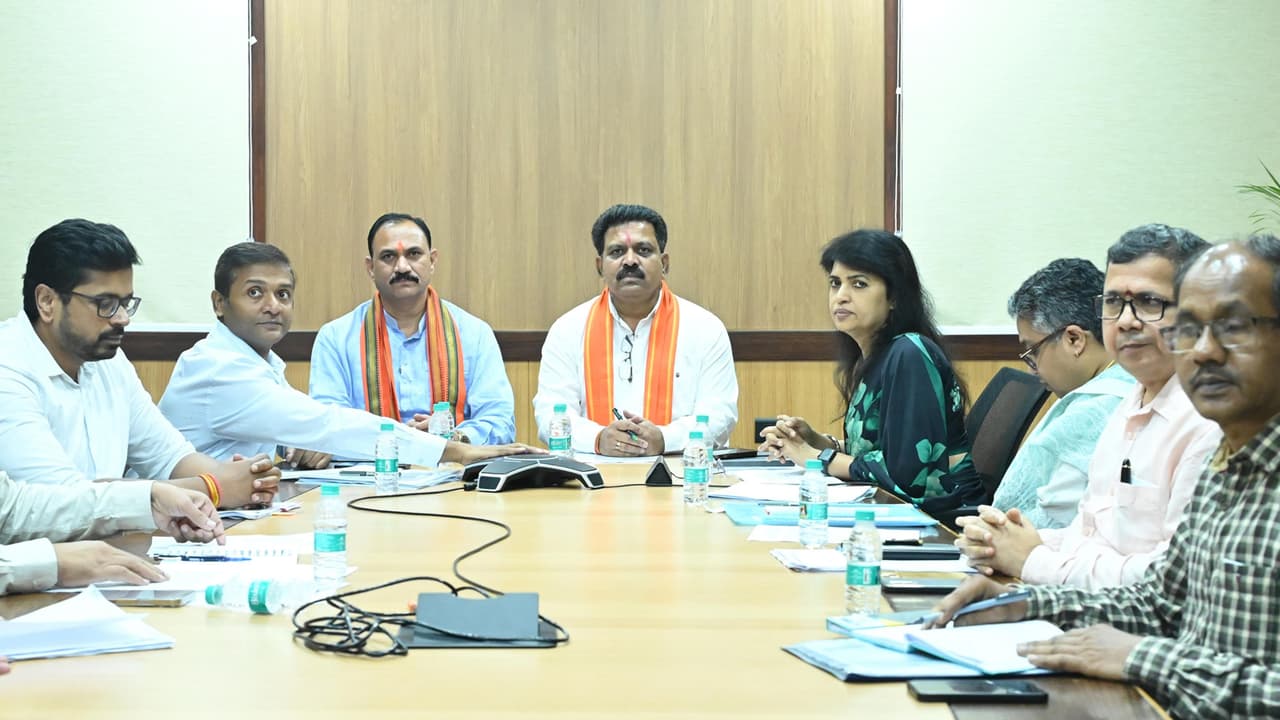
In the CCTNS review meeting in Chhattisgarh, important decisions were taken on strengthening the digital justice system, expansion of E-FIR, E-Sakshya, E-Signing Pad and ICJS.
Raipur. With the aim of effectively implementing the new Indian Judicial Code (Bharatiya Nyaya Sanhita) in Chhattisgarh and making the justice process technology-based, transparent and quick, Deputy Chief Minister and Home Minister Vijay Sharma and Health Minister Shyam Bihari Jaiswal held a high-level review meeting of the Crime and Criminal Tracking Network and System (CCTNS) on Tuesday.
In the meeting, issues related to practical challenges faced during operation of CCTNS, integration of various digital platforms and making the police and judicial system more effective were discussed in detail.
Digital and time bound justice process priority of state government
Deputy Chief Minister Vijay Sharma said that in accordance with the new Indian Justice Code, making investigation of crimes, evidence collection, court proceedings and coordination between various departments completely digital and timely are among the major priorities of the state government. He directed the officers to make every step of the justice process simple, transparent and more convenient for the citizens through CCTNS so that people can get speedy justice.
Emphasis on connecting all digital modules including E-FIR, E-Challan and E-Forensic
In the meeting, detailed discussions were held on effectively integrating e-FIR, e-Challan, e-Saksha, Medlipar, e-Prison, e-Forensics, CIS, Nyaya Shruti and other digital systems with CCTNS. The Deputy Chief Minister directed that better coordination should be established between all these digital modules, so that the judicial process can become faster, transparent and result oriented.
Special training in all districts to strengthen e-evidence system
In the meeting, special emphasis was laid on the increasing importance of digital evidence. Vijay Sharma directed that comprehensive training on e-evidence system should be given to police officers and related employees in all the districts of the state. He said that collection, preservation and presentation of digital evidence in the court should be done with full efficiency. Instructions were also given to encourage the excellent performing districts and implement their methodology in other districts.
‘Nyaya Shruti’ system will start soon
There was also discussion in the meeting about starting the Nyaya Shruti system soon. The Deputy Chief Minister said that the necessary IDs of all the judges should be prepared through the High Court so that the judicial system can be made live as soon as possible. He said that this will promote the use of technology in courts and improve the speed of judicial work.
E-signing pads will be installed in police stations of Raipur, Durg and Bilaspur.
Keeping in mind the convenience of the applicants and complainants, an important decision was taken in the meeting. The Deputy Chief Minister directed that in the first phase, two e-signing pads should be made available in all the police stations of Raipur, Durg and Bilaspur Commissionerate and in two police stations of each district of the state by the end of this month. This system will simplify the process of digital signature of complainants and will speed up the online execution of documents. Later this facility will be expanded to the entire state.
Preparation to strengthen the five pillars of ICJS
Vijay Sharma directed to strengthen all the five major pillars of Interoperable Criminal Justice System (ICJS). He said that the justice process should be made more effective and timely by establishing better coordination between police, court, jail, forensic and prosecution system.
Preparation to connect district hospitals with MedLeaPR
In the meeting, Health Minister Shyam Bihari Jaiswal assured all possible cooperation from the Health Department to speed up the medical examination and reporting process. He instructed the officials to prepare an action plan to connect all the district hospitals with the Medlipar system. For this, necessary training will also be organized by appointing nodal officers in every district. The Deputy Chief Minister gave instructions to make this system fully functional within the next three to four months.
NCRB and NIC will together solve technical challenges
The Deputy Chief Minister asked the officials of the National Crime Records Bureau (NCRB) to come to the state and resolve the technical problems being faced during the onboarding by coordinating with the National Informatics Center (NIC). He said that all the services of CCTNS should be operated uninterruptedly by removing the technical hurdles soon.
Plan to connect private hospitals also to CCTNS network
It was also decided in the meeting that along with government hospitals, private hospitals will also be connected to the CCTNS network in a phased manner. The Deputy Chief Minister said that this will speed up the exchange of medical evidence and make the investigation process more effective. He also expressed special appreciation for the work being done under the online CCTNS system in Durg district.
Special emphasis on improving FSL and reducing pendency of cases
Reviewing the Forensic Science Laboratory (FSL), the Deputy Chief Minister directed to set Standard Operating Procedure (SOP) for all types of cases and reduce the time limit of investigation. He laid special emphasis on expeditious completion of the recruitment process of forensic experts and significant reduction in the number of pending cases.
presence of senior officials
Principal Secretary Niharika Barik Singh, Principal Secretary Sushma Sawant, Secretary Himshikhar Gupta, Inspector General of Police Dhruv Gupta and senior officials of the state government were present in the meeting. Senior officials associated with NCRB and CCTNS attended the meeting through virtual medium from Delhi.