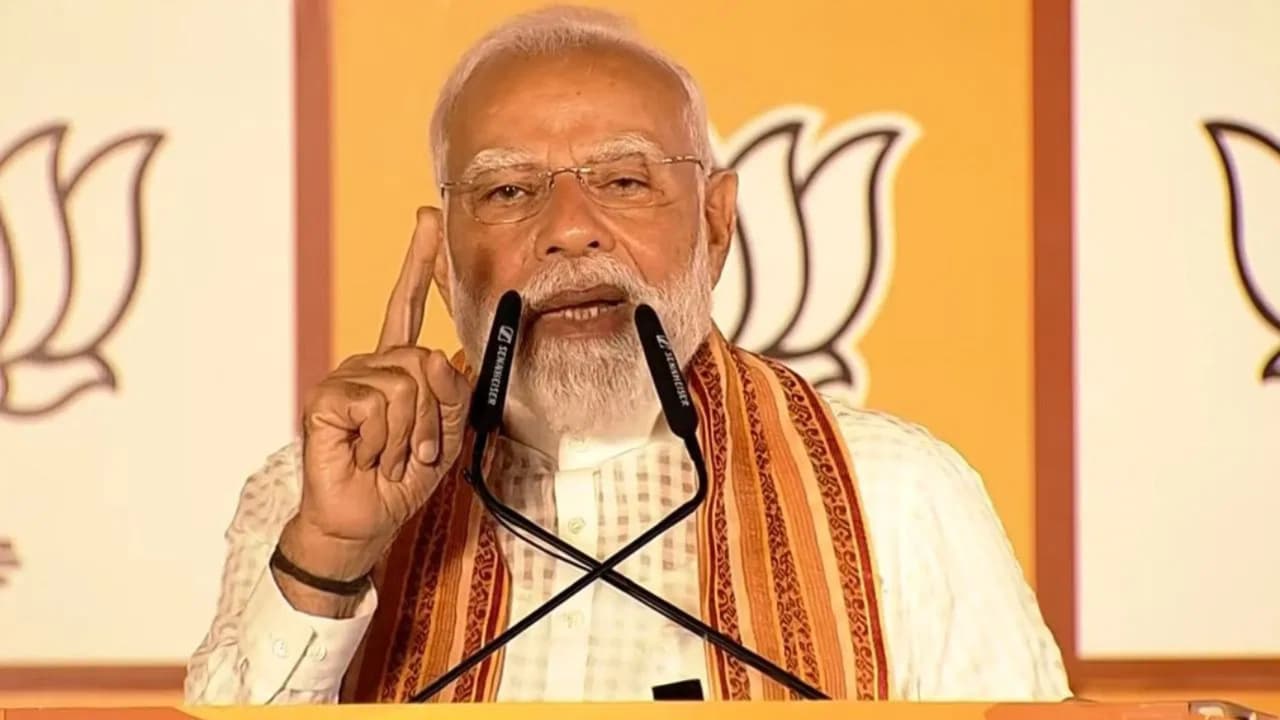
Narendra Modi Speech Highlights: After victory in Bengal and Assam, PM Modi’s big message – violence free Bengal, strength of women and now focus on UP. Know the 5 big points of Modi’s speech and his sharp attacks on the opposition.
The Prime Minister’s address amid the excitement of victory from the BJP headquarters in Delhi was not limited to just celebration, but was also a clear outline of the political signals to come. After the bumper victory in West Bengal and Assam, while PM Modi saluted the hard work of the workers, he also gave many big messages, from ending violence in Bengal to focusing on Uttar Pradesh. His speech shows that now BJP is not only celebrating the victory but is also busy preparing for the next political goal.
Credit for victory goes to workers, “penance was successful”
Prime Minister Modi started his address by thanking the BJP workers. He said that this victory is the result of years of hard work and dedication. The PM also said that the election results have come at a time when the world is facing many challenges, and India has shown its position strongly.
Also read: Power changed in Bengal! After 15 years, TMC OUT, BJP IN, but why questions were raised on EVM?
Strict message on violence in Bengal
PM Modi said in clear words that now there will be no place for political violence in West Bengal. He appealed to all political parties to come forward to end the cycle of violence and participate in the politics of development. This statement is being considered as a direct target on All India Trinamool Congress and the political culture of the state.
“No change, time for change”
In his speech, the Prime Minister gave an important message, this is not the time for revenge, but for change. He said that the atmosphere of fear should end in Bengal and there should be talk of development. He also warned that those committing violence will not be spared, indicating the government’s stand on law and order.
From Ganga to Brahmaputra, cultural and political messages
PM Modi also used cultural symbols in his speech. He said that now there is BJP government from Gangotri to Gangasagar and linked the victory of Assam to Brahmaputra. This message was not only a sign of political expansion, but is also being seen as an attempt to strengthen the spirit of Hindutva and cultural unity.
Special emphasis on women voters
The Prime Minister cited the role of women as an important reason for the victory. He said that the parties which opposed women’s reservation were answered by the mothers and sisters in the elections. During this, he targeted Indian National Congress, Dravida Munnetra Kazhagam and TMC and said that women voters have taught them a lesson.
Now look at Uttar Pradesh
PM Modi also made the future strategy clear in his speech. He indicated that the next big political contest would be in Uttar Pradesh. He said that just as other parties had to face defeat, the public will respond to the Samajwadi Party in the same way, especially on the issue of women.
The sharpest attack on Congress
In his entire speech, Prime Minister Modi appeared to be the most attacking on Congress. He alleged that while Congress has not been able to take concrete action against Naxalism, on the other hand “Urban Naxal” is now becoming the center of thinking. He also raised questions on the victory of Congress in Kerala and said that this victory is not of Congress but is the result of public anger against the leftist government there.
With victory the message is also clear
This speech of Prime Minister Modi was not just a celebration of the election victory, but also an indication of the political direction of the times to come. The message of ending violence in Bengal, the focus on women and the gesture towards Uttar Pradesh, all these things show that BJP is now moving ahead rapidly on the strategy of the next phase. This speech makes it clear that the political contest is going to be more intense in the coming elections, where issues like development, law and order and women empowerment will remain at the center.
Also read: ‘Shah Model’ behind the change of power in Bengal: The story of strategy, organization and precise implementation