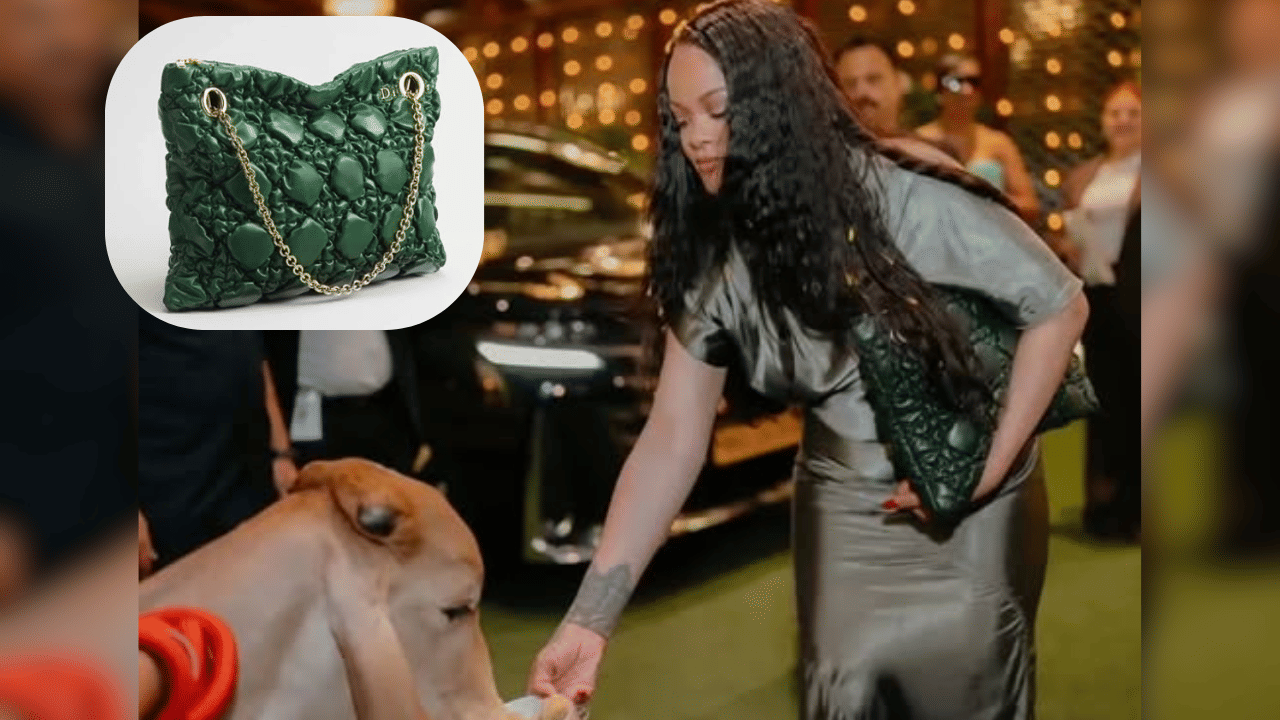
New Delhi: Pop star Rihanna’s latest visit to India has turned a simple, seemingly reverent moment into a full‑blown social‑media storm. The Barbadian singer was recently photographed feeding a cow in Mumbai, an act that in many Indian contexts is seen as a gesture of kindness and respect toward the animal considered sacred by millions. However, the image quickly went viral for a different reason: in her hand was a Dior bag reportedly worth around ₹4.3 lakh, made from calfskin and lambskin leather. That stark visual contrast – nourishing a cow while clutching a luxury accessory derived from young cattle struck many viewers as deeply ironic, and the internet has not held back its opinion.
The photograph, taken during Rihanna’s stay at industrialist Mukesh Ambani’s residence, Antilia, captured her participating in several traditional rituals, including a puja, aarti and flower‑petal celebrations. Yet it was the cow‑feeding frame that became the focal point, with users dissecting everything from the ethics of leather fashion to the optics of celebrity “performative” gestures. As the clip went viral on Instagram, X and other platforms, hashtags and memes multiplied, turned the moment into a cultural flashpoint about hypocrisy. Keep reading to have a closer look at why this single image has the internet spiralling, and what it reveals about the way we consume celebrity culture in India today.
Rihanna feeding cow while carrying Dior bag made with calfskin
The Dior Crunchy bag Rihanna was seen carrying is estimated to cost around ₹4.3 lakh and is crafted using calfskin and lambskin, materials that are prized in the luxury fashion world. For many critics online, the fact that the outer shell of the bag is made from young calf leather while the singer feeds a live cow became the core of the controversy. Some commenters joked that the cow might “recognise its own hide,” while others pointed out that the leather industry itself is built on the slaughter of animals, including cows and calves. These remarks fuelled a broader debate about whether celebrities are being held to a different standard, or whether such moments simply expose the contradictions that many people quietly live with when they enjoy both tradition and luxury.
How people reacted to her viral moment
Reactions on social media have been sharply divided. On one side, netizens have mocked the moment, calling it “cringe,” “ironic beyond belief” and emblematic of “selective compassion,” where animals are ritualistically fed but also commercially exploited. Memes, sarcastic captions and hashtags questioning the ethics of carrying leather bags while feeding cows have trended across platforms.
On the other, a section of users has defended Rihanna, arguing that leather has been a part of human fashion for centuries, and that many Indians who eat meat or wear leather also feed and respect cows. This divide reflects a larger tension between purity‑driven symbolism and the everyday realities of consumption and class.
The debate has also reignited questions about what counts as “genuine” kindness versus performative or symbolic gestures. Critics argue that feeding a cow for a photo‑op, especially while holding a luxury accessory, can come across as a curated image rather than a sincere act of compassion.
Supporters, however, point out that Rihanna’s visit also included participating in puja and aarti, suggesting a willingness to engage with local traditions rather than simply treating them as props.
Luxury fashion and animal ethics
Underlying the outrage is a growing discomfort with the way luxury fashion brands continue to use animal‑derived materials, even as vegan and cruelty‑free alternatives gain popularity. Calfskin bags, in particular, are associated with exclusivity and high price tags, which further amplifies the perceived hypocrisy when the wearer is seen with a living cow. Some online commentators have used Rihanna’s moment to call out the broader fashion industry, asking why brands do not pivot more aggressively to sustainable, non‑animal materials. At the same time, others have countered that the real ethical issue lies in the meat and dairy industries, where vast numbers of animals are slaughtered or used for commercial purposes, making the leather‑bag debate feel like a smaller piece of a much larger problem.
In the end, the frenzy around Rihanna holding a ₹4.3 lakh calfskin Dior bag while feeding a cow tells us as much about the internet’s mood as it does about the singer herself. It reveals how easily a single frame can be turned into a morality test, exposing contradictions in our own consumption habits, cultural values and celebrity worship.