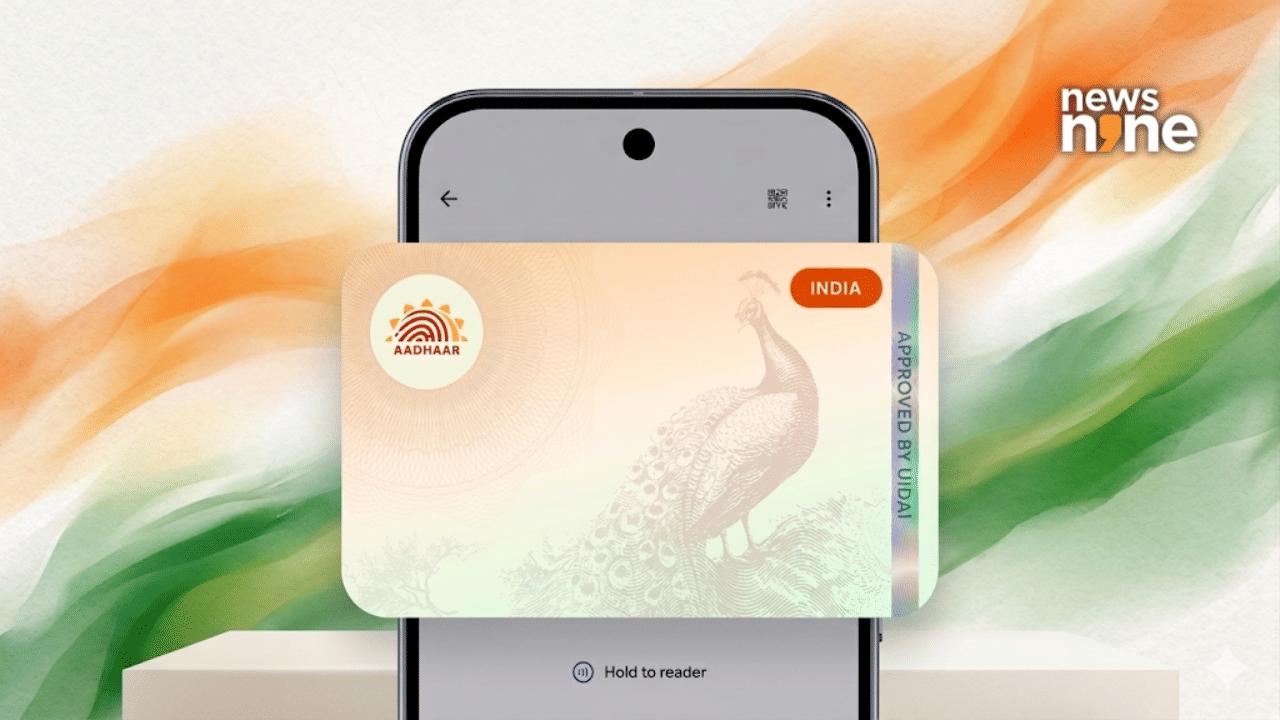
New Delhi: Google is expanding digital ID support in Google Wallet, and India is getting a major part of that rollout. The company says users in India can now save Aadhaar Verifiable Credentials directly on their device through Google Wallet, as part of its partnership with UIDAI.
The move is meant to make identity checks easier across everyday services, from age verification to travel forms and gated community access. Google said the system is built with privacy features such as “selective disclosure,” where only the required details from a person’s ID are shared when needed.
We’re expanding access to digital IDs in Google Wallet in select countries, all built with advanced privacy features like selective disclosure to keep your data secure.
Rolling out now:
🇮🇳 In India, you’ll be able to save Aadhaar Verifiable Credentials directly on your device… pic.twitter.com/oQqCrzF9Fu— Google (@Google) April 28, 2026
Google Wallet gets Aadhaar Verifiable Credentials in India
According to Google, digital IDs are meant to help people prove who they are without digging through a physical wallet. In India, that now includes Aadhaar Verifiable Credentials saved on the device through Google Wallet.
The company said, “Building on our UIDAI partnership, consumers in India can now save their Aadhaar Verifiable Credentials directly in Google Wallet on the device.”
This does not mean users are simply uploading a photo of an Aadhaar card. Google is positioning it as a secure digital credential for identity verification across supported services.
Where Aadhaar in Google Wallet may be used
Google has named its first set of partners for the India rollout. These include PVR INOX, BharatMatrimony, Atlys, Mygate and Snabbit.
- PVR INOX: Age checks for movies and rewards
- BharatMatrimony: Verified “Prime” profiles
- Atlys: One-tap auto-fill for international visa applications
- Mygate: Delivery and service staff verification, coming soon
- Snabbit: Checks for service providers in the near future
For users, this could reduce repeated identity checks across apps and services. For businesses, it gives another way to confirm details without asking people to share more information than needed.
Privacy is the big question
Digital ID always raises a simple concern: how much data is being shared? Google says security, privacy and interoperability are built into every layer of the integration.
Its selective disclosure feature is the key promise here. For example, a service may only need to confirm age, not see the full ID. That could reduce oversharing, if implemented as stated.
Google is also rolling out passport-based ID passes in Singapore, Taiwan and Brazil. For India, though, the Aadhaar-linked Wallet update is the headline change, and it could push digital identity use deeper into daily life.