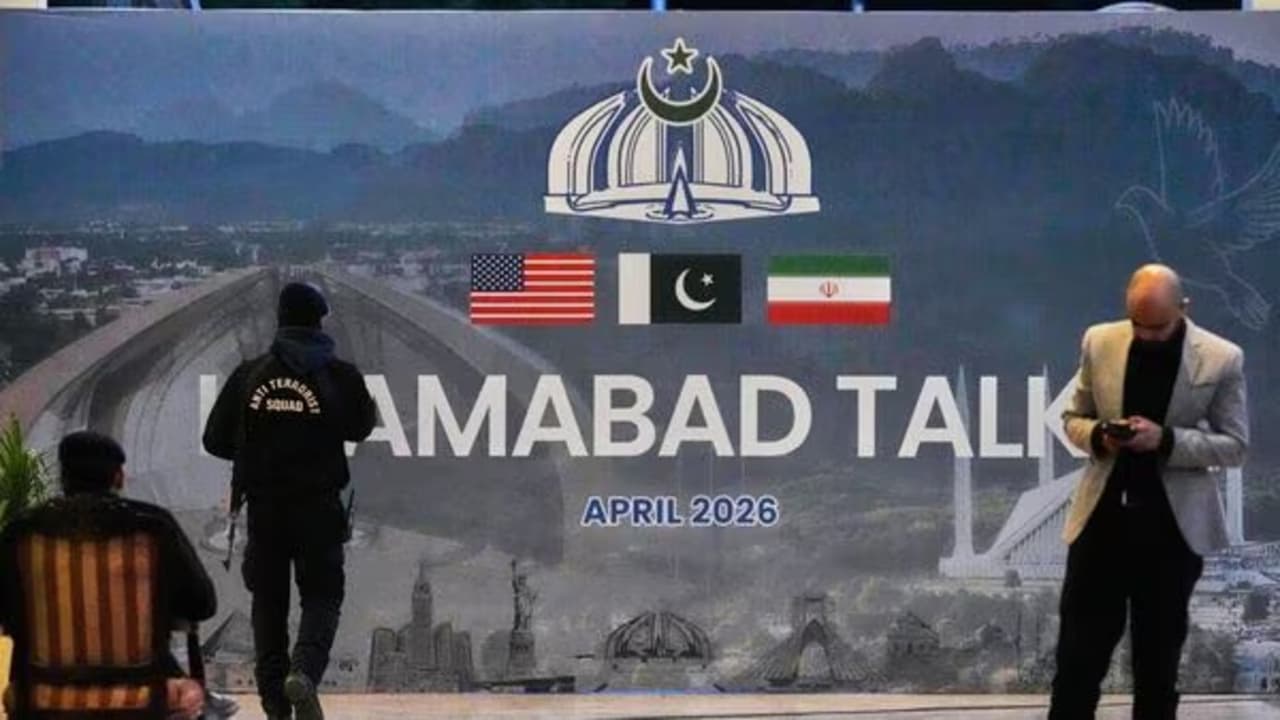
Pakistan Mediation Failure: US-Iran peace talks in Islamabad collapsed even before it started – Donald Trump canceled the visit, Abbas Araghchi returned without meeting. The deal still remains a mystery amid the Hormuz blockade, nuclear tension and mistrust.
Islamabad Talks Collapse: The second round of US-Iran peace talks to be held in Islamabad on April 25, 2026 collapsed even before it could begin. The meeting which was being considered a major step towards reducing tension in the Middle East suddenly turned into uncertainty. Iran’s Foreign Minister Abbas Araghchi returned without waiting for the US delegation, and on the other hand, Donald Trump canceled the visit of his envoys at the last moment.
Pakistan’s efforts and rising expectations
Pakistan, presenting itself as an “honest mediator”, tightened security, imposed a partial lockdown and made full preparations to bring the two countries on one platform. The atmosphere in Islamabad was as if a historic agreement was about to take place. But after hours of waiting, neither the American representatives arrived nor the talks could begin—bringing all efforts to a halt.
Iran’s ‘red lines’ and strict conditions
Iran was already adamant on its terms. He had made it clear that before any talks could take place, the US naval blockade on the Strait of Hormuz would have to be removed. For Tehran, this was not just a condition, but a question of its strategic and economic security. Iran rejected America’s “extreme demands” as unrealistic, further weakening the ground for negotiations.
Trump’s statements and growing distrust
Donald Trump’s public statements emerged as the most controversial element in this entire process. His claims for Iranian concessions were immediately rejected by Tehran, further deepening the lack of trust between the two countries. Trump’s statement that “18 hours of flight is useless” and “America holds all the cards” further upset the diplomatic balance. After articulating his concerns, Araghchi left the city without any direct talks. At the same time, Trump announced the cancellation of the trip on social media. This was a moment that put the entire initiative on hold.
Will the path to dialogue remain closed in the future?
This failure made it clear that the deep distrust between America and Iran is still the biggest obstacle. While on one hand Trump talks about keeping the door open for talks, on the other hand Iran remains suspicious of American policies. For now, both sides are in a wait-and-see situation—it remains to be seen who will cave in first. This failed attempt by Islamabad is not just the cancellation of a meeting, but is a symbol of the complexities present in global diplomacy. Hopes for peace in the Middle East are still dim, and every next step is fraught with uncertainty.