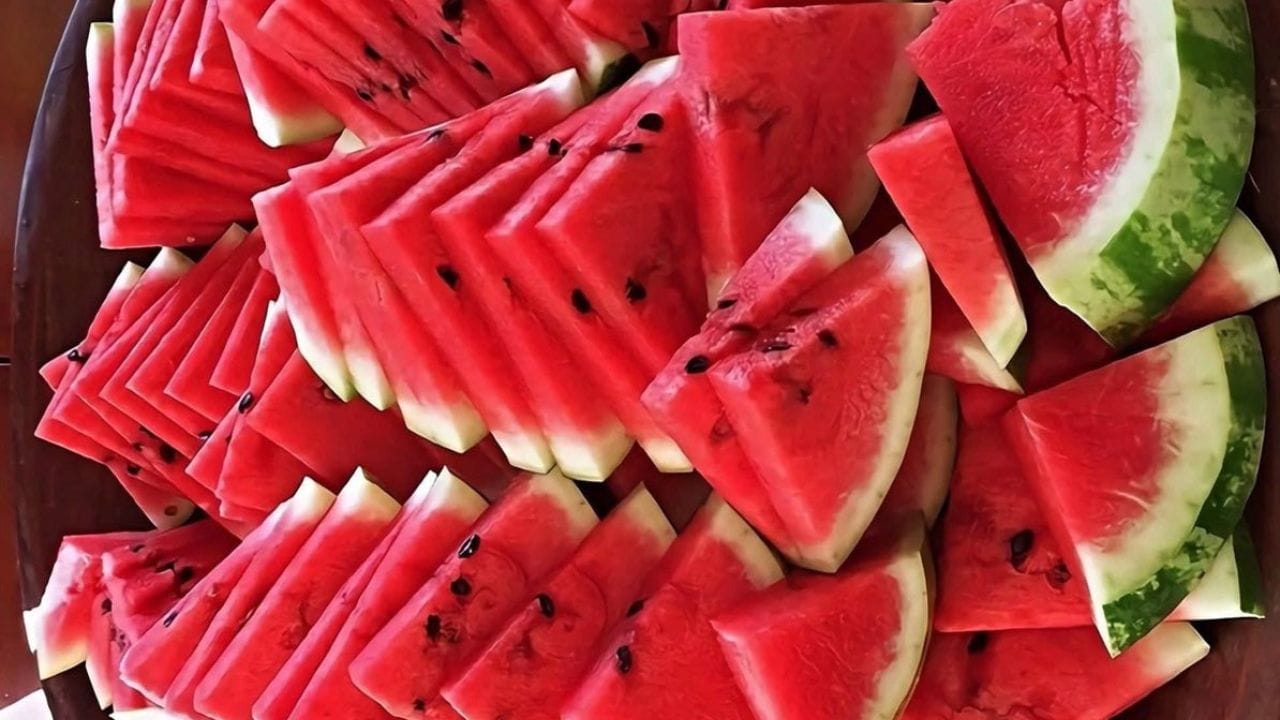
New Delhi: Nothing defines summer better than a slice of juicy, refreshing watermelon. But with the cases of rising adulteration and artificially ripened fruits rising, many people are beginning to question whether the fruits available in the market are organic or safe to eat or not. While watermelon is generally considered a low-risk fruit, some sellers may use chemical dyes, injected sweeteners, or harmful ripening agents to enhance colour and sweetness. These practices not only reduce the nutritional value but can also pose health risks.
By knowing which fruit to pick and if it is adulterated or not, you can make a smarter choice at the market. Below is a complete guide with practical, easy-to-follow tips to help you pick the right fruit every time.
How to know if the watermelon is adulterated or not?
1. Check the Skin for Natural Patterns
A naturally ripe watermelon has:
- A green, consistent rind with light and dark green stripes
- A dull finish (not overly glossy)
- No sticky or oily coating on the surface
If the skin looks too shiny, it may have been polished or coated artificially.
2. Look for the Field Spot
The field spot is the beige or yellow patch where the watermelon rested on the ground.
- A creamy, deep yellow field spot indicates natural ripening.
- A white or very light yellow patch suggests the fruit was harvested too early.
Chemically ripened fruits often lack natural field spots.
3. Examine the Pulp Colour When Cut
If you’re buying pre-cut watermelon slices:
- Natural pulp is deep pink to red, not unnaturally bright or fluorescent.
- If the flesh looks dark red, overly shiny, or grainy, be cautious—it may be dyed.
- Red water oozing out of cut pieces is a warning sign of colour adulteration.
4. Check for Injection Marks
Artificial sweeteners or dyes are often injected using syringes.
Inspect the peel for:
- Tiny needle-like punctures
- Wet or sticky spots
- Leaks around the puncture area
If you spot these, avoid the fruit entirely.
5. Do the Water Test at Home
Once home, you can test a small sample:
- Drop a cube of watermelon into a bowl of clean water.
- If the water turns red or pink, the fruit likely contains artificial colouring.
- Natural watermelon flesh will not colour the water.
Why adulteration happens
Watermelon is the seasonal favourite, and the demand skyrockets during peak summer. To sell the underripe fruits quickly and make them more appealing for the market buy vendors resort to injecting red dyes to intensify the pulp colour, using sugar syrup injections to make the fruit taste sweeter, and using carbide or ethephon for artificial ripening.
While not all sellers engage in these practices, knowing the difference helps you avoid unnecessary health risks such as stomach irritation, allergies, nausea, and long-term toxic exposure.
How to Store Watermelon Safely
Even if your fruit is pure and safe, keeping it fresh matters.
- Store whole watermelons in a cool, dry corner away from sunlight.
- Once cut, refrigerate in airtight glass containers.
- Consume within 24–36 hours to avoid bacterial growth.
- Never store cut watermelon uncovered; it attracts microbes quickly.
Choosing the right watermelon is not complicated; all you need is to be observant and aware while purchasing at the market to easily differentiate and find the best produce for yourself each time.