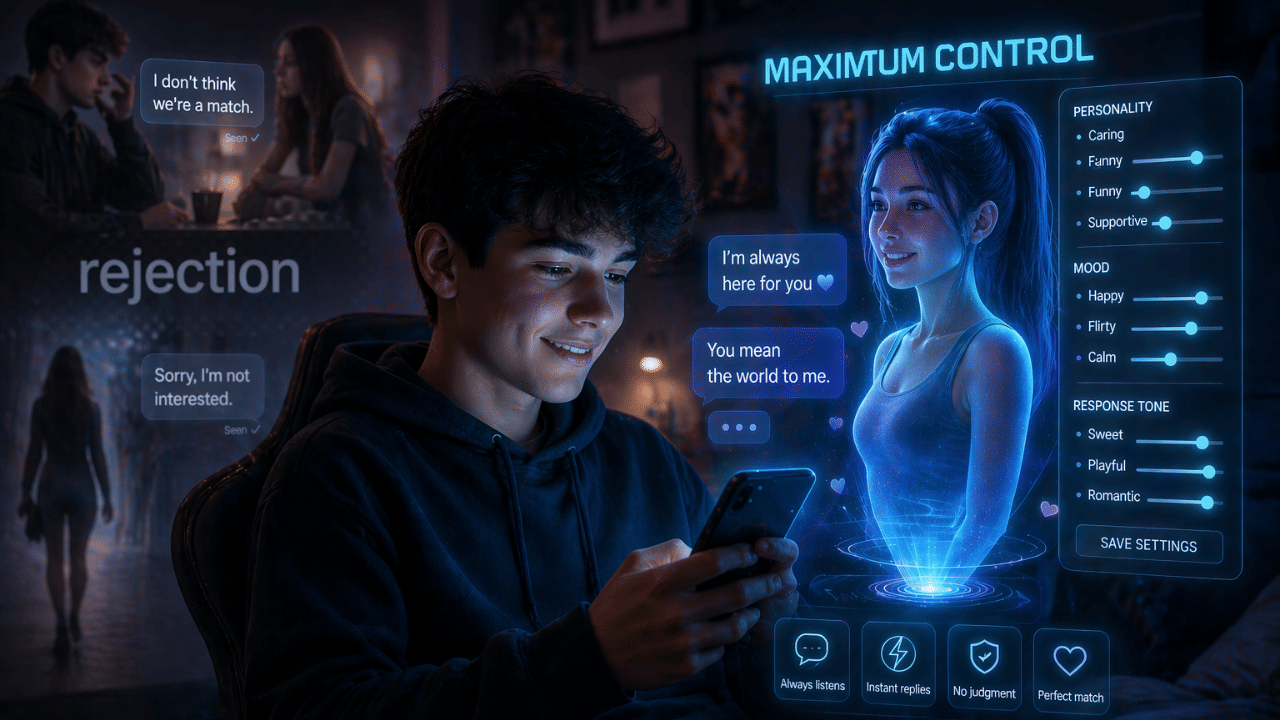
New Delhi: Gen Alpha is increasingly stepping away from real-life dating, opting instead for AI girlfriends that offer predictability and ease. Unlike human relationships, these virtual partners come without awkward silences, emotional risks or fear of rejection.
Gen Alpha’s AI girlfriend
A study by Male Allies UK found that 20 per cent of boys aged 12 to 16 know someone “dating” an AI chatbot. Around 85 per cent have interacted with one and over a quarter say they prefer the attention they receive from AI over real people.
According to the research, 58 per cent of respondents said AI relationships are easier because they can control conversations.
Experts say the appeal is simple. As one professor told Fortune, AI relationships give them “maximum control, zero rejection.”
AI companions offer a version of connection that removes the unpredictability of real relationships — no disagreements, no emotional complexity and no risk of being turned down.
Impact on social skills
However, experts warn this convenience may come at a cost. Real relationships play a key role in developing essential life skills such as empathy, communication and compromise.
Professor Pierluigi Casale explained, “The real issue is not that young people are talking to AI, but that some may start using it as a substitute for the messy, demanding work of human connection.”
He added, “Real relationships teach negotiation, empathy, rejection, compromise, and social confidence. AI companionship can mimic intimacy whilst removing much of that friction.”
Workplace risks ahead
The long-term effects could extend beyond dating. Skills learned through real-world interactions are critical in professional settings — from job interviews to teamwork and leadership.
Professor Alessia Paccagnini warned, “Reading a room, picking up on social cues, building trust over coffee or a conference dinner — these are muscles you develop through practice, and practice requires real people.”
Professor Raoul V Kübler added that boys relying on AI may be “unconsciously training themselves to expect relationships that never push back, never need tending, and never require genuine compromise.”