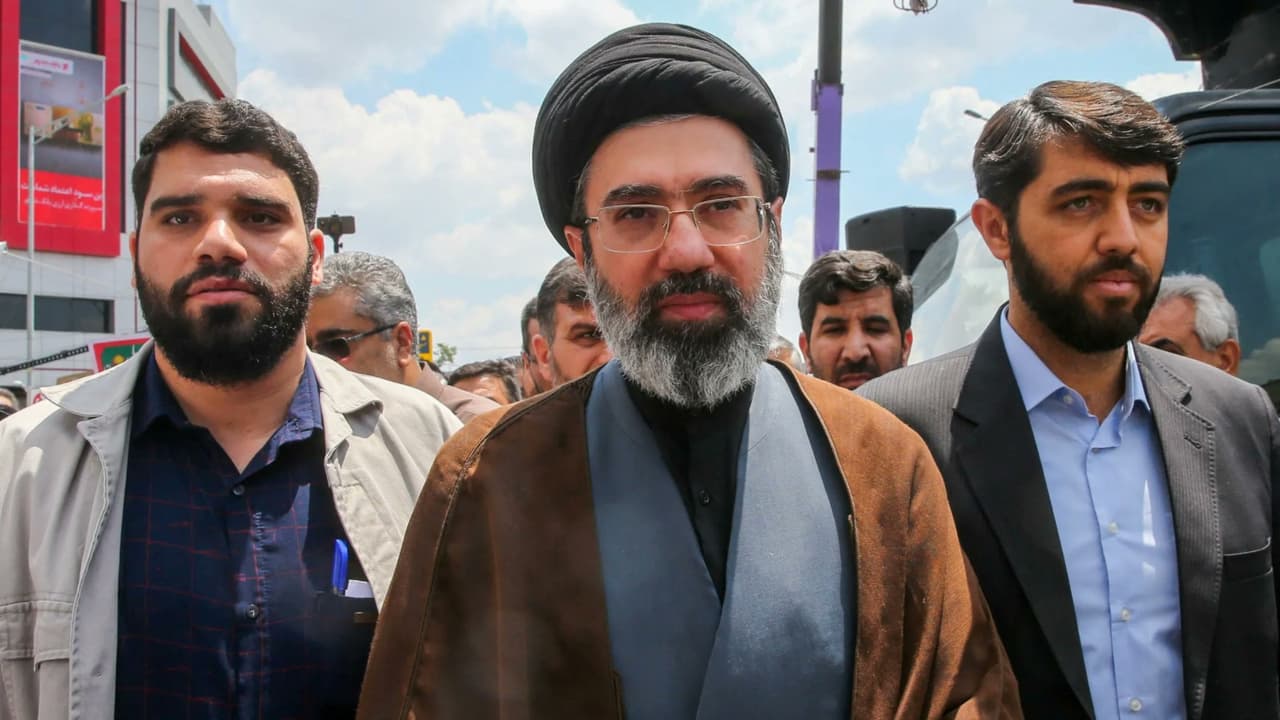
Mojtaba Khamenei, Iran’s new supreme leader, has not appeared publicly since his father’s assassination. Reports indicate he was severely injured in the same US attack and is now ruling from hiding, communicating through secretive, handwritten messages to avoid detection.
Mojtaba Khamenei, the supreme leader of Iran, has not been seen in public and his voice has not yet been heard because the majority of his statements during the conflict with the United States are written. According to some reports, this was caused by the injuries he sustained on February 28, the first day of the conflict, when his father, Ayatollah Ali Khamenei, was murdered in an American attack.
According to a deep report by The New York Times, Mojtaba Khamenei, who assumed power following his father’s murder, has suffered severe injuries and is currently functioning from concealment with little communication.
Four top Iranian sources with knowledge of Khamenei’s condition told the newspaper, “He is mentally sharp and engaged despite being gravely wounded.” The physical damage, however, is extensive. He is awaiting a prosthesis after having one of his legs “operated on three times.” Additionally, he had surgery on one hand and is gradually recovering function. The report stated that he will eventually require reconstructive surgery since “his face and lips have been burnt severely, making it difficult for him to speak.”
How Mojtaba Khamenei communicates?
Since taking over as leader, Khamenei has not made any public appearances or televised statements. The report claims that he made this deliberate choice because he “does not want to appear vulnerable or sound weak” at a crucial time.
Rather, communication has become virtually secretive. According to the report, “messages to him are handwritten, sealed in envelopes, and relayed via a human chain in cars and on motorcycles until they reach his hide-out.” The same is true of his answers.
Even high-ranking officials are avoiding contact. Reports further suggest, “senior government officials do not visit him, fearing that Israel may trace them to him and kill him.”
Despite his position, senior commanders of the IRGC and top government officials are not visiting him. However, President Masoud Pezeshkian, a heart surgeon, along with the health minister, has been involved in his treatment.
The developments come as an indefinite ceasefire remains in place between Iran and the United States, with both sides assessing pathways to resume negotiations and reopen the Strait of Hormuz.