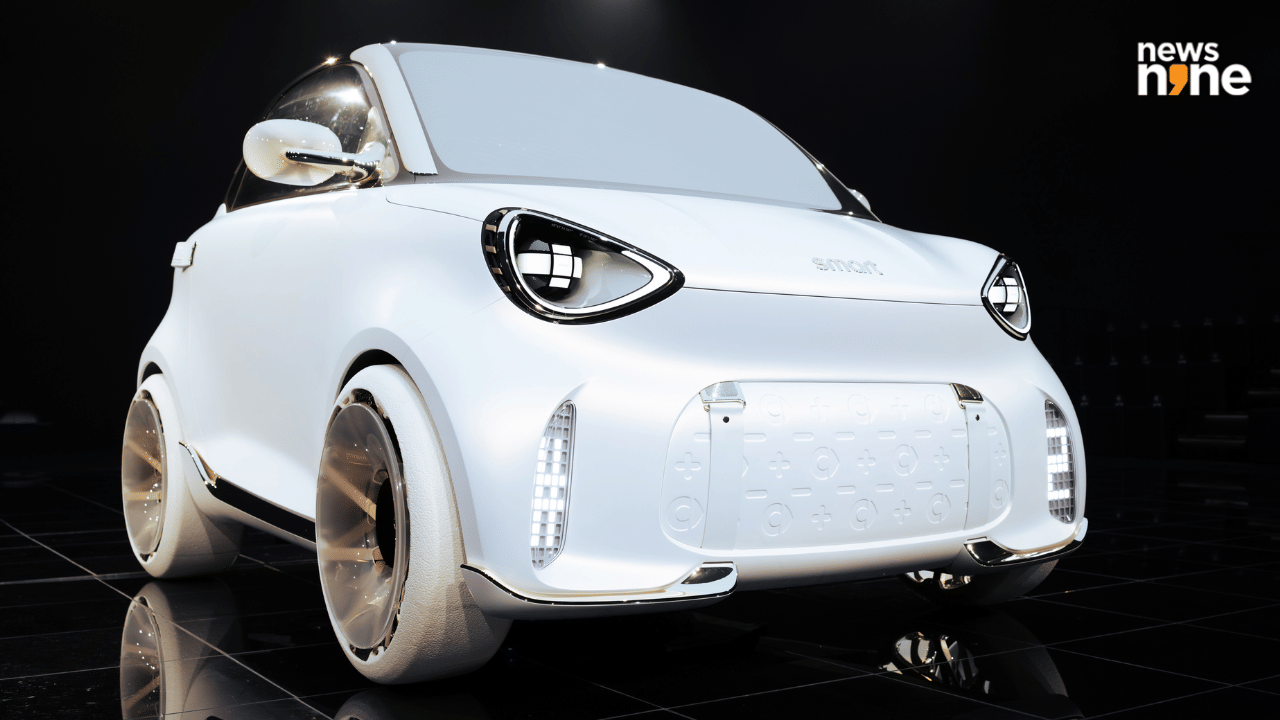
New Delhi: The Smart brand has changed a lot since 2019, when Mercedes and Geely went for a 50:50 joint venture. Production now happens exclusively in China, and all models are much bigger and heavier than they used to be. The brand at present has two SUVs and a saloon, which is as long as the present-day E-Class.
The new Smart #2 marks a return to what it made its name upon, coming back with the spirit of the original ForTwo in both styling and in terms of footprint. Designed by Mercedes, the tiny two-door hatchback looks back at its predecessor, which debuted back in 1999 and spanned across three generations before retiring in 2024.
Smart #2 will come in electric exclusive
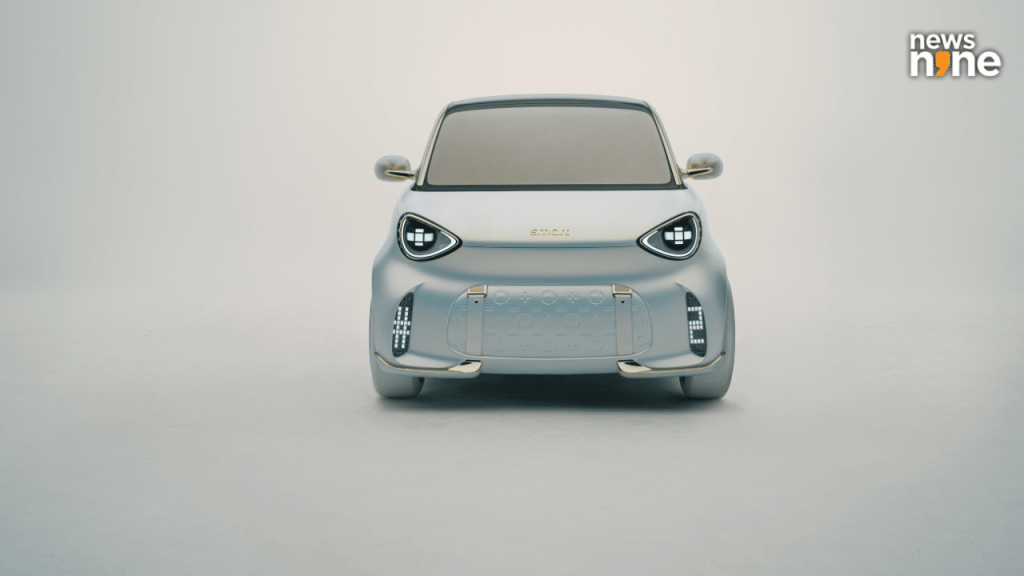
Smart #2 should have a range of 300 kms
With earlier models came in petrol and even diesel engines, the fourth generation will come just as an electric. The Smart #2 picks up where the EQ ForTwo left off, coming with pronounced wheel arches and extremely short overhangs. Some design has been largely exaggerated, as it is still a concept.
The production version will debut in October at the Paris Motor Show and will be made from the ground up as an EV on what Smart calls the Electric Compact Architecture (ECA) platform. Even though the old EQ managed about 135 kms on a single charge, the new successor should be able to do double that number, with 300 kms as claimed by Smart.
Still, it is a big number, all thanks to the rapid advancements in battery technology in recent times. The new #2 will also get fast charge, going from 10 to 80 per cent in 20 minutes. It will also support Vehicle-to-Load (V2L) functionality, letting the car be used as something of a powerbank.
The #2 will come in Europe as the smallest EV in the market, and even though the dimensions are unknown, the concept comes in the same vein as the old EQ ForTwo, which was about 2.7 meters in length, which is microscopic in front of the Renault Twingo, measuring 3.5 meters. While Smart is centred in China, the vehicles are sold in about 40 markets globally.