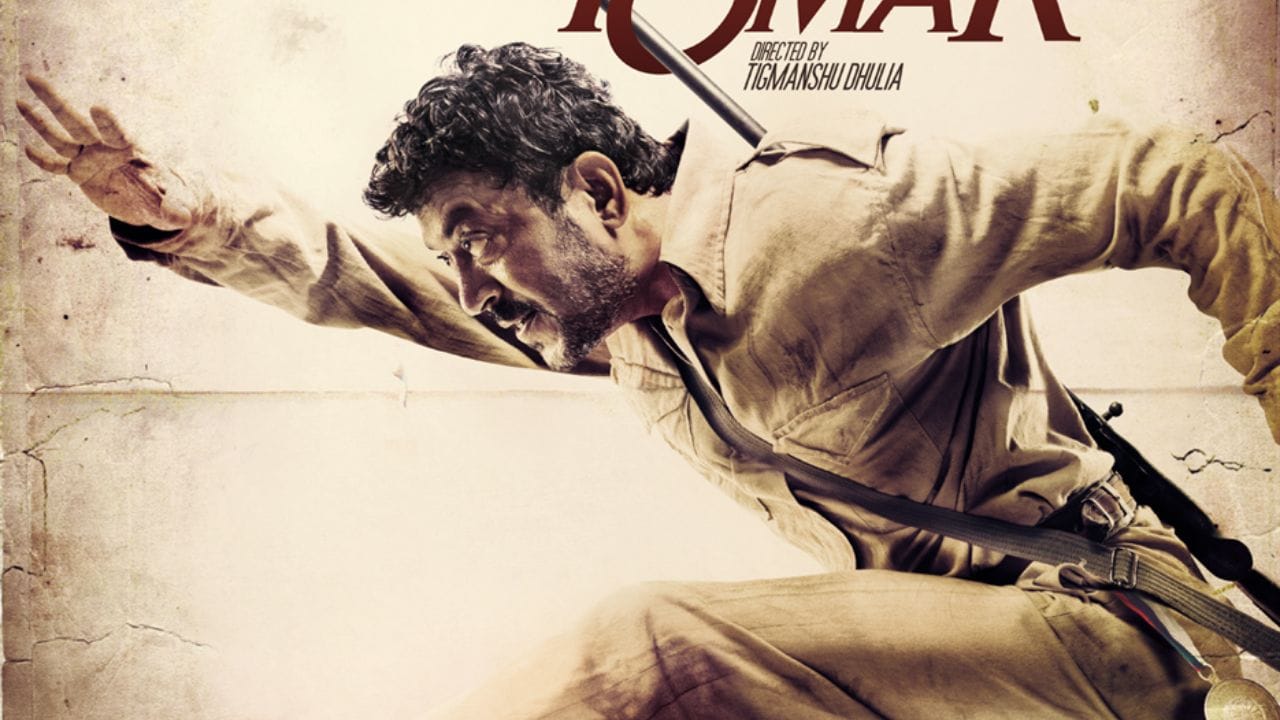
New Delhi: A documentary on the late actor Irrfan Khan’s critically acclaimed movie, Paan Singh Tomar, that triumphed against all odds, will be screened for the first time on his sixth death anniversary. Now, New9 Digital exclusively spoke with the maker of the film, Ranjeeta Kaur.
Cinematographer-writer-director Ranjeeta Kaur reflects on a deeply personal, long-delayed documentary born out of loss, persistence and love for cinema. What began as behind-the-scenes (BTS) footage of Paan Singh Tomar (2012) evolved into an archival labour of resilience, shaped by vanished tapes, crashed hard drives and one surviving render. In this conversation, she speaks about her 14-year journey, working alongside the late actor, Irrfan Khan and director Tigmanshu Dhulia, and why the story still matters.
Q.Why did it take fourteen years to release this documentary?
A. I was initially supposed to do the BTS of Paan Singh Tomar and it was an absolutely stunning experience. It was incomplete with some patchwork and interviews of some crew members still remaining to be done. However, UTV, the producers, didn’t get back to me for two years and then suddenly, they released the film. I handed over the tapes they asked for. I was heartbroken because I wanted to edit the material myself. They assured me they would upload short capsules on YouTube. Later, when I enquired, I was told the tapes had been destroyed due to moisture after being stored in a box for two years. I was devastated, because it had incredible moments from the shoot.
After 8-9 months of the release, I found some of the footage on a hard disk drive (HDD) that I didn’t even existed. It had been digitised and stored there. It was such a valuable footage. As the film was already released, I thought of working on that footage for my own sake. Even then, half of the digitised footage was also destroyed. I salvage what I could and began weaving a story around it. I worked on it for a month before stopping due to lack of funds.
When the film won National Award, Tishu sir (Tigmanshu Dhulia) who was aware of the documentary I was working on, asked me what happened to it. I told her that I had no money. He stepped in and supported the post-production. He believed that it was an important archival work and even proposed a coffee table book with a DVD of the documentary, but that plan didn’t work out.
I faced another setback when the HDD of the documentary crashed. I was left with just one rendered file (with sound and video merged, no separate project files). For 14 year, I kept working on that single file, with help from editors. I knocked on countless doors, but no one seem interested.
Then COVID happened. Irrfan Sir passed away. Namit and I still tried to get this film released. This documentary carries the sport of the film, which was made in such challenging conditions. Tishu Sir had waited for nearly 20 years to make the film, having discovered the story in the 1980s. He didn’t have the money to start the film, but UTV were nice enough to fund the research work. There were many hurdles during the making of the film as well.
Q. What does your documentary explore?
A. My documentary captures the journey of making the film – the process, the challenges, the highs and the lows on the set. It features Irrfan, Tigmanshu, the cinematographer and other cast members. It is also deeply personal as I have narrated what I saw and experienced first-hand.
Q. What about Irrfan stays with you even now?
A. His truth, sincerity and deep love for his art. It was so honest. He was incredibly evolved and spiritual, not in a superficial sense. He absorbed everything from life. He once said, “It was Paan Singh’s energy that compelled or inspired us to make this film.” That stayed with me. Why does a filmmaker revive a story forgotten by time? Why return to it after decades? That is the power of the story of Paan Singh Tomar.
Q. What do you remember of your times spent with Irrfan?
A. I had long conversations with him – about books, life and rejection. He was reading Shantaram at the time. He spoke candidly about his struggles with rejection, saying he had once become frantic because of it. These conversations happened 16 years ago, which is why I remember them in fragments now. I was the only woman technician in the second unit. No heroine, no female assistant, no female executive producer. So, you can imagine the pampering! But beyond that, Irrfan was genuinely nice and kind.
When I read the Paan Singh Tomar script, I realised how perfect the casting was. I could instantly imagine Irrfan Sahab speaking in that dialect. On, his craft was beyond words, yet he was never pretentious. He did the film with joy.
In that documentary, you’ll see to what extent he pushed himself to complete the film. He even performed through a leg injury – running, jumping, ducking and falling despite severe pain. He was often on painkillers while doing those shots. It took him six months to fully recover from the injury, after which he returned to complete the remaining portions of the film. This film was made with pure intent and immense dedication.
Q. Why should people watch this documentary?
A. I’ve been associated with this film emotionally, creatively, personally. I made this documentary for the love of cinema and for cinephiles and students. It’s about the need to treasure and cherish our most valuable things, whether be it as an art form or industry. Paan Singh Tomar was made against all odds and set the trend for biopics. If Irrfan Khan was an exceptional artist, the film is a masterpiece and we need to celebrate both.
Why does Irrfan’s work still resonates with us? Because it has a hypnotic, timeless quality to it. That’s the kind of an actor he was. Every student of cinema and admirer of Irrfan should watch this film.