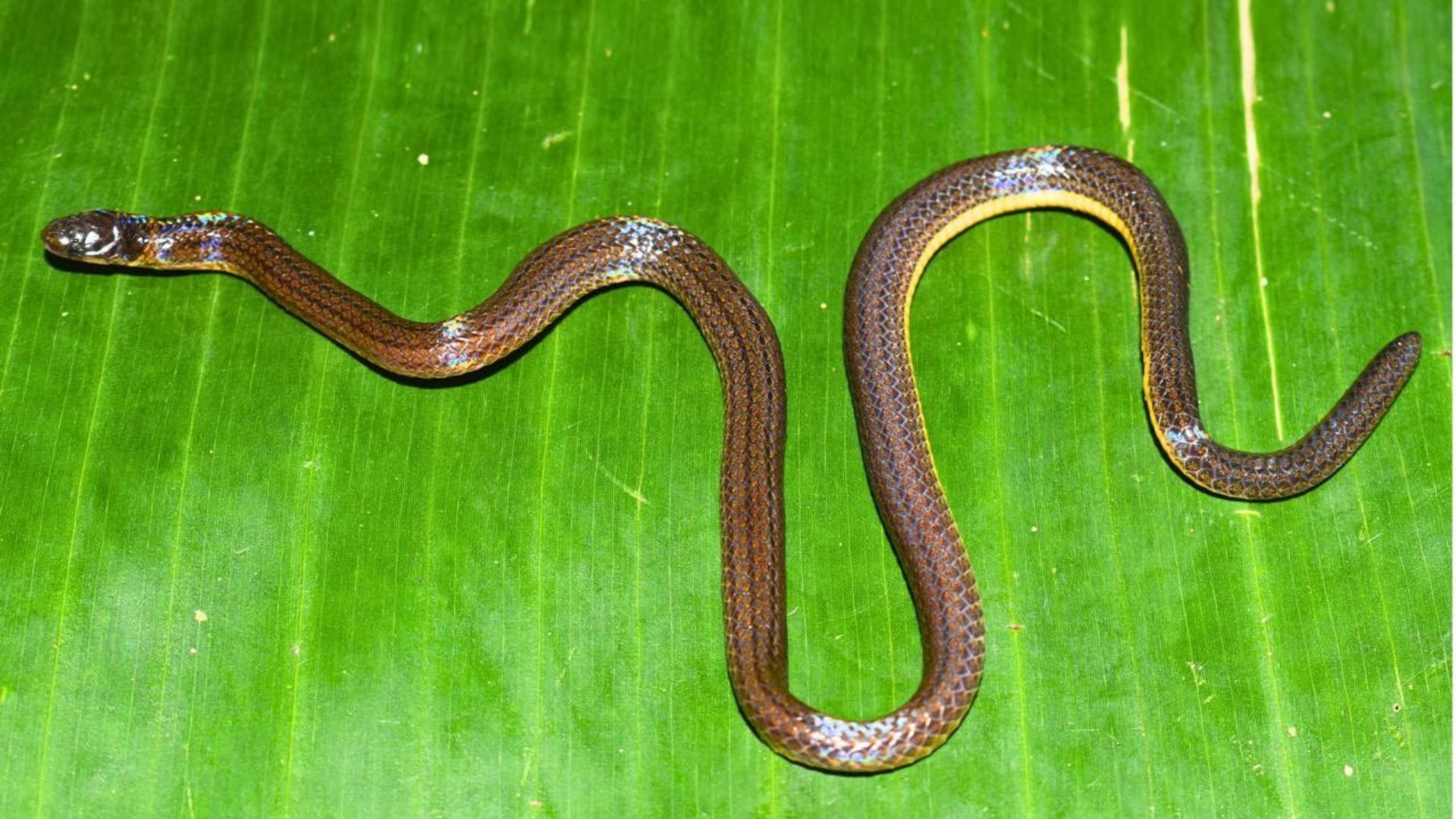
New Delhi: Scientists have described Calamaria garoensis, a new fossorial (burrowing) reed snake from the Garo Hills of Meghalaya in Northeast India. There has been a consistent taxonomic confusion in the region, with a number of snakes as identified as Calamaria pavimentata, across East and Southeast Asia for decades, with a long list of unresolved synonyms such as quadrimaculata, siamensis, uniformis, and formosana. The records from Northeastern India were routinely placed under this label until the description of a closely related species in Mizoram, Calamaria mizoramensis that showed that the snakes considered to be ‘pavimentata‘ in the region comprise of multiple distinct lineages.
The researchers obtained one fresh specimen that became the holotype, or the reference specimen for the species, during night surveys in Oragitok, in the West Garo Hills, after rainfall, when burrowing snakes seek out thee surface. Four additional museum specimens were examined from the Zoological Survey of India, Shillong. DNA and morphological examinations revealed the new species. Comparisons with all nominal taxa in the pavimentata complex using original descriptions and type data confirmed no match. The species is only known from mid-elevation sites in the Garo Hills and is believed to be endemic to the region. A paper describing the new species has been published in Taprobanica.
Meghalaya CM Conrad Sangma congratulates scientists
The Chief Minister of Meghalaya, Conrad K Sangma commended the efforts of the researchers in a post on X, “Heartiest congratulations to the team of researchers on the discovery of a new snake species, Calamaria garoensis, found in the Garo Hills. This remarkable discovery highlights the rich and unique biodiversity of our State and the immense value of our forests. Commend the dedicated efforts of the researchers from Help Earth, Cotton University, Assam Don Bosco University, Mizoram University, Zoological Survey of India, and the National Research and Innovation Agency (Indonesia) for bringing global attention to Meghalaya’s natural heritage.”