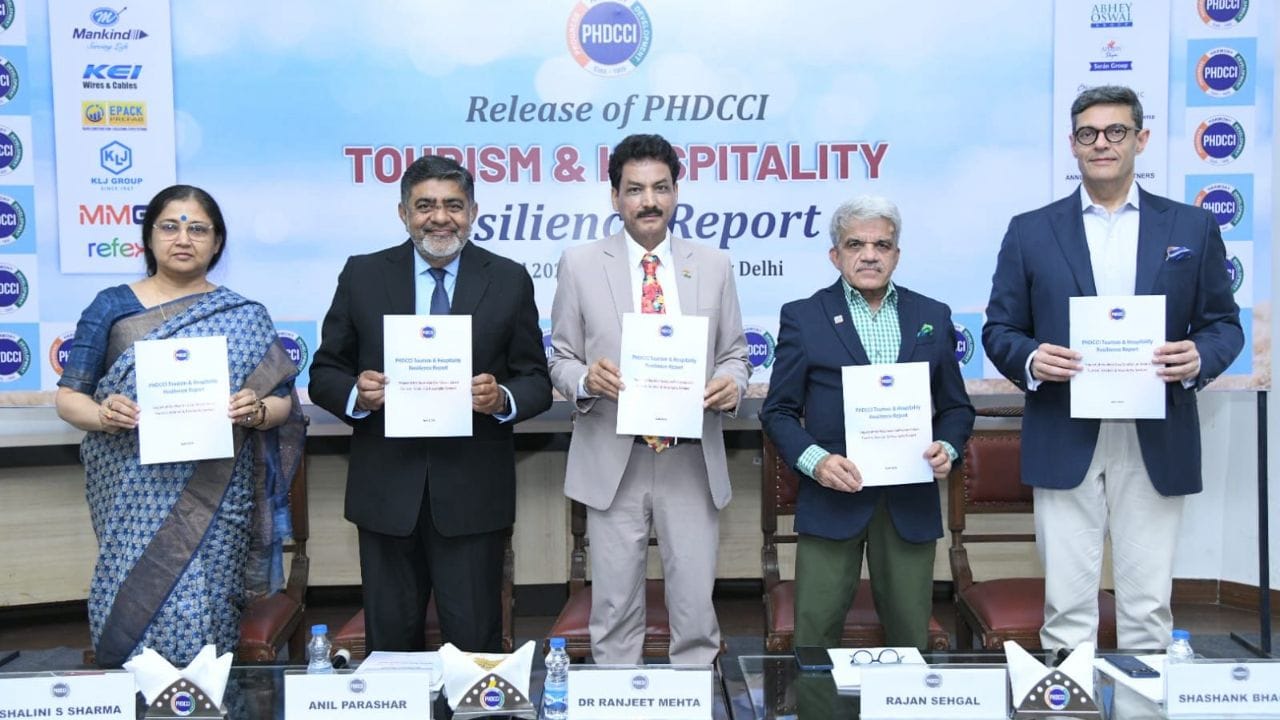
PHDCCI report
The impact of ongoing tensions in West Asia is now clearly visible on India’s aviation, tourism and hospitality sectors. According to the latest report of PHDCCI, there has been a decline of 1520% in inbound tourist traffic, while the entire industry has suffered a net loss of around Rs 18,000 crore.
Aviation sector hit the hardest
According to the report, the aviation industry has been most affected by this crisis. Due to airspace restrictions, flight cancellation and rerouting, flight time has increased by 24 hours. This has led to a huge increase in fuel consumption and operating costs. Fuel already accounts for 3540% of the airlines’ costs, so there is direct pressure on profits.
Decline in tourism, changed attitude of travelers
Due to global uncertainty, foreign tourists are avoiding coming to India, due to which inbound tourism has decreased by 1520%. At the same time, Indian travelers are now giving preference to nearby countries like Thailand, Singapore and Vietnam instead of long distance travel.
Hospitality sector sustained by domestic demand
However, strong demand for domestic travel has supported the hotel industry. But rising energy costs, expensive inputs and lack of foreign tourists have hit profits, especially at premium and business hotels.
Pressure on restaurant business too
According to the report, input costs in the restaurant sector have increased by 1015%. Due to this, there has been a decline in business worth Rs 79,000 crore every month and about 10% of the restaurants have been closed. Premium dining has been impacted by the lack of foreign customers, although food delivery and domestic demand are providing some relief.
What are the further measures?
The report suggests that air routes should be diversified, taxes should be reduced on ATF and hospitality sector and easy loans should be given to MSMEs. Also, the impact of this crisis can be reduced by promoting domestic tourism. Even though the current situation is challenging, India’s tourism and hospitality sector can rebound in the long term on the back of strong domestic demand.