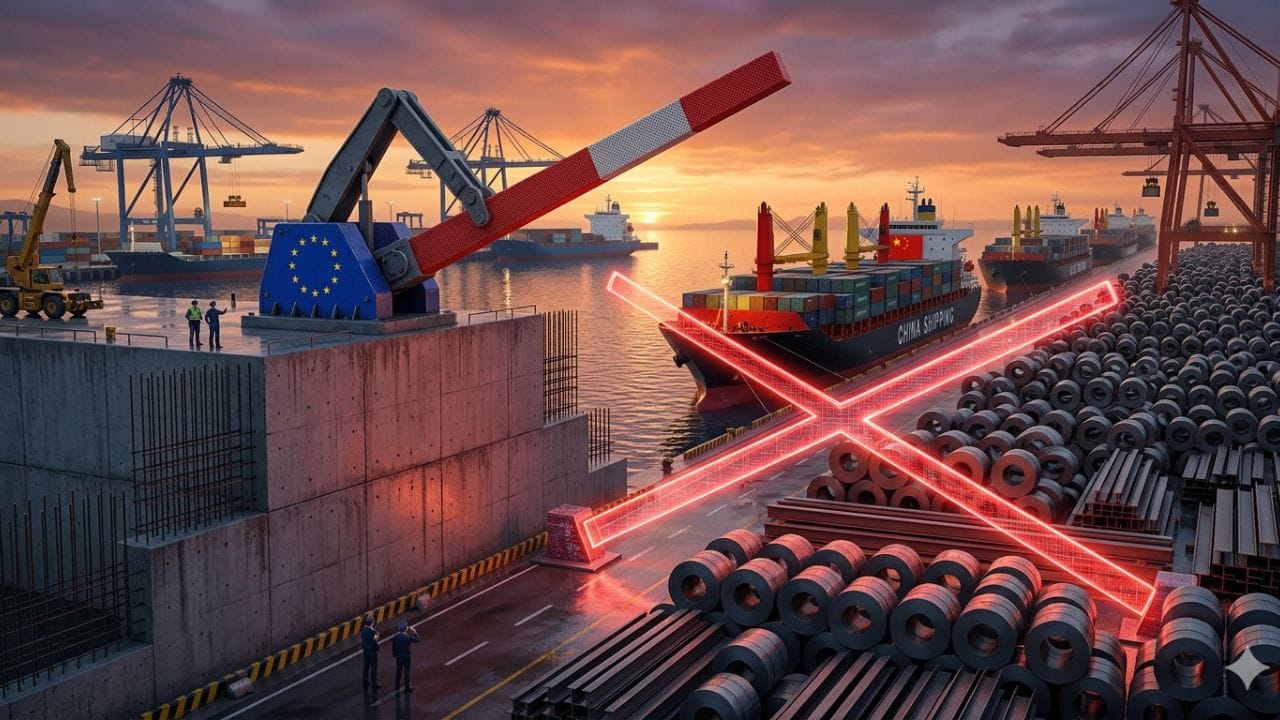
European Union lawmakers and countries agreed Monday to double tariffs on foreign steel to protect struggling industries in EU countries from a flood of cheap Chinese exports. EU governments and parliament representatives reached an agreement late in the evening to increase tariffs on steel imports to 50 percent and cut the volume of imports allowed by 47 percent before the tariffs took effect. EU trade chief Maros Sefcovic commented that the nature and global position of Europe’s steel sector is fundamental to our strategic autonomy and industrial strength. Therefore, we cannot ignore the situation of production capacity reaching dangerous levels at the global level. He said today’s result will help provide our producers with the much-needed stability to thrive in Europe.
This proposal was approved
Under the agreement, which is based on a proposal put forward by the European Commission last year, the tariff-free quota on imports will be reduced to 18.3 million tonnes annually — the same total amount the EU imported in 2013. That year was chosen because the EU believes that at that time market imbalances had developed, largely due to excess production — and largely attributable to China, which heavily subsidizes local steelmakers and now produces more than half the world’s steel.
2.30 lakh jobs will be saved
European steel industry group Eurofer welcomed the deal, saying it would help save about 230,000 jobs in Europe. “We are extremely pleased,” Eurofer’s Carl Tachelet told AFP, calling the improvement “phenomenal”. He said these steps alone are not enough to improve the situation in the troubled sector — which also grapples with problems like high energy costs — but the measures were “an essential condition for reviving the industry and making it economically viable again.”
Steel production was reduced in Europe
European steel production fell to about 126 million tonnes last year, a historic low, compared with the 960 million tonnes produced in China. At the same time, imports also reached record levels, according to industry data, and imports will account for almost one-third of total European steel consumption in the third quarter of 2025.
This decision will not apply to these countries
European manufacturers have also been hit by tariffs imposed by US President Donald Trump — these tariffs have been imposed at the rate of 50 percent on steel and aluminum imports. These new measures will apply to products imported from all countries, except the European Economic Area member countries – Iceland, Liechtenstein and Norway. This will replace the current security scheme, which is ending at the end of June. Under this scheme, 25 percent duty is imposed on imports in excess of the fixed import quota. This agreement is temporary and must be officially approved by the European Council and Parliament, representing member states, before it can be formally adopted.