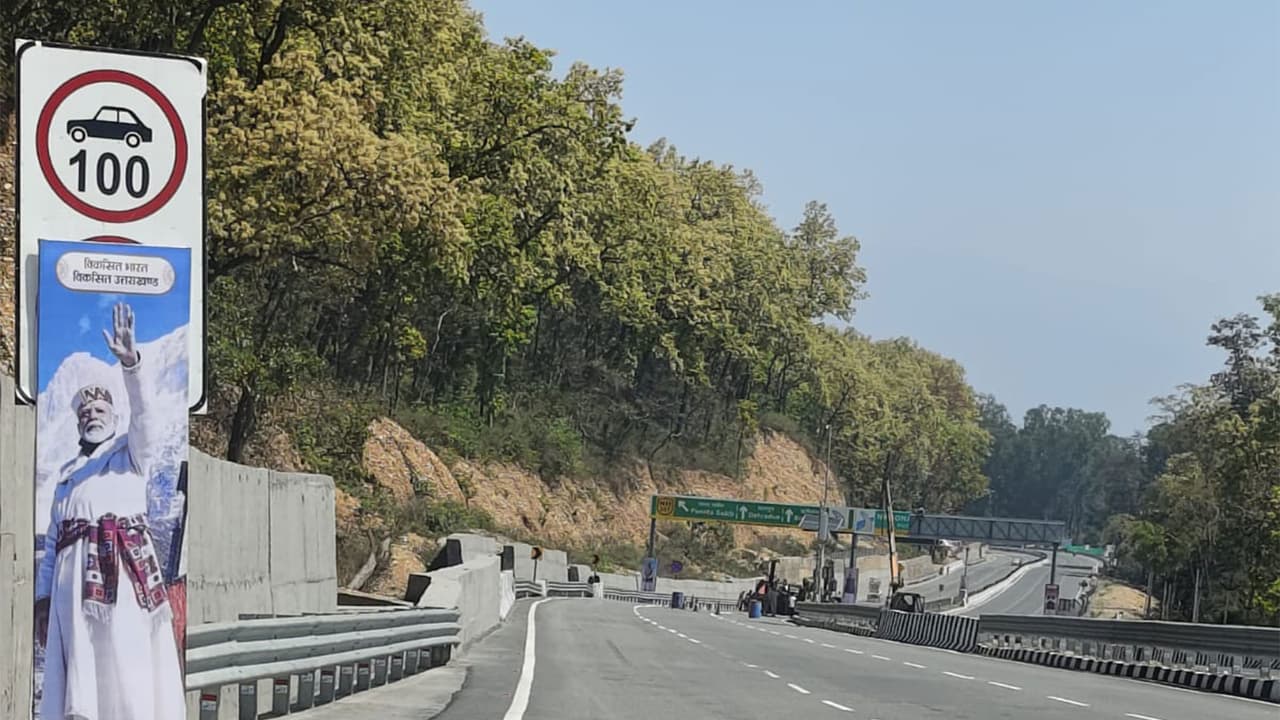
Real estate experts predict the new Delhi-Dehradun Expressway will significantly boost property prices by 15-25% in key areas. The corridor is expected to cut travel time by half, spurring demand in residential, commercial, and industrial segments.
Real estate industry players on Tuesday said the newly inaugurated Delhi-Dehradun Expressway is set to significantly boost property demand and prices across its corridor, with estimates of 15-25 per cent appreciation in key micro-markets over the next 18-24 months.
Prime Minister Narendra Modi today inaugurated the six-lane Delhi-Dehradun Economic Corridor in Dehradun, a 213 km long access-controlled highway built at a cost of over Rs 12,000 crore. The project is expected to reduce travel time between Delhi and Dehradun from six hours to approximately two-and-a-half to three hours.
Property Appreciation and Second-Home Demand
According to Pyush Lohia, Managing Director, Lohia Worldspace, the expressway is expected to play a transformative role in reshaping real estate demand not only in Delhi NCR but also in emerging tier-2 cities such as Moradabad. “Micro-markets including Ghaziabad’s Sahibabad belt and key East Delhi locations are likely to witness an appreciation of 15-25 per cent over the next 18-24 months, driven by improved connectivity and infrastructure,” he said, while advising investors to focus on developer credibility and long-term livability.
Anupam Rastogi, Co-founder and CBO at Square Yards, also highlighted that the expressway would be instrumental in expanding the NCR influence zone deeper into Uttarakhand. “The travel time is expected to be reduced by nearly 50 per cent. Dehradun will see a surge in second-home demand, plotted developments, and villa communities, while NCR and western Uttar Pradesh micro-markets will attract both end-users and investors,” he said.
Boost for Industrial and Hospitality Sectors
Vimal Nadar, National Director and Head of Research at Colliers India, said the expressway will strengthen regional connectivity and boost industrial and warehousing demand across key hubs such as Ghaziabad, Noida, Greater Noida, and Meerut, connecting them with cities like Muzaffarnagar, Saharanpur, and Dehradun. “We anticipate 1-2 million sq. ft. of Grade A supply infusion in these micro-markets in the coming years, with annual leasing potentially reaching 1-1.5 million sq. ft.,” he said, adding that hospitality and second-home markets in Haridwar, Rishikesh, and Dehradun are also expected to benefit.
Catalyst for Broader Economic Growth
Sahil Agarwal, CEO of Nimbus Group, noted that the expressway will not only impact housing but also trigger broader economic activity. “There is a larger economic shift, where improved access is expected to bring in a wave of commercial development. Over time, retail formats, healthcare, hospitality, office spaces, and even IT-led ecosystems are likely to emerge, steadily transforming the stretch into a far more dynamic growth belt,” he said.
Impact on Tourism and New Investment Hubs
Yash Miglani, Managing Director of Migsun Group, said the expressway would act as a game-changer for both real estate and tourism in North India. “With the expressway becoming operational, travel from Delhi to Dehradun and nearby hill stations will become faster and more convenient, giving a significant boost to weekend tourism. From a real estate perspective, cities like Baghpat, Shamli, and Saharanpur are expected to emerge as new investment hubs,” he said.
A Window for Long-Term Investors
Sanchit Jain, Director at Sarvottam India, termed the corridor an attractive opportunity for long-term investors. “For investors with a medium- to long-term view, this is a well-timed entry window, with strong potential for value creation as the corridor evolves. As connectivity strengthens and infrastructure continues to take shape, property values along the corridor are expected to see a strong upward movement,” he said.
So the industry experts believe the Delhi-Dehradun Expressway will unlock new growth opportunities across residential, commercial, and industrial segments, significantly reshaping the real estate landscape across the region. (ANI)
(Except for the headline, this story has not been edited by Asianet Newsable English staff and is published from a syndicated feed.)