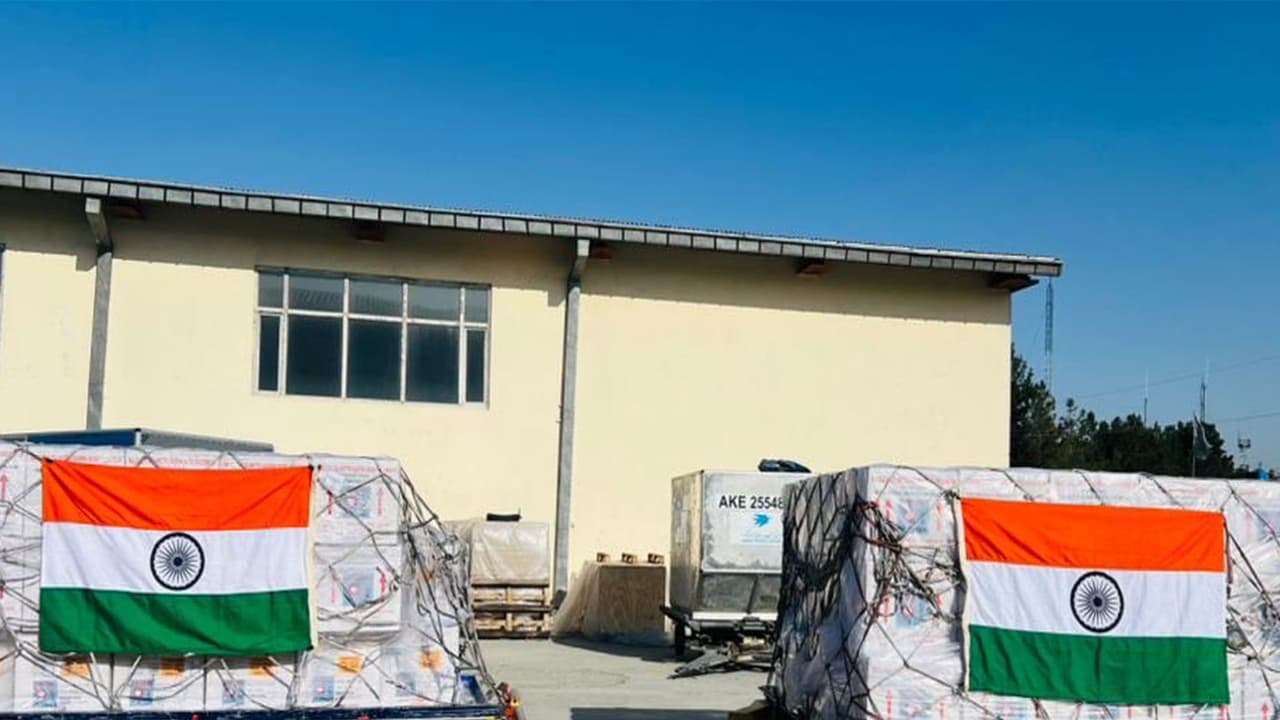
India has delivered 13 tonnes of BCG vaccines and related materials to Afghanistan to augment its child immunisation programme against tuberculosis. The consignment is part of India’s consistent humanitarian assistance to the Afghan people.
India Provides Vaccine Support to Afghanistan
India on Tuesday said that it has delivered 13 tonnes of Bacille Calmette-Guerin (BCG) vaccines along with related dry material to support Afghanistan’s child immunisation efforts against tuberculosis, according to the Ministry of External Affairs.
In a post on X, MEA spokesperson Randhir Jaiswal said, “India delivers 13 tons of BCG vaccines and related dry material to @MoPH_afg to augment Afghanistan’s child immunisation programme against tuberculosis.” India delivers 13 tons of BCG vaccines and related dry material to @MoPH_afg to augment Afghanistan’s child immunization programme against tuberculosis.@WHO @UNICEF pic.twitter.com/tTh6GVLrqK — Randhir Jaiswal (@MEAIndia) April 14, 2026
The consignment was sent to Afghanistan’s Ministry of Public Health to augment the country’s child immunisation programme against tuberculosis.
Ongoing Humanitarian Assistance
India has been known to consistently provide humanitarian assistance to Afghanistan, including medical supplies and vaccines, as part of its ongoing support to the Afghan people, even after the earthquake in Afghanistan on April 3.
Earlier on April 5, the Ministry of External Affairs said that India had delivered humanitarian assistance to support flood and earthquake-hit Afghanistan.
In a post on X, MEA Spokesperson Randhir Jaiswal said at that time that India delivered humanitarian assistance and disaster relief (HADR) materials, including kitchen sets, hygiene kits, plastic sheets, tarpaulins, sleeping bags, and more.
“India stands in solidarity with the people of Afghanistan and remains committed to extending humanitarian assistance and support during this challenging time,” he said.
According to the National Disaster Management Authority, heavy rains and floods had destroyed 131 houses and partially damaged 650 others. More than 3,000 jeribs of agricultural land have also been affected.
Taliban Criticizes UN Sanctions
Meanwhile, the Afghanistan government has sharply criticized the United Nations’ sanctions regime following the latest update to listings targeting senior leaders, calling the measures “unreasonable and ineffective.”
Speaking in response to the move, spokesperson Zabihullah Mujahid said the continued use of sanctions reflects a failure of policy and analysis. He argued that repeating such measures “lacks logic” and suggests that international bodies have not properly assessed their impact.
Mujahid said the move ultimately harms ordinary Afghans rather than decision-makers, warning that restrictions placed on individuals extend to government institutions and broader society.
The comments came after the United Nations Security Council (UNSC) announced updates to its sanctions list as part of ongoing enforcement efforts. The council’s 1988 Sanctions Committee confirmed revisions to identifying details for four senior Taliban officials: Mohammad Hassan Akhund, Abdul Ghani Baradar, Amir Khan Muttaqi, and Hedayatullah Badri. (ANI)
(Except for the headline, this story has not been edited by Asianet Newsable English staff and is published from a syndicated feed.)