U.S. President Donald Trump announced on Sunday that the U.S. Navy will commence an immediate blockade to prevent ships from entering or exiting the Strait of Hormuz, following inconclusive peace talks between the U.S. and Iran in Pakistan.
Trump’s directive comes after Iran insisted on the right to impose tolls on vessels transiting through the strait, a demand Trump rejected, stating that no vessel paying these tolls would have ‘safe passage on the high seas.’
Details of the Peace Talks
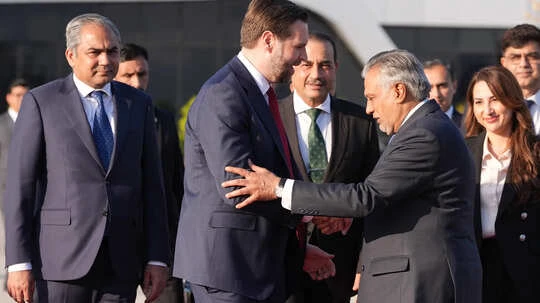
The United States and Iran concluded 21 hours of direct negotiations in Islamabad without reaching a consensus, leaving the status of the fragile ceasefire, which has been in effect for two weeks, uncertain.
Vice President JD Vance emphasized the necessity for Iran to commit to not pursuing nuclear weapons during a press briefing, stating, ‘The simple fact is that we need to see an affirmative commitment that they will not seek a nuclear weapon.’
This ongoing conflict has resulted in thousands of casualties and has significantly impacted global markets, now entering its seventh week.
Implications for Oil Prices
Energy analyst Michael Lynch predicted that Trump’s blockade threat could lead to a rise in oil prices by $5 to $10 when markets reopen. Brent crude oil prices have fluctuated significantly, peaking at over $119 per barrel since the war began.
Lynch noted that the blockade could remove an estimated 2 million barrels of oil per day from the market, compounding the effects of the ongoing conflict that has already disrupted approximately 10 million barrels per day.
He remarked, ‘This is a pretty big insult to a pretty big injury,’ while suggesting that the blockade might not last long due to potential pressure on Trump to reverse his decision.
Iran’s Response to U.S. Threats
Iran’s parliament speaker, Mohammad Bagher Qalibaf, responded to Trump’s blockade announcement, asserting that Iran does not yield to threats. He stated, ‘If you fight, we will fight,’ and described the discussions in Pakistan as ‘intensive, serious and challenging.’
While Qalibaf acknowledged some progress in negotiations, he refrained from detailing the nature of this progress or Iran’s proposals.
Negotiations on Lebanon Conflict
Lebanon’s Prime Minister Nawaf Salam reaffirmed his government’s commitment to resolving the conflict through negotiations, coinciding with the anniversary of Lebanon’s civil war.
Upcoming talks in Washington aim to address the ongoing conflict between Israel and Hezbollah, with Lebanon’s government insisting on a ceasefire as a prerequisite for discussions.
Protests in Beirut reflect the divided opinions on the government’s ability to navigate these negotiations effectively.
Impact of the Blockade on Regional Stability
Experts have voiced concerns that the blockade may exacerbate tensions in the region. Kevin Book from ClearView Energy Partners noted that tighter oil supplies could lead to increased prices, contingent on how the blockade is executed.
He added that Iran’s potential retaliatory actions against Gulf producers could further disrupt stability in the region.
U.S. Red Lines in Negotiations
According to a U.S. official, the negotiations aimed to clarify America’s red lines, which Iran’s representatives could not fully accept. These include demands for Iran to cease uranium enrichment and to dismantle its enrichment facilities.
The U.S. aims to leverage the blockade as a demonstration of its resolve in negotiations with Iran.
Military Developments in the Region
Israeli Prime Minister Benjamin Netanyahu visited southern Lebanon, asserting that Israel’s military strategy has transformed the regional landscape. He highlighted efforts to establish a buffer zone to mitigate threats from Hezbollah.
Iran’s Revolutionary Guard Navy claimed it maintains control over the Strait of Hormuz, stating that military vessels would face a firm response if they approached the area.
International Reactions and Future Implications
Saudi Arabia expressed concerns over drone attacks from Iraqi territories, summoning the Iraqi ambassador to address the situation. The Islamic Resistance in Iraq announced a temporary halt to its operations amid the ceasefire.
Iran’s President Masoud Pezeshkian emphasized the country’s willingness to pursue a balanced agreement for regional peace while criticizing U.S. military actions in the Gulf.