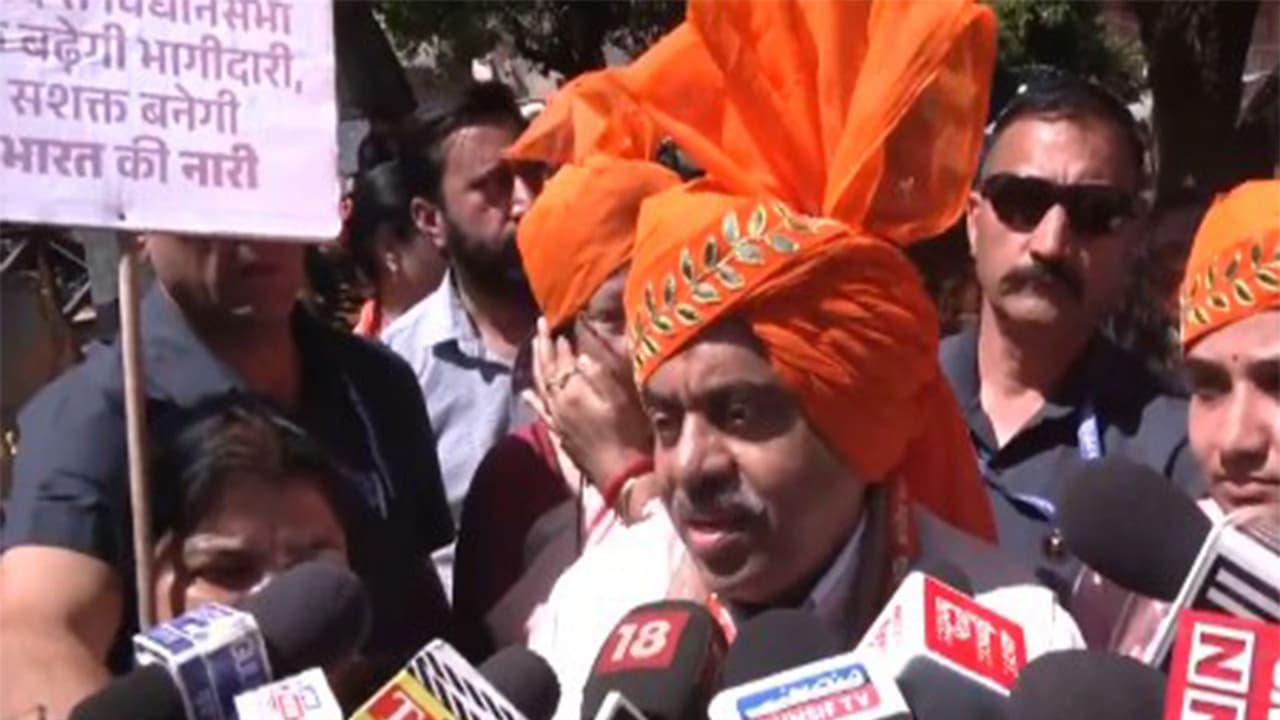
BJP’s Tarun Chugh called the Women’s Reservation Bill a ‘golden moment’ for India’s democracy at a Jammu rally. He stated that women will now sit in Parliament, make laws, and directly participate in running the country, strengthening governance.
A ‘Golden Moment’ for Indian Democracy
BJP National General Secretary Tarun Chugh on Sunday stated that with the Women’s Reservation Bill, women will now sit in Parliament, make laws, and directly participate in running the country, calling it a “golden moment” for India’s democracy. He made the remarks after flagging off a bike and scooty rally organised by the BJP Mahila Morcha in Jammu in support of the Women’s Reservation Bill.
Addressing the occasion, Chugh said the passage of the Women’s Reservation Bill marks a historic moment in India’s democratic journey, stating that women will now play a direct role in lawmaking and governance. “Today, daughters will sit in the country’s largest panchayat (Parliament) and influence the country’s decisions. They will make rules, laws, and run the country,” he told reporters.
He added that women’s progress is directly linked to national progress, saying, “I believe that where the daughter progresses, the country progresses. Just as a daughter is the ornament and pride of a home, so too is she the pride of the nation.”
Chugh said Prime Minister Narendra Modi has consistently focused on women’s empowerment through initiatives like ‘Beti Bachao, Beti Padhao’, and added that the government is now giving greater decision-making roles to women. “Today, Modi ji has given the ‘Beti Bachao, Beti Padhao, Beti Badhao’ slogan and now he is handing over the command of the country to the daughters,” he said.
He further said that women’s participation will strengthen governance, adding, “The country’s largest panchayat will now be in the hands of daughters. I believe that the sweetness, bravery, diversity, and the scholar within daughters will give direction to the country’s policies.”
Women Excel in Every Field
Highlighting women’s performance across sectors, he said, “Just as she manages her home with ease, performs her duty with ease… whichever field you send her to, she excels. If she becomes a doctor, she’s the best doctor, if she becomes a teacher, she’s the best teacher…Now, Modi ji gave them 33% reservation in security agencies…”
He also referred to women’s role in security forces, saying women are already serving the nation as BSF personnel and protecting borders.
Chugh said the Women’s Reservation Bill marks a “golden moment” and a “changing India”, adding that the move will strengthen democracy and ensure greater participation of women in governance. “This is a moment to take daughters to new heights. This historic moment is being watched by the whole world. The world’s largest democracy is bringing a golden change in its democracy. Where democracy will be strengthened, 50% of the country’s population will get their 100% rights,” he said.
Legislative Amendments Planned
The Parliament is set to meet for a three-day special session starting April 16, with a focus on the Women’s Reservation Amendment Bill. The Government has planned two major amendments. 2023’s Nari Shakti Vandan Act tied women’s reservation to the new census and delimitation. Due to census delays, the plan is to proceed with the 2011 census data.
The 2011 census is to be the basis for delimitation and seat redistribution. Lok Sabha seats may increase from 543 to 816 post-amendment. A bill will be introduced in Parliament to amend the Nari Shakti Vandan Act. A separate Delimitation Bill will be introduced. Both bills need to be passed as Constitutional amendments for women’s reservation.
The new Lok Sabha is likely to have more than 800 seats. Keeping up with the status quo, there is no provision for OBC reservation, and SC/ST reservation will continue. However, states won’t have a role; the bill passed by Parliament will apply to them.
Currently, the Lok Sabha has 543 seats. With a proposed 50 per cent increase, the number of seats will rise to 816, with 273 (about a third) reserved for women. The government’s key point is that they won’t wait for a new census to give women, comprising half the country’s population, fair representation in Parliament. Instead, delimitation will be done using the 2011 census data. (ANI)
(Except for the headline, this story has not been edited by Asianet Newsable English staff and is published from a syndicated feed.)