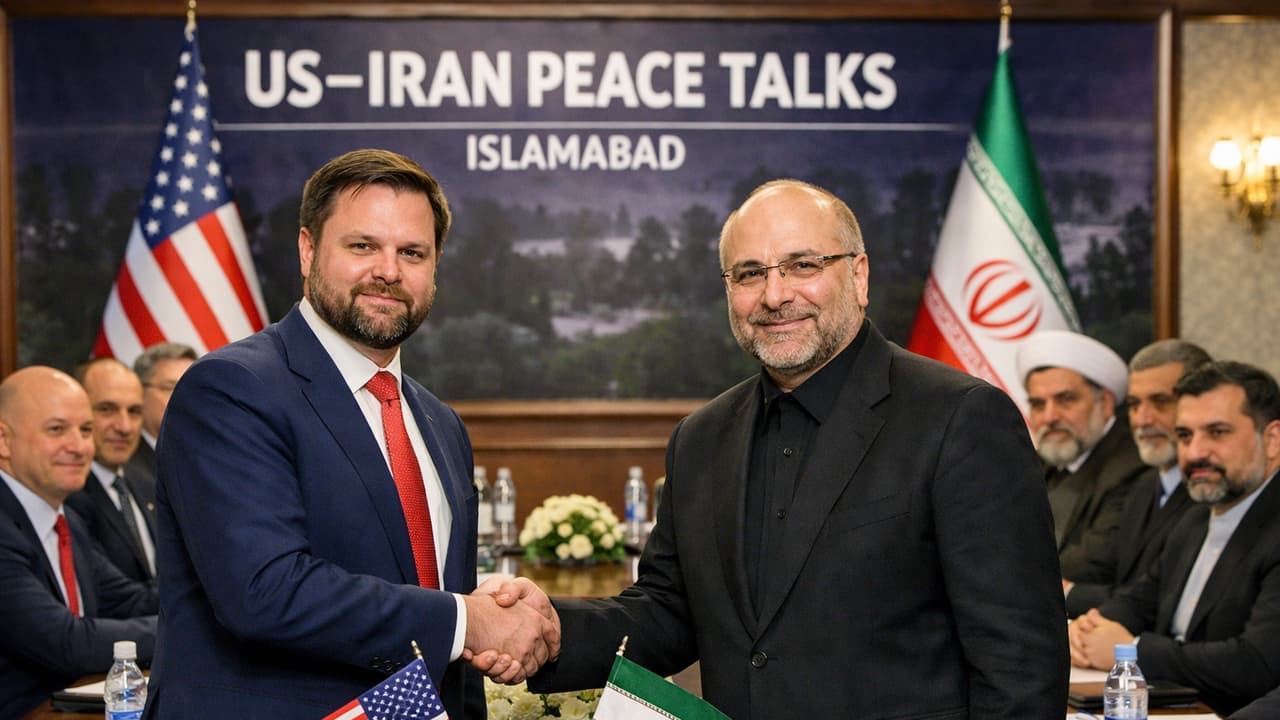
US-Iran Talks Fail: 21-hour talks in Islamabad remained inconclusive. Iran rejected America’s “excessive demands”, while the US called it a major mistake. Conflict increased over Hormuz and nuclear issue – will the ceasefire be broken now or will Plan B come?
Iran vs USA: High-level US–Iran peace talks held in Islamabad ultimately ended without any agreement. It was hoped that this conversation, which lasted for about 21 hours, would lead to permanent peace after the 40-day war, but it did not happen. While America said that Iran did not accept its conditions, Iran directly accused – “US was demanding everything which it could not achieve through war.” This conflict became the biggest reason for this entire conversation.
Did US’s ‘excessive demands’ really become the reason for failure of talks?
Iran clearly says that America put forward such conditions in the talks which were one-sided. According to Tehran, Washington wanted to achieve things on the table that it could not do during the war. So Iran simply said “NO” and the talks ended there.
Did the Strait of Hormuz become the biggest controversy?
The Strait of Hormuz has become the center of this entire controversy. Iran has made it clear that unless there is a “credible ceasefire”, this important oil route will remain closed. This means that there may be a direct impact on global oil supply and economy.
Has the conflict over nuclear rights increased?
The second big issue of Iran is its nuclear program. America wants Iran to guarantee not to make nuclear weapons, while Iran considers it a part of its right. This is the reason why both the countries could not reach any common ground.
Are the statements of the two countries completely opposite to each other?
- America says: “Iran rejected our conditions”
- Iran’s answer: “The demands of the US were impractical”
Iranian officials also said the talks took place in an “atmosphere of mistrust,” so it was wrong to expect an agreement in a single meeting. That means lack of trust is still the biggest problem.
Can the ceasefire be broken now and the war start again?
This is the biggest question after talks fail. The US has already warned of military action, and Iran has also remained tough on its stance. If no new agreement is reached soon, tensions in the Middle East may increase further. The failure of US-Iran talks is not just a diplomatic news, but a big global signal. Oil supplies, inflation, and the threat of war—everything now depends on this conflict.