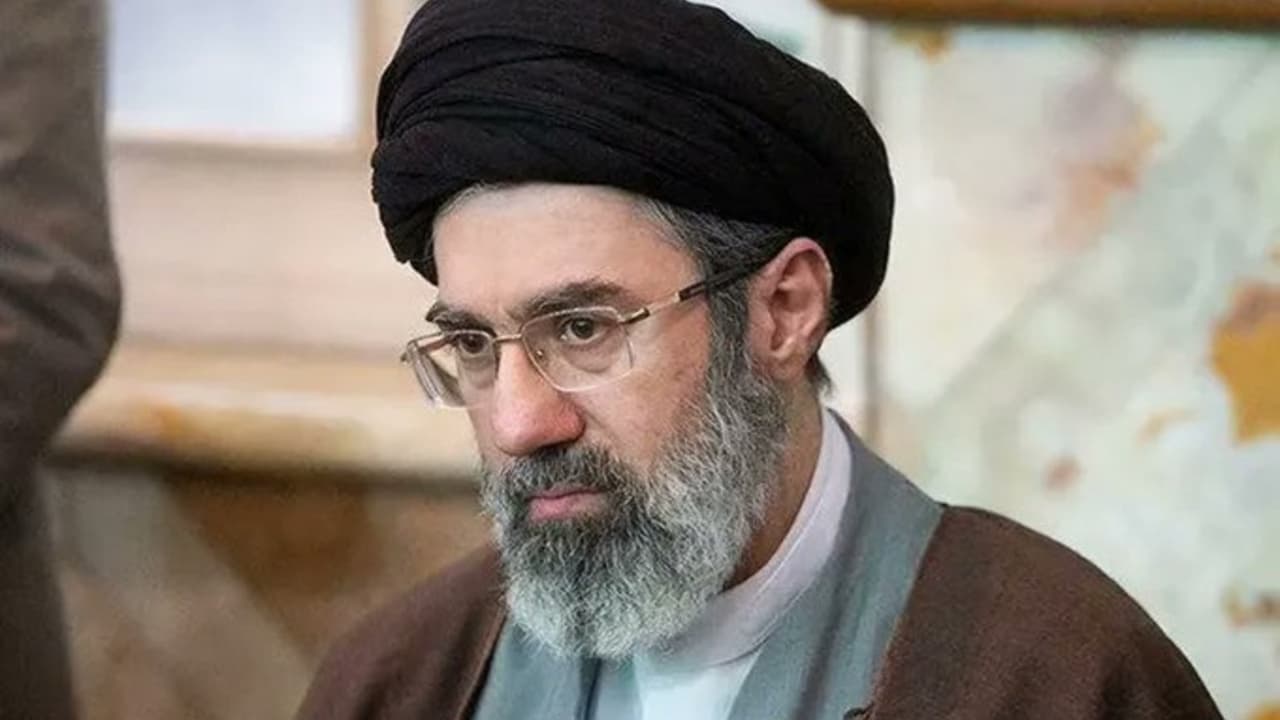
Iran’s new Supreme Leader, Mojtaba Khamenei, is reportedly recovering from severe injuries sustained in the airstrike that killed his predecessor and father, Ali Khamenei. He assumed power in March but has not appeared publicly, fueling speculation about his condition, which includes major facial and leg damage.
Severe Injuries Reported After Deadly Strike
Iran’s newly appointed Supreme Leader, Mojtaba Khamenei, is reportedly recovering from severe and disfiguring injuries sustained during a devastating airstrike that killed his father and predecessor, Ali Khamenei. The revelations, based on accounts from individuals close to his inner circle, have raised serious concerns about his physical condition and its implications for Iran’s leadership.
According to sources, Mojtaba Khamenei suffered extensive facial injuries that left his face disfigured, along with major damage to his legs. The injuries were reportedly sustained when a strike targeted the supreme leader’s compound in Tehran during the early phase of the ongoing conflict. The attack marked a turning point, not only due to the loss of Ali Khamenei but also because it directly impacted Iran’s line of succession.
A Leadership Transition Amid Crisis
Following the death of Ali Khamenei, Mojtaba Khamenei assumed the role of Supreme Leader in March under extraordinary circumstances. His elevation came at a time when Iran was already grappling with escalating conflict, mounting international pressure, and internal uncertainty.
Despite the severity of his injuries, sources claim that he remains “mentally sharp” and continues to engage in governance. He is believed to be participating in key decision-making processes, including war strategy and diplomatic engagements, even as he recovers away from public view.
However, the unusual nature of his succession—combined with his physical condition—has prompted intense scrutiny. Unlike traditional leadership transitions in Iran, this shift occurred abruptly, under the shadow of violence and instability.
Also Read: ‘New Stage’ in Strait of Hormuz: Mojtaba Khamenei Vows ‘Revenge for Martyrs’ Amid Rising Tensions
Absence From Public View Fuels Speculation
One of the most striking aspects of Mojtaba Khamenei’s leadership so far has been his complete absence from public appearances. Since assuming power, there have been no verified visuals, speeches, or live addresses from him.
This lack of visibility has fuelled widespread speculation about the true extent of his injuries. While official narratives suggest he is recovering and actively involved in governance, unverified reports have hinted at far more serious complications, including long-term incapacitation.
In a political system where public messaging and symbolic authority play a crucial role, his absence has created an information vacuum. Social media platforms have been flooded with theories, debates, and concerns regarding who is truly in control behind the scenes.
Conflicting Reports on His Condition
Reports about Mojtaba Khamenei’s health remain inconsistent and, at times, contradictory. While some sources emphasise that he is recovering and maintaining cognitive clarity, others suggest that his injuries may be far more debilitating.
There have been claims that he could have suffered the loss of a limb or may be facing prolonged medical challenges. However, these assertions remain unverified, and Iranian authorities have largely dismissed concerns about his ability to govern.
State-linked narratives have instead portrayed him as resilient, even referring to him as a “janbaz”—a term used in Iran to describe war veterans who have sustained serious injuries. The label carries a sense of honour but also reinforces the gravity of his condition.
Impact on Governance and Power Dynamics
The uncertainty surrounding Mojtaba Khamenei’s health has inevitably raised questions about governance in Iran. While he is said to be actively participating in decision-making, his physical limitations could affect how authority is exercised.
Analysts suggest that powerful institutions such as the Islamic Revolutionary Guard Corps (IRGC) may be playing an increasingly influential role during this period. In the absence of a visibly active leader, decision-making could become more decentralised or concentrated among key military and political figures.
This potential shift in power dynamics is being closely watched by international observers, as it could reshape Iran’s internal political structure and its approach to the ongoing conflict.
Also Read: Iran’s new leader vows punishment for US-Israel, demands compensation
High-Stakes Diplomacy Continues
Even as questions linger about his health, Mojtaba Khamenei is believed to remain involved in high-stakes diplomatic efforts. Iran is currently engaged in crucial negotiations with the United States, with talks being hosted in Islamabad.
These discussions are focused on de-escalation, ceasefire arrangements, and broader regional stability. The outcome of these talks could significantly influence the trajectory of the conflict and the geopolitical balance in the Middle East.
Khamenei’s reported participation—albeit remotely—signals that he continues to play a central role in shaping Iran’s strategic decisions, despite his physical condition.
Global Implications of Leadership Uncertainty
Iran’s position as a key regional power means that any uncertainty at the top of its leadership has far-reaching implications. The country plays a critical role in global energy markets, particularly through the Strait of Hormuz, a vital route for oil shipments.
Instability in Iran’s leadership could impact not only regional security but also global economic stability. Markets remain sensitive to developments in the region, and any sign of disruption can trigger volatility in oil prices and supply chains.
Furthermore, adversaries and allies alike are closely monitoring the situation, assessing how Iran’s leadership dynamics might influence its military and diplomatic posture.
The Human Cost of Conflict
Beyond the political and strategic dimensions, the situation highlights the human cost of the ongoing conflict. The strike that killed Ali Khamenei and injured Mojtaba was part of a broader wave of violence that has affected both leadership and ordinary citizens.
Thousands of lives have been impacted, with military personnel and civilians alike bearing the brunt of the conflict. The injuries sustained by Mojtaba Khamenei serve as a stark reminder that even the highest levels of leadership are not immune to the consequences of war.
A Leader Governing From the Shadows
For now, Mojtaba Khamenei’s leadership is defined by paradox. He is both central to Iran’s political system and largely invisible to the public. His reported ability to remain “mentally sharp” contrasts sharply with descriptions of severe physical injuries.
This duality has created a unique situation in modern governance—one where authority is exercised without visibility, and decisions are made behind closed doors amid intense global scrutiny.
As Iran continues to navigate one of the most volatile periods in its recent history, the condition and role of its supreme leader will remain a critical factor in shaping the country’s future. Whether Mojtaba Khamenei emerges stronger or whether his injuries lead to a deeper shift in power remains an open and closely watched question.
Also Read: “Not End Of War”: Iran Leader Mojtaba Khamenei Orders Forces To Stop Firing