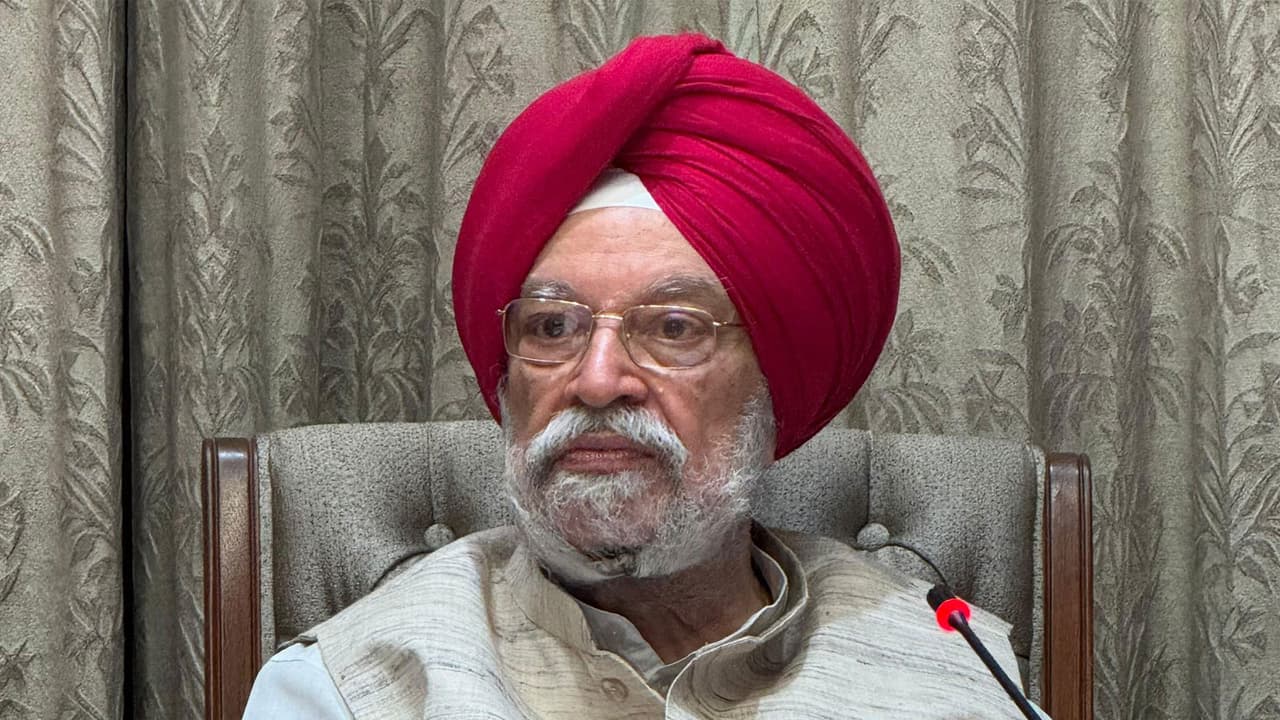
Petroleum Minister Hardeep Singh Puri lauded the HPCL Rajasthan Refinery as a testament to India’s energy self-sufficiency under PM Modi. He highlighted its massive engineering scale, calling it a ‘Jewel of the Desert’ set for a milestone inauguration.
The Minister of Petroleum and Natural Gas of India, Hardeep Singh Puri, on Saturday praised Hindustan Petroleum Corporation Limited’s Rajasthan Refinery Limited and said it is a testament to India’s unwavering commitment to achieving energy self-sufficiency, led by the leadership of Prime Minister Narendra Modi.
“HPCL Rajasthan Refinery Limited is a towering example of India’s undaunted efforts towards achieving Energy Aatmanirbharta under the decisive leadership of PM Sh @narendramodi Ji,” said Hardeep Singh Puri on X.
Located in Balotra, Rajasthan, this greenfield refinery-cum-petrochemical complex is a behemoth of modern engineering, with a capacity to process 9 million metric tonnes of crude oil per annum, Puri said.
A ‘Jewel of the Desert’: Unprecedented Scale
The sheer scale of this project is staggering – over 15 million cubic meters of earth excavated, equivalent to six times the volume required to build the Pyramids of Giza.
As Hardeep Singh Puri highlighted, “These figures define the scale and magnitude of this iconic Jewel of the Desert.”
The refinery’s infrastructure is equally impressive, with 1.6 million cubic meters of concrete used, which is five times more than what was used in the Burj Khalifa. Additionally, 300,000 metric tonnes of steel were deployed, equivalent to forty times the weight of the Eiffel Tower.
The 28,000 kilometres of cable laid is enough to wrap around the Earth twice, while the 125-meter-high Coke Dome installed is three times bigger than the iconic Gol Gumbaz.
Milestone Inauguration and Future Impact
Prime Minister Modi is set to inaugurate the refinery on April 21, marking a significant milestone in India’s pursuit of energy self-sufficiency. With its state-of-the-art technology and energy-efficient systems, the refinery is poised to become a game-changer in India’s energy landscape.
Geopolitical Context for Energy Security
This comes amid the escalation of tensions in West Asia since late February that has disrupted trade channels globally, affected by the closure of the Strait of Hormuz, a critical maritime chokepoint that handles around one-fifth of global seaborne oil trade, along with significant volumes of Liquefied Petroleum Gas. (ANI)
(Except for the headline, this story has not been edited by Asianet Newsable English staff and is published from a syndicated feed.)