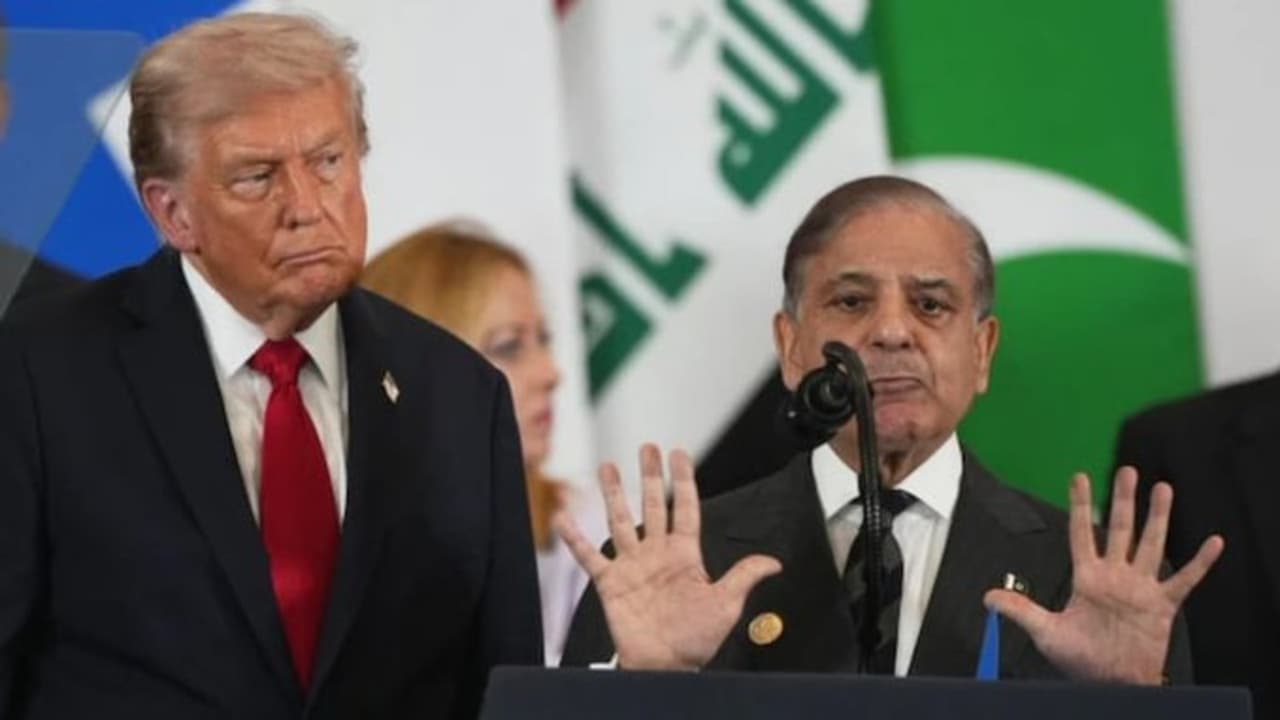
Iran and America are holding talks in Islamabad to end the war in the Middle East. China played an important role behind Pakistan’s mediation, which convinced Iran for a ceasefire. China has emerged as a key guarantor for the permanent agreement.
Envoys of Iran and America are preparing for talks in Islamabad to end the ongoing war in the Middle East. Official sources and experts say that the path for this negotiation was prepared by Beijing and China will also prove to be an important link for a permanent peace agreement. Although Pakistan is being praised across the world for establishing a temporary ceasefire between the two enemy countries, Pakistani officials say that the work done by China behind the scenes is equally important. On Tuesday night this agreement was almost about to be broken.
A senior Pakistani official associated with the talks, speaking on condition of anonymity, said, “On the night of the ceasefire, hopes were almost lost, but then China intervened and convinced Iran for the initial ceasefire.” He further said, “Our efforts were very important, but we fell short of success. Ultimately success came only when Beijing convinced the Iranians.”
President Donald Trump also said something similar. Shortly after announcing the two-week ceasefire on social media, he told AFP that China had played a key role in bringing Iran to the negotiating table. This conversation has raised a fragile hope of ending the war. This war started on February 28, when Israel and America launched attacks and Iran retaliated on Gulf countries and Israeli cities. Thousands of lives have been lost in this war and the world economy has been shaken.
Pakistan, which has deep cultural and religious ties with neighboring Iran and whose leaders also have good personal relations with Trump, will help both sides. To reach a concrete agreement, Pakistan will have to engage both sides on difficult issues like the opening of the Strait of Hormuz and Iran’s nuclear program. “Pakistan has formed a team of experts to assist both sides on movement of ships, nuclear and other matters,” said a second diplomatic source, requesting anonymity.
Other sources and several former officials told AFP that as Pakistan sets the table for talks, all eyes are on China’s role. “China was requested to become a guarantor. Iran wants a guarantor,” the source said. The second option was Russia, but it is fighting a war in Ukraine. Western countries, especially the European Union, never accept it. This meant that China was the ‘best fit’ for this work.
‘Forever friend’
Beijing has close relations with both Islamabad and Tehran. Despite tough US sanctions, China has been Iran’s largest trading partner for years. China has also invested billions of dollars in Pakistan under President Xi Jinping’s Belt and Road Initiative. Both governments call each other “ironclad brothers”. “Being close partners and neighbours, Pakistan and China have been working together since day one to end this war,” said Mushahid Hussain Syed, a former Pakistani senator and head of the defense and foreign affairs committees.
He further said, “China’s role as a guarantor will be very important for any final peace agreement, because Iran does not trust the pairing of Trump and (Israeli Prime Minister) Netanyahu.” Last month, when Pakistan’s foreign minister rushed to Beijing after talking to his Saudi, Turkish and Egyptian counterparts, China said it supported Pakistani efforts at mediation.
After this, China also started talks to reduce the increasing armed conflict between Pakistan and Afghanistan. China hosted Afghan government representatives and Pakistani officials in Urumqi after weeks of fighting. Hours before the ceasefire, China, together with Russia, took another major step that would have pleased Tehran. He vetoed a UN Security Council resolution on reopening the Strait of Hormuz. Since the beginning of the war, Iran has maintained a blockade here.
‘uphill climb’
China has not made much of its efforts to maintain peace. All he keeps repeating is that he is mediating and promoting cessation of hostilities. China’s Foreign Minister Wang Yi spoke by phone 26 times with his counterparts from the countries concerned, while Beijing’s Middle East envoy made several visits to the war-torn region, a Foreign Ministry spokesman said. Analysts and officials say it is not certain whether China will openly play the role of a formal guarantor in the coming weeks. “They have their own interests, they don’t want to be publicly dragged into this conflict,” a second source told AFP.
The path of negotiation is not easy. There is a big problem regarding Lebanon. The Prime Minister of Pakistan and Iran are insisting that Lebanon should also be included in the ceasefire, but Israel is refusing this. Israel, which Pakistan does not formally recognize, has been carrying out deadly attacks targeting the Iran-backed group Hezbollah in Lebanon. However, the US has said it will hold separate talks between Israeli and Lebanese officials in Washington next week. “The talks are very complex and sensitive…all sides will have to make painful compromises and concessions to reach a consensus,” the source concluded.
(Apart from the headline, this story has not been edited by Asia News Hindi staff and is published from a syndicated feed)