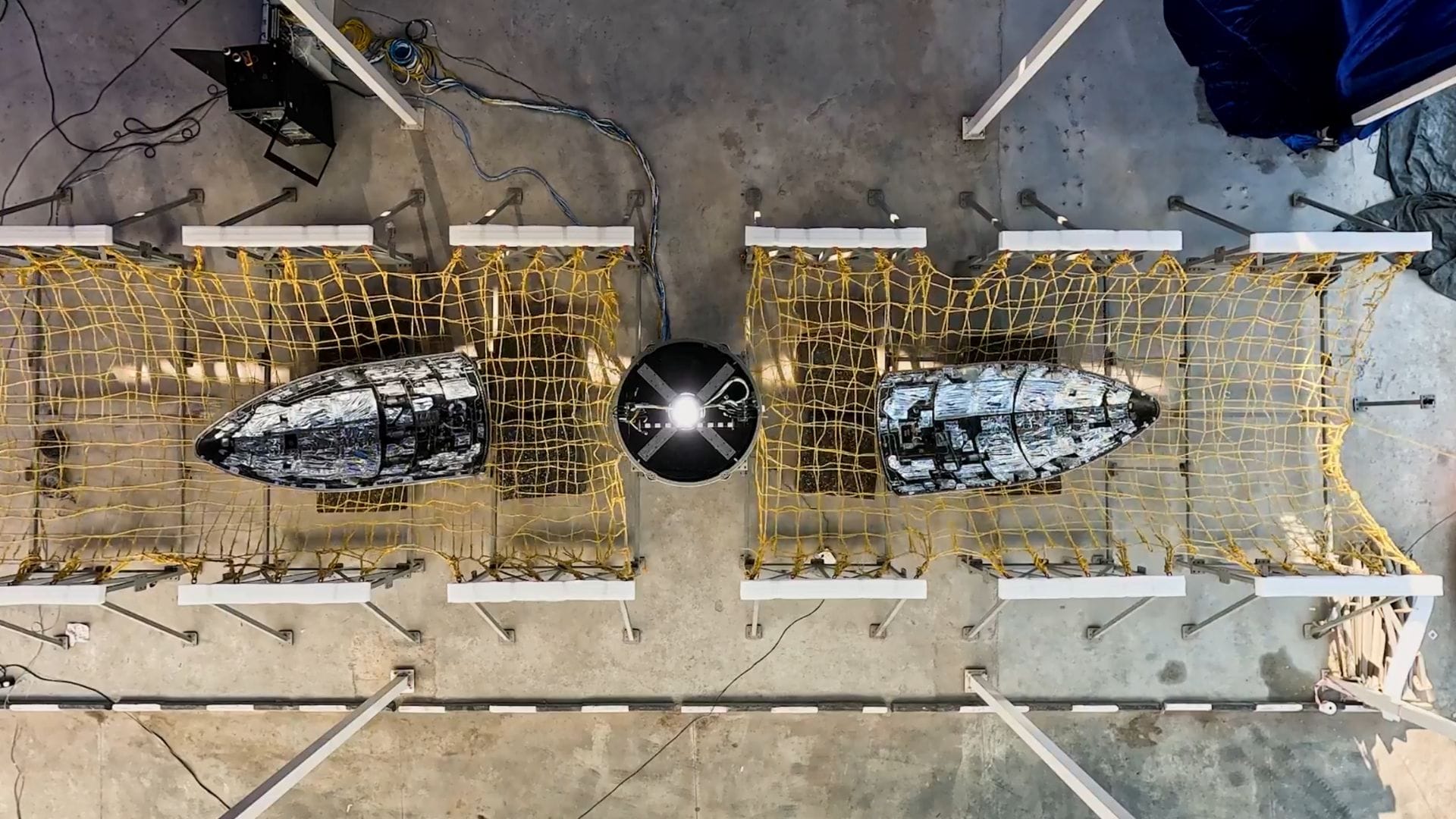
New Delhi: Skyroot Aerospace tested the separation of the two halves of the payload fairing on the Vikram I rocket. The payload fairing, or nose cone, opens up like the petals of a flower and falls away, after the rocket passes through the lower atmosphere. The job of the payload fairing is to protect the payload or satellite on board from the friction of the lower atmosphere. In the upper atmosphere, it is no longer needed, and is shed to reduce weight. The payload fairing split apart nominally, and fell away cleanly during the test.
When Vikram-1 reaches space, the payload fairing needs to split apart and fall away cleanly, protecting the satellite on the way up, then getting out of the way when its job is done.
The final pre-flight separation test on flight hardware confirms the pneumatic separation… pic.twitter.com/uGZQbq3Pbc
— Skyroot Aerospace (@SkyrootA) April 8, 2026
This was the final pre-flight separation test on flight hardware, that demonstrates that the pneumatic separation system works as intended. Skyroot Aerospace will next ship the Vikram I rocket to India’s spaceport in Sriharikota, for the first orbital flight. The mission was supposed to launch in February 2026, but has been delayed. Skyroot Aerospace executed the first test flight of a private Indian launch vehicle, the Vikram-S in November 2022, which was a suborbital flight. Since then, Skyroot Aerospace has been conducting the intensive ground test campaign for the Vikram I rocket, with the support of technical inputs and testing facilities of ISRO.
Hailing a rocket to space
Skyroot Aerospace had previously evaluated the nose cone of Vikram I, and had conducted a separation test of the payload fairing as well. In November 2025, the flight-ready Vikram I was revealed at Skyroot’s Brand New Infinity Campus, which was inaugurated by Prime Minister Narendra Modi. The Vikram I rocket is designed to cater to the burgeoning demand for launching small satellites, providing democratic, on-demand access to space with a rapid turnaround time. Customers can book rides to space for various target orbits and inclinations, with opportunities available for ridesharing missions, which can be described as car pooling for satellites.