New Delhi: The Russian State Space Agency Roscosmos is organising the first Russian Space Week between 6 and 12 April, 2026 to commemorate the 65th anniversary of the first human spaceflight by Yuri Gagarin in 1961. At the event, plans were revealed for the nuclear power plant that Russia is building on the Moon to provide electricity to the Lunar International Research Station (ILRS), a collaborative project with China to rival the Artemis Basecamp, along with updates on future planned missions of the Lunar programme. The first post-soviet lunar mission, Luna 25, crashed into the Moon in August 2023.
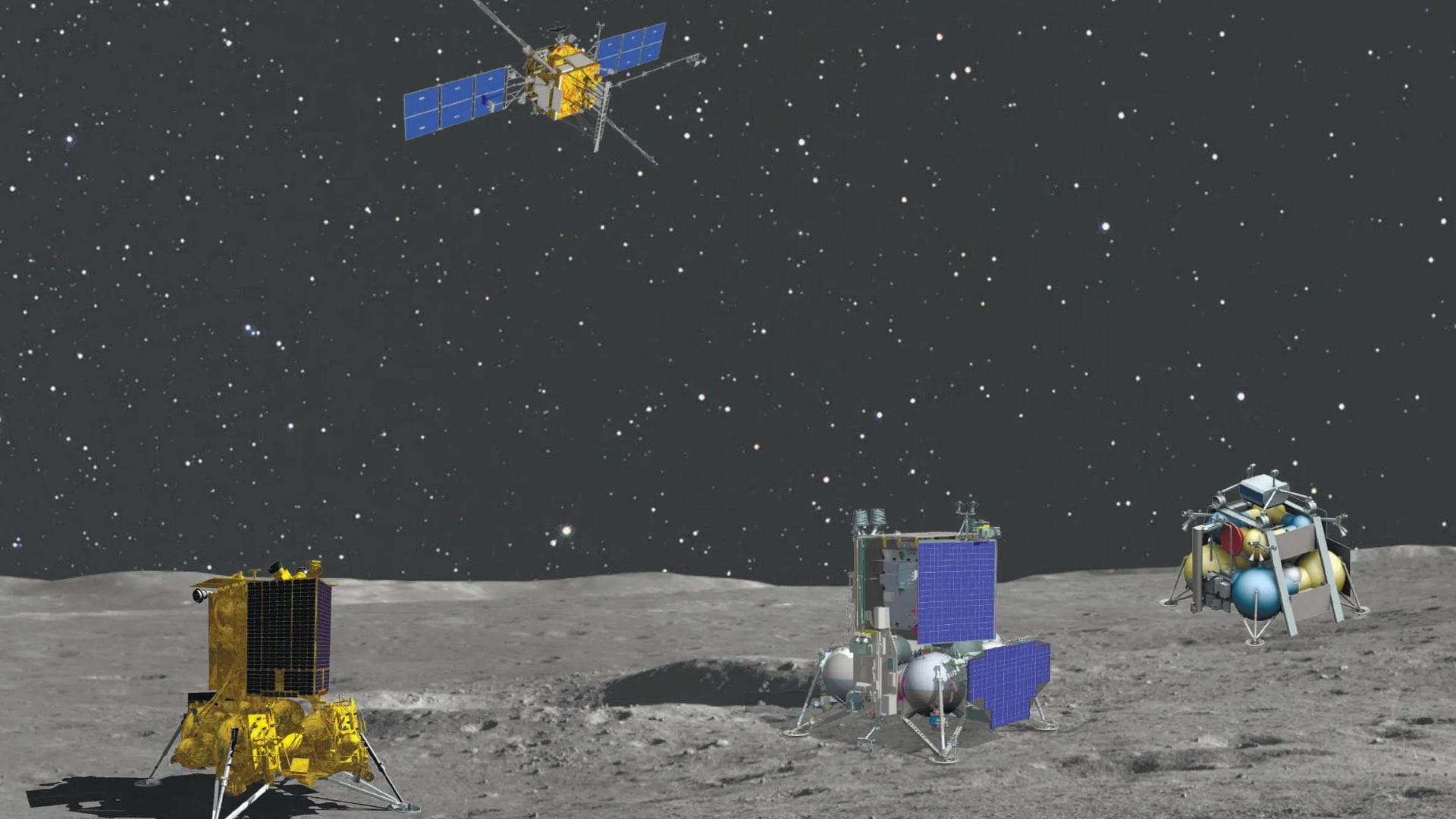
The Luna 26 mission is an orbiter, to act as a relay satellite for future surface missions, to be launched in 2027. The Luna 27 mission is planned with a probe capable of digging a metre into the lunar soil, or regolith. This was to be followed by the Luna 28 mission, which would dig to a depth of two metres, in an attempt to retrieve water ice, and then return the collected material to the Earth. All of these missions were supposed to launch by 2030. Russia plans to land the Luna 27 mission close to China’s Chang’e 7 mission. The two nations are close collaborators in lunar exploration, with Russia shipping a payload for analysing lunar dust to China for inclusion on the Chang’e-7 mission, which is flying later this year.
The new timelines for the Luna missions
According to a report by the Moscow Times, The Luna 26 mission has been pushed to 2028, delaying the entire Russian lunar exploration programme. The Luna 27 mission is now modified, to dispatch a pair of landers to the poles of the Moon, which will launch in 2029 and 2030. According to a report by the Russian State News Agency, TASS, The Luna 28 mission has been has now been pushed all the way to 2036. The Luna 29 mission will fly before Luna 28, in 2032, followed by Luna 23 in 2034. Both of these missions will ferry rovers to the Moon.