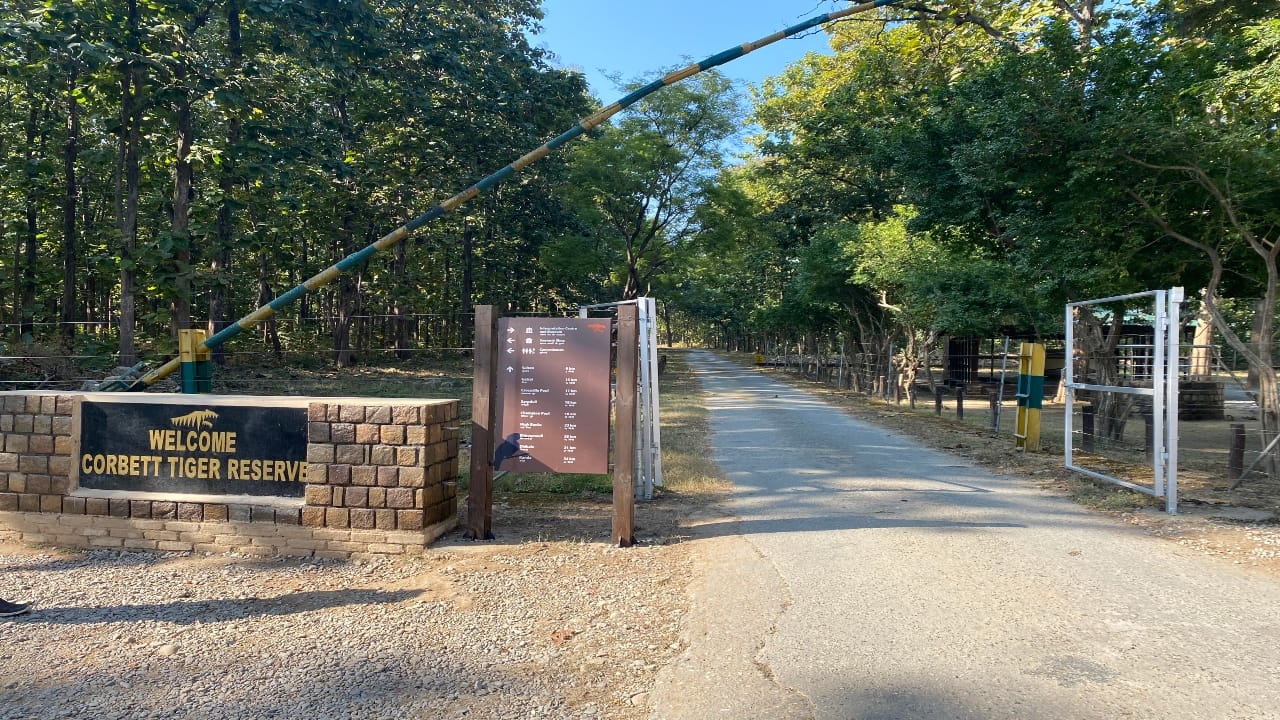
Ramnagar: Uttarakhand’s Jim Corbett National Park, one of India’s most famous wildlife destinations, is facing a worrying decline in tourist numbers and revenue. Known for its tiger sightings, jungle safaris, and natural beauty, Corbett has seen 58,000 fewer visitors this financial year compared to last year.
According to official figures, only 400,946 tourists visited Corbett in 2025–26, including 389,997 Indian visitors and 10,949 foreign tourists. In 2024–25, the number was 459,395. This drop has directly impacted revenue, which fell to Rs 27.75 crore.
Why tourists are turning away
Wildlife experts and guides say several factors are behind the decline. Senior nature guide Sanjay Chhimwal explained to ETV Bharat that increased safari fees have discouraged middle-class families. “People are more budget-conscious now, and expensive safaris are not their first choice,” he said.
Online booking issues have also frustrated tourists. Popular zones like Dhikala often get booked quickly, leaving many visitors disappointed. Meanwhile, new tourist zones outside Corbett, such as Sitabani and Phato, are attracting more visitors with easier bookings, lower fees, and better facilities.
Competition from new zones
The Ramnagar Terai West and Forest Division now offer alternative zones like Phato, Hathidungar, Sitabani, Pawalgarh, and Corbett Heritage. These areas are gaining popularity due to improved tiger sightings, overnight stays, and aggressive promotion on social media. Travel agents are also redirecting tourists to these zones, where they earn higher profits.
Wildlife enthusiast Rajesh Bhatt believes the problem is not just rising fees but poor management. “Agents sell packages in Corbett’s name but take tourists to other zones. Limited safari vehicles and a complex booking process in the main park are pushing people away,” he said.
Status of safari zones
Corbett has eight safari zones—Dhikala, Bijrani, Jhirna, Dhela, Durgadevi, Sonnadi, Garjia, and Pakhro. Among these, Dhikala, Bijrani, Jhirna, Dhela, and Durgadevi are the most popular. Some zones remain open year-round, while others close during the monsoon. However, tourists are increasingly choosing alternatives outside the main park.
What needs to change
Experts say Corbett must improve its booking system, balance tourism across zones, and ensure transparency. If not, the park’s traditional tourism infrastructure could weaken further. With competition rising from nearby zones, Corbett’s charm may continue to fade unless corrective steps are taken.
For now, the decline in visitors and revenue has raised serious concerns for the park administration, local communities, and conservationists who depend on tourism for livelihood and wildlife protection.