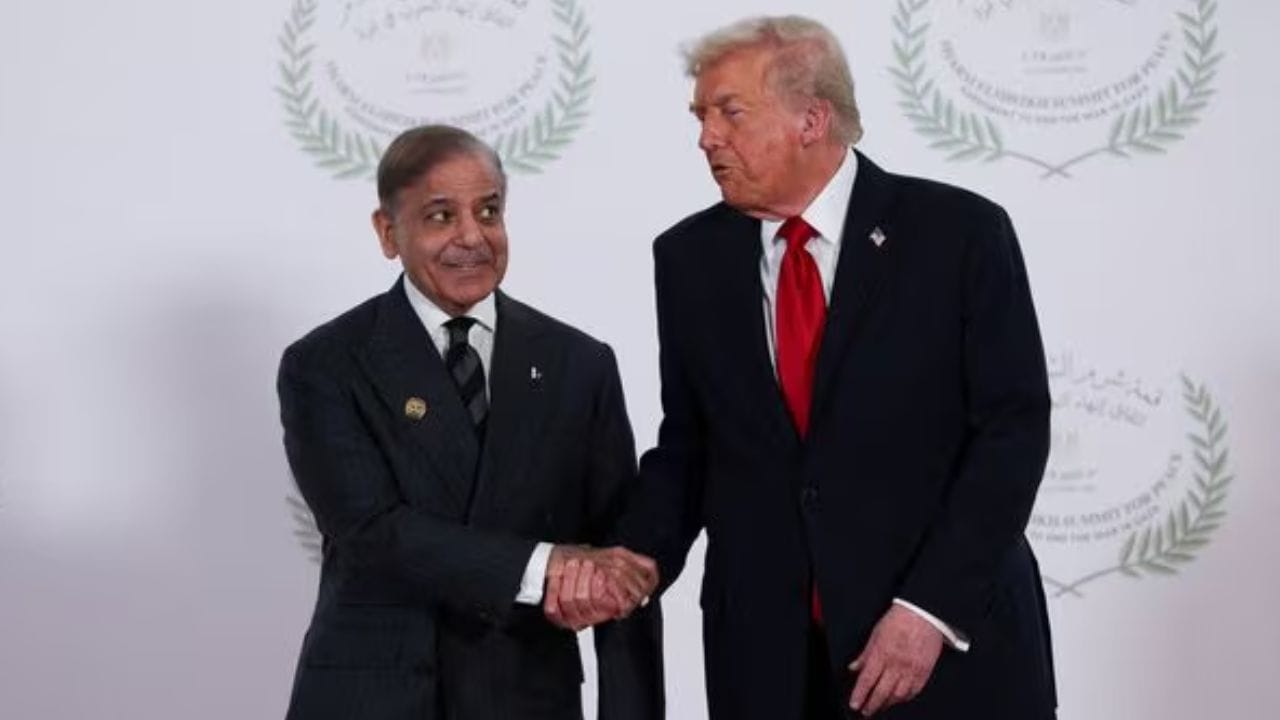
New Delhi: Questions have been raised over Pakistan’s role in the West Asia ceasefire, agreed by the United Sates and Iran after a gaffe by Shehbaz Sharif.
Hours before US President Donald Trump through his social media post informed the world about the ceasefire, a post from Sharif’s X handle triggered debate not only about the content but about Islamabad’s role in the negotiations.
In the post made around 12.46 am on Tuesday, Sharif’s post began with “Draft – Pakistan’s PM Message on ‘X’”, suggesting it may not have been intended for direct publication. The post, which urged Trump to extend his deadline by two weeks and appealed to Iran to reopen the Strait of Hormuz during that period, was edited within a minute to remove the “Draft” reference.
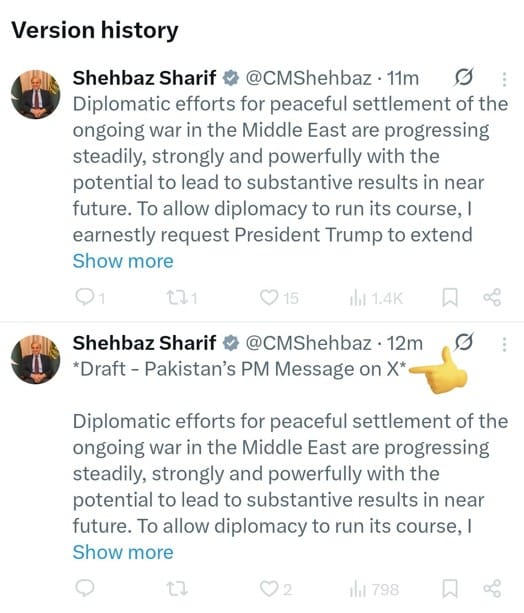
Did Sharif copy-pasted someone’s text
Social media users were quick to react with some questioning if the text came from somewhere else that Sharif copy-pasted on his handle. Some users mentioned that official communications typically do not include such labelling, especially with references to the country in third person.
Pakistan has been engaged in talks with both US and Iran for a ceasefire in West Asia for past few days. Even Trump acknowledged the role played by Sharif Pakistan Army chief General Asim Munir in his post on Truth Social.
In his post, Sharif had emphasised ongoing diplomatic efforts for a peaceful resolution and urged all parties to observe a two-week ceasefire to allow negotiations to progress. He also appealed to Iran to open the Strait of Hormuz as a goodwill gesture.
China or Pakistan – who influenced Iran?
Even as Trump mentioned Pakistan’s role in ceasefire, some reports have cited China’s influence on Iran. A report by AP, China encouraged the Iranians to “find a way to a ceasefire”.
The nearly 40-day war saw destruction around the Gulf region, as Iran targeted its neighbours after US and Israel launched an attack on Tehran.
The effects of this devastating war has been felt around the globe as Iran placed a chokehold on Strait of Hormuz — a critical route for supply of crude oil.