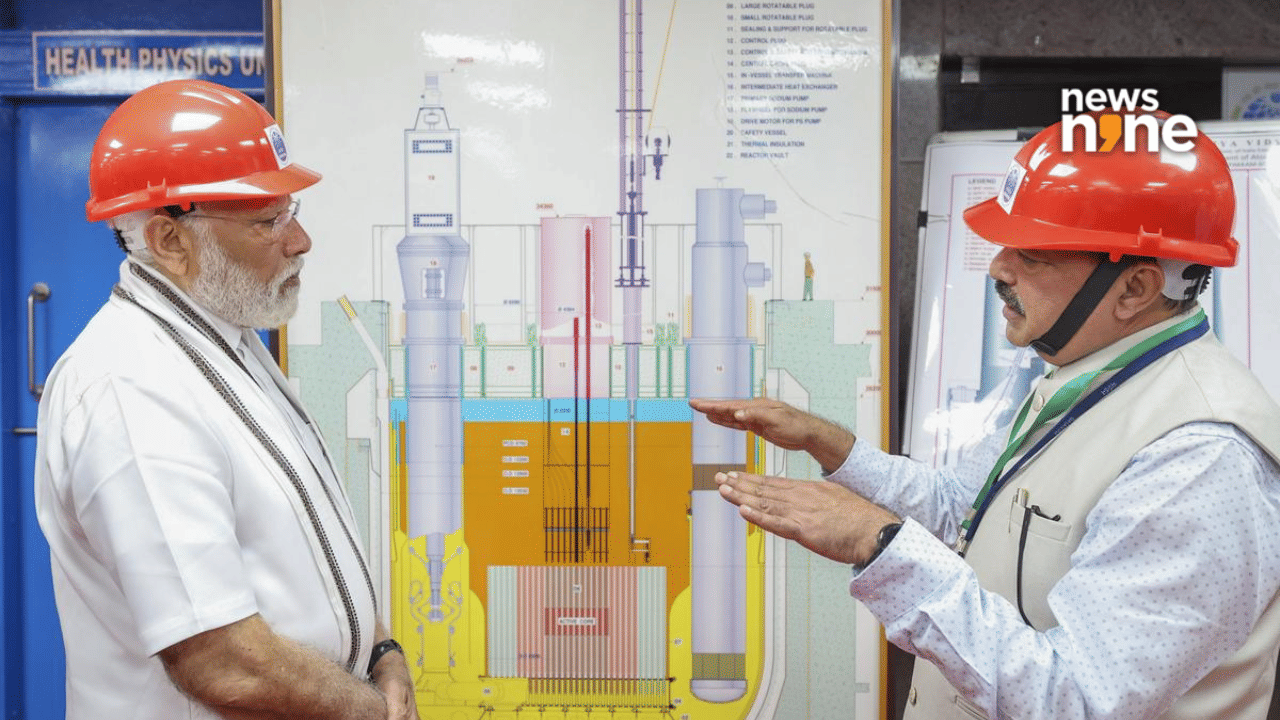
New Delhi: India’s nuclear programme just hit a moment that scientists have been waiting on for years. On April 7, 2026, the country’s first indigenous Fast Breeder Reactor at Kalpakkam reached “criticality”. That simply means the reactor has started a controlled nuclear chain reaction that can sustain itself. It sounds technical, but in simple terms, the core is now alive.
This reactor is not just another power unit. It sits right in the middle of India’s long-term plan to use thorium, something India has in large amounts.
Today, India takes a defining step in its civil nuclear journey, advancing the second stage of its nuclear programme.
The indigenously designed and built Prototype Fast Breeder Reactor at Kalpakkam has attained criticality.
This advanced reactor, capable of producing more fuel…
— Narendra Modi (@narendramodi) April 6, 2026
What “criticality” really means for India
Attaining criticality is a big milestone before power generation starts. It shows the reactor core is working as designed. Each reaction now produces enough neutrons to keep the process going.
Prime Minister Narendra Modi called it a major step, saying, “Today, India takes a defining step in its civil nuclear journey, advancing the second stage of its nuclear programme.” He added that the reactor “reflects the depth of our scientific capability and the strength of our engineering enterprise.”
This reactor has a capacity of 500 megawatt electric. It was built by BHAVINI, a government company set up in 2003 to handle such advanced projects.
How is this reactor different?
This is not a regular nuclear reactor. It is a fast breeder reactor, which means it can produce more fuel than it uses. That sounds strange at first, but here’s how it works.
- It uses uranium-plutonium mixed oxide fuel
- A Uranium-238 layer around the core turns into new fuel
- In later stages, thorium will be used to produce Uranium-233
The Prime Minister explained, “This advanced reactor, capable of producing more fuel than it consumes… is a decisive step towards harnessing our vast thorium reserves.”
Long journey with delays and challenges
This project did not happen overnight. Work on fast breeder reactors started over two decades ago. The PFBR was expected to be ready by 2010, then delayed multiple times due to technical issues.
Core loading finished in March 2024. Now, with criticality achieved, things are moving closer to actual power generation.
Once fully operational, India will become only the second country after Russia to run a commercial fast breeder reactor.
Why this matters beyond just power
India’s nuclear plan has three stages. The second stage, where this reactor sits, is key for unlocking thorium use in the future.
Thorium reserves are spread across states like Kerala, Tamil Nadu, Odisha, and Andhra Pradesh. Using it could reduce dependence on imported fuel.
Officials say India now has capabilities across the full nuclear fuel cycle. More than 200 Indian industries, including MSMEs, contributed to building this reactor.
The reactor still needs to move from criticality to full power generation. That will take time. But this step shows the system is finally working the way it was designed to.