New Delhi: Tensions in West Asia are refusing to die down, and despite continuous warnings from US President Donald Trump attempting to force Iran to a ceasefire and have the Strait of Hormuz reopened, this has not materialised. Iran meanwhile looks to go only in the offensive direction. In line with this, in its latest threats, Iranian officials have warned of closing the Bab al-Mandeb Strait off the Red Sea, through which about 12 per cent of the world’s trade typically passes.
Dire warnings
Ali Akbar Velayati, a former Iranian foreign minister warned on Sunday on X that “the unified command of the Resistance front views Bab al-Mandeb as it does Hormuz”. “If the White House dares to repeat its foolish mistakes, it will soon realize that the flow of global energy and trade can be disrupted with a single move,” Velayati wrote. Iran’s state-owned Press TV subsequently confirmed his warning.
Disastrous effects
The effective closure of the Strait of Hormuz has already caused a big blow to global trade, and with Iran now warning of closing the Bab al-Mandeb strait, things can spiral down quickly. Also known as the ‘Gate of Grief/Tears’, the strait is a major global chokepoint between Yemen on the Arabian Peninsula and Djibouti and Eritrea in the Horn of Africa, connecting the Red Sea to the Gulf of Aden and by extension the Indian Ocean.
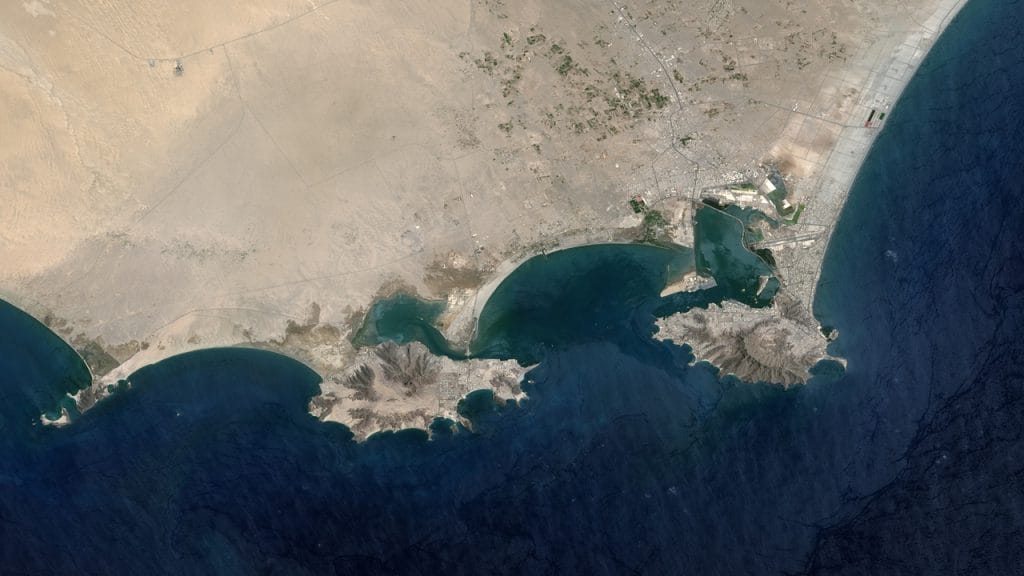
A Natural satellite view of the seaport city of Aden April 22, 2015 in Aden, Yemen. The city lies east of the Bab Al-Mandab strait. (Photo by USGS/NASA Landsat/Orbital Horizon/Gallo Images/Getty Images)
The Bab al-Mandeb’s positioning as a central point of access and connecting to disparate waterways gives it a unique importance in the global trade waterways. It acts as a strategic link between the Indian Ocean and the Mediterranean Sea via the Red Sea and the Suez Canal.
The strait is a vital route through which Saudi Arabia sends its oil to Asia. When the Strait of Hormuz is open, it is also a crucial passageway for other Gulf states to export their energy supplies to Europe via the Suez Canal or the Sumed (Suez-Mediterranean) Pipeline on Egypt’s Red Sea coast. In 2024, about 4.1 billion barrels of crude oil and refined petroleum products passed through the strait.
It is not just oil that is transported through the waterway, about 10 per cent of global trade sails through the Bab al-Mandeb, including containers shipped from China, India and other Asian countries to Europe. Closure of the Bab al-Mandeb Strait could keep tankers originating in the Persian Gulf from transiting the Suez Canal or reaching the SUMED Pipeline, forcing them to divert around the southern tip of Africa, which would increase transit time and shipping costs.
The strait is effectively controlled by the Iran-backed Houthis, who during the Israel-Hamas war post October 7, did block the Bab al-Mandeb for what they described as ships associated with Israel or the US for some time. Thus, with the Strait of Hormuz already effectively blocked by Iran in accordance to their whims, if they do similar action in Bab al-Mandeb, the consequences for global energy supplies and trade would be disastrous.