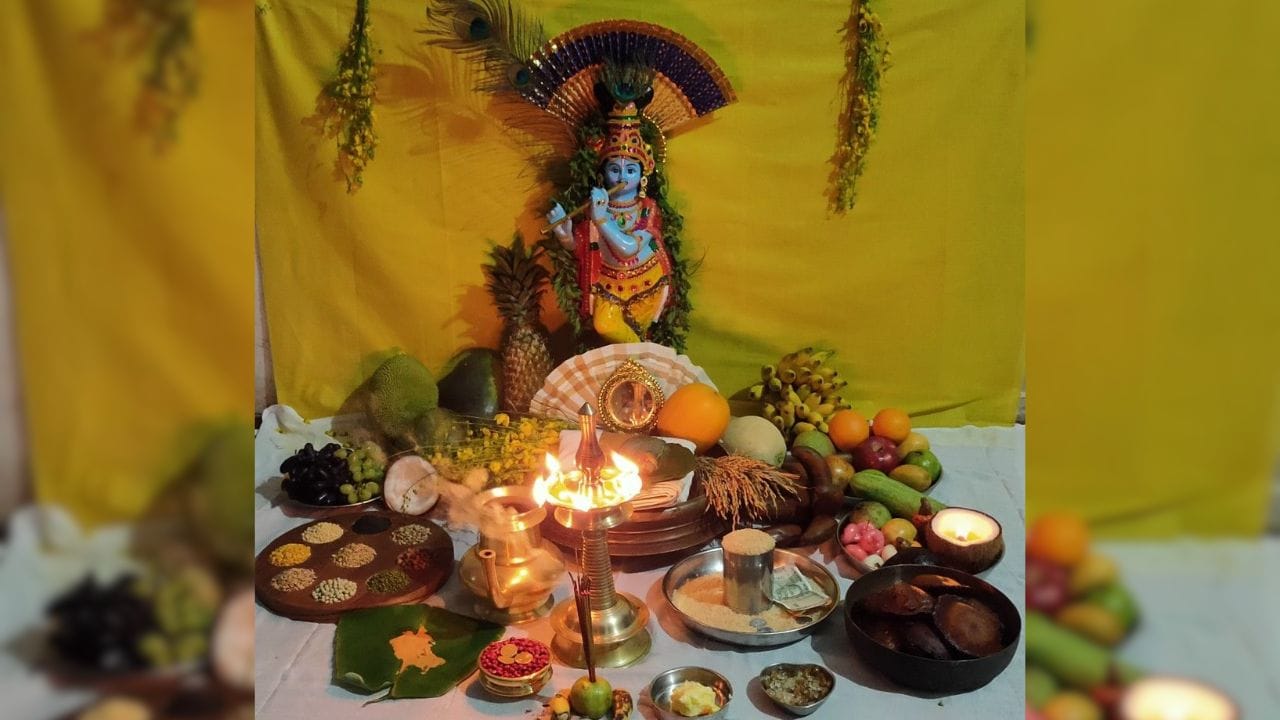
New Delhi: Vishu, the Malayalam New Year, will be celebrated on April 15 across Kerala and Malayali households worldwide. Central to the festival is the cherished ritual of Vishu Kanni, a carefully arranged display viewed at dawn as the first sight of the year. The word ‘Kanni’ means first sight, and tradition holds that this sacred glimpse sets the tone for the months ahead. Prepared the previous night, the arrangement symbolises prosperity, gratitude and inner clarity.
Families wake early and approach the Kanni in silence, taking in its gentle glow with devotion. In earlier times, elders would guide younger members with closed eyes towards the display, creating a sense of reverence. Vishu Kanni reflects a belief that beginnings matter. By choosing to see abundance, faith and light at daybreak, families affirm hope, harmony and shared blessings for the year unfolding ahead.
Vishu Kanni ritual items and meaning
Rice
A small measure of rice represents nourishment and food security. It symbolises the wish that no household faces scarcity in the coming year.
Fruits: Mango and banana
Seasonal fruits such as ripe mangoes and bananas signify sweetness and fertility. Their presence reflects hope for growth, good harvest and joyful moments.
Vegetables
Fresh vegetables denote health and everyday sustenance. They remind families to value simple, wholesome living.
Coconut
A whole coconut symbolises purity and selflessness. It holds spiritual importance in Kerala households and temple offerings.
Betel leaves and areca nuts
These traditional elements represent hospitality and social harmony, reinforcing bonds within family and community.
Val Kannadi
The polished metal mirror placed at the centre is called Val Kannadi. It reflects one’s image, encouraging self-awareness and introspection at the start of the year.
Gold coins or ornaments
Gold signifies wealth and stability. Even a small ornament conveys aspiration for financial security and dignity.
Bhagavad Gita
A sacred text such as the Bhagavad Gita is placed to invoke wisdom, righteousness and spiritual grounding.
Krishna idol or picture
An image or idol of Lord Krishna brings divine grace into the arrangement, symbolising protection and guidance.
Konna flowers
Bright yellow Konna blossoms are considered highly auspicious. Their golden hue enhances the beauty of the Kanni and represents prosperity.
Nilavilakku
The traditional lamp, Nilavilakku, is lit to invite divine light. Its steady flame marks clarity and positive energy.
Uruli
All items are arranged in a wide metal vessel called Uruli, usually prepared neatly by the eldest woman of the house.
Vishu Kanni ritual and its meaning
On Vishu morning, family members wake up before sunrise to witness the Vishu Kanni as their first sight of the year. In many homes, elders gently cover the eyes of children and younger members and lead them to the prepared arrangement. When they open their eyes, they see the softly lit display of flowers, grains, fruits, gold, mirror and the image of Lord Krishna glowing beside the Nilavilakku. The moment is calm and deeply personal.
After viewing the Kanni, prayers are offered with folded hands, seeking blessings for health, prosperity and harmony. The ritual carries a simple yet profound belief: the first sight on Vishu morning influences the year ahead. Seeing symbols of abundance and light is thought to cultivate a positive and grateful mindset.
Vishu Kaineettam
A cherished custom that follows is Vishu Kaineettam. Elders gift money to younger members, especially children, as a gesture of goodwill and sharing. The ritual is less about material value and more about transmitting blessings, reassurance and affection.
All these rituals of Vishu reinforce family bonds and reminds each generation to begin the year with hope, generosity and clarity of thought.