Dehradun: A surprising discovery has been made in the Shivalik foothills on the outskirts of Dehradun. For the first time, scientists have found freshwater fish fossils in the region, which was earlier known only for land animal remains.
This breakthrough has given research a new direction and opened a window into the prehistoric environment of northern India.
Discovery in Shivalik Foothills
The fossils were found during a research project near Mohan, close to Dehradun. Scientists from the Wadia Institute of Himalayan Geology (WIHG) and other institutions identified remains of aquatic animals, marking a significant shift in the understanding of the Shivalik valleys.
The fossils are believed to belong to the Pliocene era, dating back between 5 million and 2.5 million years. Researchers estimate the specific samples to be around 4.5 million years old.
Fossils of Three Fish Species
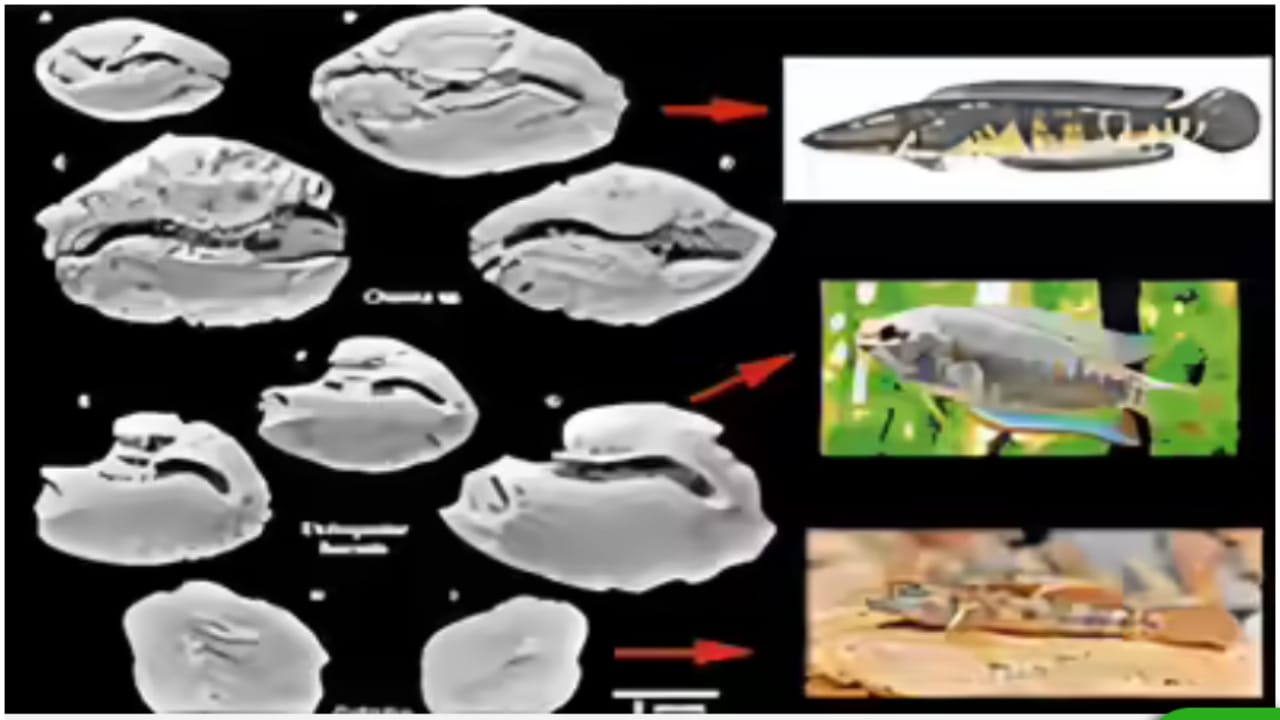
The team discovered fossils of three distinct freshwater fish species:
– Snakeheads
– Gobies
– Gourami
These fossils were found with ear bones, or otoliths, which help scientists identify fish species and study their evolutionary history.
Senior scientist Ningthoujam Premjit Singh from WIHG highlighted the importance of the gourami fossil. He explained that this is the first recorded presence of gourami in India. Previously, such fossils were only found in Sumatra, Indonesia. This rare find enhances knowledge about the biogeographic history of South Asian freshwater fishes.
Importance of the Discovery
The discovery is crucial for exploring ancient aquatic ecosystems. It provides evidence that freshwater fish thrived in the Shivalik valleys millions of years ago, offering a glimpse into biodiversity during the Pliocene era.
Scientists believe that these findings will help reconstruct the prehistoric environment of the region, showing that it once supported a rich freshwater ecosystem. This challenges earlier assumptions that the Shivalik foothills were primarily home to land animals.
Future Research
The study suggests that more fossils may be found in the region with increased sampling efforts. Expanding the species list could help scientists better understand the evolution of freshwater ecosystems in northern India.
Researchers are now focusing on further excavations and detailed analysis of the fossils. They hope to uncover more species and gain deeper insights into how aquatic life evolved in the Himalayan foothills.
The discovery of freshwater fish fossils in the Shivalik foothills is a landmark in Indian palaeontology. Estimated to be 4.5 million years old, these fossils not only enrich scientific knowledge but also highlight the ancient biodiversity of Uttarakhand. With more research, the Shivalik valleys may reveal even greater secrets about Earth’s prehistoric ecosystems.