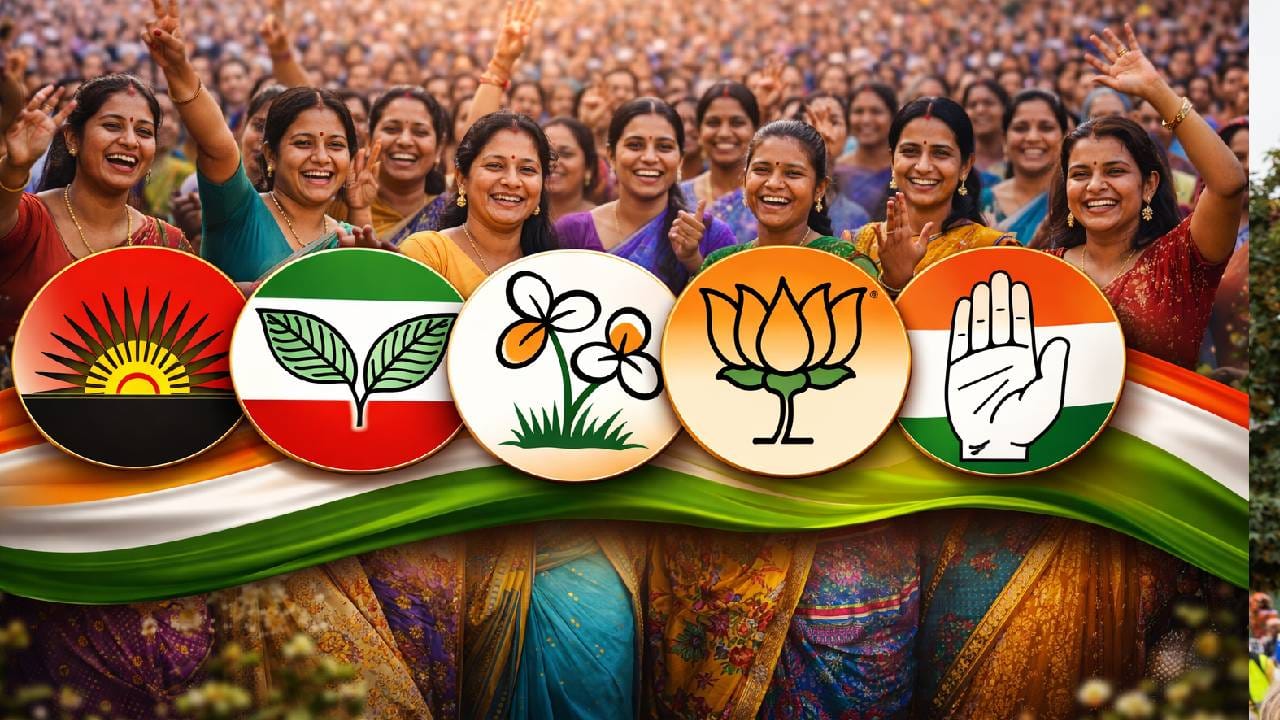
New Delhi: The traditional arithmetic of Indian elections is undergoing a seismic shift. As four major states, Tamil Nadu, West Bengal, Assam, and Kerala, prepare for the polls, political parties have stopped viewing the electorate through the singular lens of caste or religion. Instead, they are locked in a high-stakes “bidding war” for a decisive bloc of over 10 crore (100 million) women voters.
From direct cash transfers to “lifestyle coupons” and entrepreneurship grants, here is how the political landscape is being reshaped by the pursuit of the female vote.
Tamil Nadu: The triple-threat payout
In the Dravidian heartland, the competition has moved beyond simple subsidies to substantial monthly incomes. Chief Minister MK Stalin has upped the ante by proposing to double the state’s flagship cash assistance to Rs 2,000 per month. Additionally, they have introduced the ‘Illatharasi’ coupon, worth Rs 8,000 annually, specifically designed to cushion household expenses.
The opposition All India Anna Dravida Munnetra Kazhagam (AIADMK) isn’t backing down, floating a massive Rs 10,000 family support promise alongside existing perks like free transport and household subsidies.
Enter Thalapathy Vijay’s Tamilaga Vettri Kazhagam (TVK), which is attempting to outshine the veterans with a Rs 2,500 monthly assistance plan. Their pitch blends cash with “cradle-to-grave” benefits, including free LPG cylinders, gold for marriages, and rewards for newborn girls.
West Bengal: The cash duel
In Bengal, the narrative is a straight fight between two massive financial support models. The saffron party is banking on its Annapurna Yojana, promising a monthly payout of Rs 3,000, positioning it as a transformative income floor for homemakers.
While Mamata Banerjee’s Trinamool Congress is doubling down on the proven Lakshmir Bhandar program. By expanding it to offer roughly Rs 1,500 per month, the TMC is betting on the trust and delivery systems it has already built.
Assam: Welfare vs entrepreneurship
The battle in the Northeast is a fascinating clash of philosophies. The direct relief versus economic independence. CM Himanta Biswa Sarma is leveraging the Orunodoi scheme (Rs 1,250/month) and recent one-time Rs 9,000 payouts to nearly 40 lakh women. They are also pushing the Mukhya Mantri Mahila Udyamita Abhiyan, offering seed funding starting at Rs 10,000 for women-led businesses.
The Congress has turned toward “entrepreneurial empowerment,” promising Rs 50,000 in financial assistance for women looking to start small businesses, aiming to turn voters into independent income generators.
Kerala: The institutional network
In Kerala, the Left-led government is leaning on its robust grassroots infrastructure. Rather than just competitive cash promises, the CPI(M) is highlighting the Kudumbashree mission. This model focuses on,
strengthening community-based livelihood networks, providing widespread access to microcredit and small enterprise support and enhanced public healthcare and social security pensions that act as a safety net for women.
With over 100 million women heading to the booths across these four states, the “silent voter” is no longer silent; she is the primary focus of the election manifestos of all parties. Whether through the DMK’s coupons, the BJP’s Annapurna payouts, or the Congress’s business grants, the message is clear, the path to power in 2026 and beyond is paved with schemes that put money directly into the hands of women.