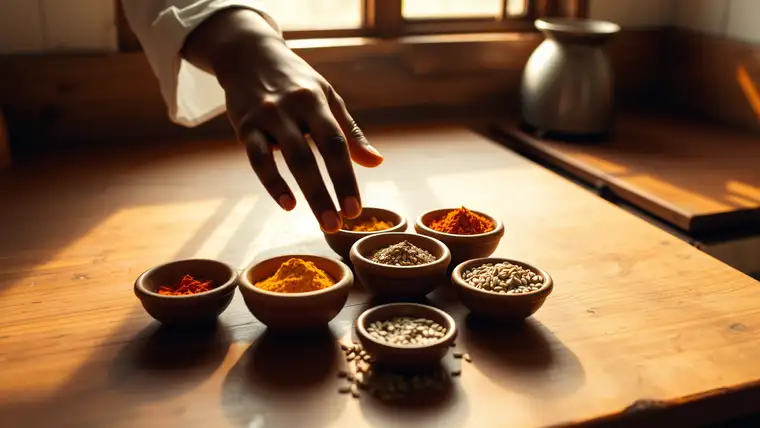
Turmeric
Curcumin, the active compound in turmeric, directly stimulates bile production and improves bile flow from the gallbladder into the small intestine. A 2002 study published in the journal Alimentary Pharmacology and Therapeutics found that curcumin caused significant gallbladder contraction in healthy volunteers, reducing the stasis that allows cholesterol to crystallise into stones. The dose in the study was 20mg of curcumin, roughly the amount in half a teaspoon of good-quality haldi. Add it to dal, sabzi, or warm milk. The fat in ghee or milk also helps absorption, since curcumin is fat-soluble.
Flaxseed
Alsi has been sitting in Indian kitchens for centuries, mostly used in chutney or added to roti dough in colder states like Punjab and Rajasthan. Its relevance to the gallbladder comes from two directions: soluble fibre and omega-3 fatty acids. Soluble fibre binds to bile acids in the intestine and carries them out of the body, which forces the liver to pull cholesterol from the blood to make fresh bile, reducing the cholesterol concentration that leads to stone formation. One tablespoon of ground flaxseed a day is enough. Whole seeds pass through largely undigested; grind them first.
Beetroot
Beets contain betaine, a compound that supports liver function and helps thin bile so it flows more freely rather than pooling and concentrating. Thick, sluggish bile is the precondition for most cholesterol gallstones. Beetroot also contains pectin, a soluble fibre that clears cholesterol the body has already excreted through bile, preventing its reabsorption. Roast it, juice it, or add it raw to a salad with lemon and jeera. The liver-gallbladder connection is direct: whatever improves liver output improves gallbladder health downstream.
Amla
Indian gooseberry is among the richest natural sources of Vitamin C available in any Indian market. The connection to the gallbladder is specific: Vitamin C is required for the enzyme that converts cholesterol into bile acids. When Vitamin C levels are low, that conversion slows, cholesterol accumulates in bile, and the risk of stone formation rises. A 1993 study in the Journal of Clinical Investigation confirmed this pathway in guinea pigs, and subsequent human observational studies have found that higher Vitamin C intake correlates with lower rates of gallbladder disease, particularly in women. Two fresh amlas a day, or a tablespoon of amla powder in water each morning, keeps the conversion pathway running.
Jeera
Cumin is so common in Indian cooking that it barely registers as a medicinal ingredient. The gallbladder connection: jeera stimulates the secretion of digestive enzymes and bile salts, which means the gallbladder is prompted to contract and empty regularly. A gallbladder that empties regularly does not allow bile to sit and concentrate. Researchers at King George’s Medical University, Lucknow, have documented cumin’s carminative and cholagogue properties, cholagogue meaning it promotes bile flow. Jeera water first thing in the morning, or simply tempering every meal with whole cumin, keeps the gallbladder cycling.
Olive Oil
Cold-pressed olive oil is increasingly available in Indian cities and is already used in households that have shifted away from refined oils. Its role in gallbladder protection is well-established: monounsaturated fats stimulate cholecystokinin, the hormone that signals the gallbladder to contract and release bile. Regular contraction prevents bile stasis. A large European study, the EPIC cohort, found that people who consumed olive oil daily had significantly lower rates of gallstone disease compared to those who avoided fat altogether. The low-fat diet, counterintuitively, is harder on the gallbladder, a gallbladder that never gets a contraction signal goes weeks without emptying. Two tablespoons of olive oil in cooking or in a salad dressing is enough to trigger the response.
The gallbladder is a storage organ, not a production organ, which means its health depends almost entirely on what the liver sends down and how often the gallbladder is asked to release it. Every food on this list works on one of those two levers, either cleaning up what goes in, or keeping the release mechanism active. That combination, built into daily Indian cooking rather than added on top of it, is why the protection is real.