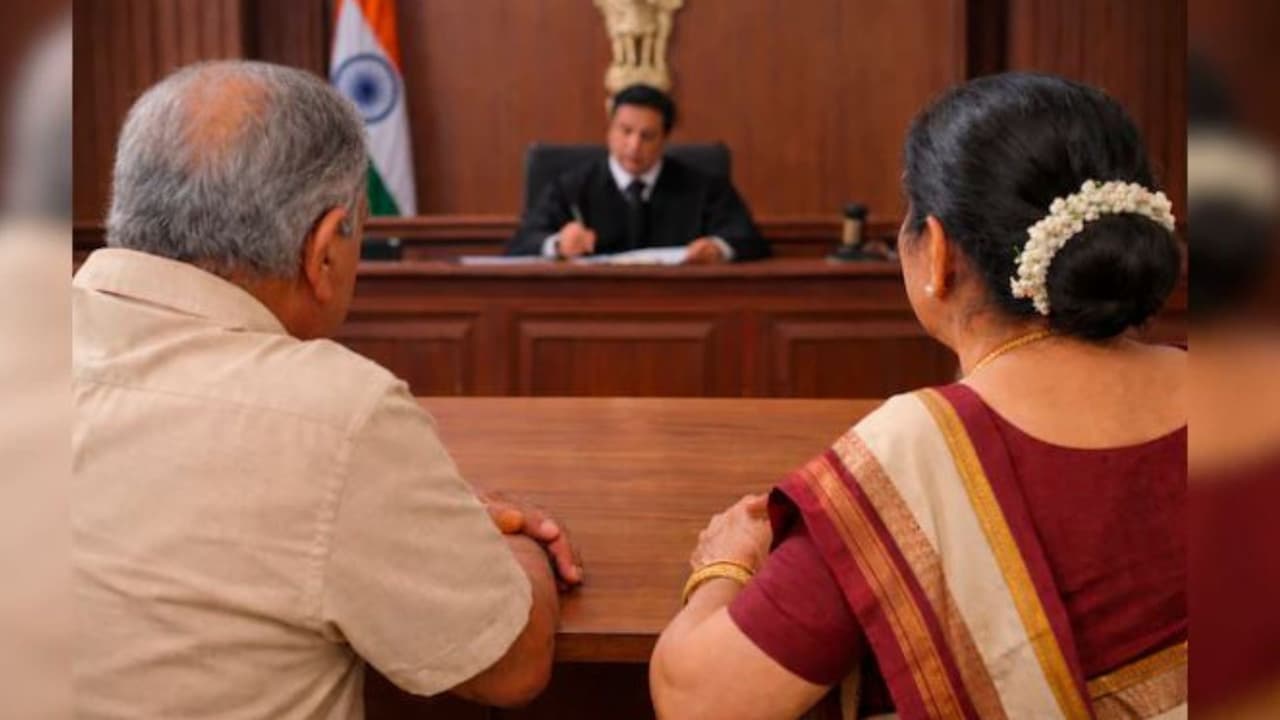
<p><strong>The Rajasthan High Court’s Jaipur bench refused to dissolve a 58-year-old marriage, ruling that ordinary quarrels and minor disputes do not amount to cruelty. The court upheld a 2019 Bharatpur family court order dismissing the husband’s divorce plea.</strong></p><img><p>The Rajasthan High Court’s Jaipur bench has refused to grant divorce in a 58-year-old marriage, saying that ordinary quarrels and daily disagreements cannot be treated as cruelty. The decision upheld a 2019 order of the family court in Bharatpur that had dismissed the husband’s divorce plea.</p><p>A division bench of Justices Anil Kumar Upman and Sudesh Bansal delivered the ruling. The court stressed that small disputes, including family property disagreements, are common in married life and cannot justify ending a long-standing relationship, especially at an advanced age.</p><img><p>The bench stated that “trivial irritations, quarrels and normal wear and tear of married life” occur in almost every household. Such issues, the court said, do not amount to cruelty that would justify granting divorce under law.</p><p>The judges also noted that the couple had lived together from their marriage in 1967 until 2013 without any recorded dispute. They have two sons and a daughter, all adults and married.</p><img><p>The husband, a 75-year-old retired government school principal, filed for divorce in 2014. He did so after his wife lodged an FIR against him under provisions related to dowry harassment, criminal breach of trust and causing hurt.</p><p>Police later submitted a negative final report after investigation, meaning no case proceeded further. The husband argued that the FIR caused him public humiliation and damaged his reputation.</p><p>He also claimed that his wife was influenced by their eldest son and was willing to transfer immovable property in the son’s name. He wanted the property divided equally between his sons.</p><img><p>The wife opposed the divorce and made serious counter-allegations. She claimed that her husband had engaged in extramarital affairs. According to her, she once found him alone in a room with another woman for several hours. When she objected, she alleged that she was pushed out, which led her to file the FIR.</p><p>The high court noted that the presence of another woman had been found to be true during proceedings.</p><p>She also accused her husband of misusing family property. She said she and their eldest son objected to prevent loss of assets. She maintained that the disputed property was purchased and registered in her own name.</p><img><p>After reviewing all arguments, the high court found no reason to interfere with the earlier family court decision. It concluded that the facts presented did not meet the legal threshold for cruelty required to dissolve a marriage.</p><p>The bench therefore dismissed the husband’s appeal, effectively maintaining the marriage under law.</p><img><p>The judgment highlights how courts carefully assess claims of cruelty in matrimonial disputes. Legal experts note that Indian courts often distinguish between serious misconduct and normal marital conflict. The ruling reinforces that long marriages cannot be dissolved on the basis of routine disagreements alone.</p>