Five years ago, in August 2021, the Indian space agency ISRO launched India’s first agile Earth observation satellite, GISAT-1, from Sriharikota on the GSLV-F10 rocket.
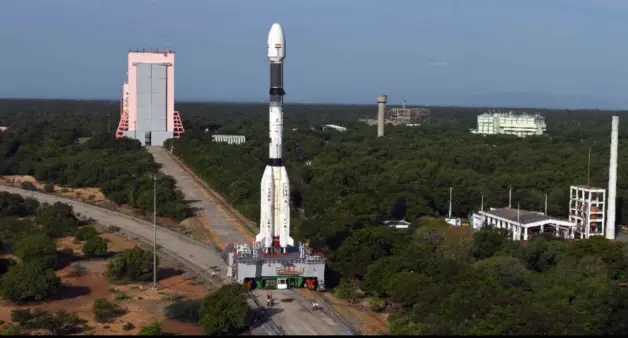
The satellite was lost after the mid-flight failure of the rocket. WION has learnt that the 52-meters-tall, three-stage GSLV-F17 rocket, carrying a replacement for the GISAT, has been moved to the second launchpad at Satish Dhawan Space Centre(SDSC), Sriharikota, around 8:00 am, Friday, 28th August. It is a standard practice at ISRO to move its relatively larger rockets (such as PSLV, GSLV, LVM3) to the launchpad a week ahead of the liftoff date. The GSLV-F17 rocket will be carrying a strategic-use Earth-imaging satellite known as GISAT-1A or EOS-05, which is a replacement for the GISAT-1 lost in 2021.
This upcoming launch, scheduled for the first week of September, will also mark the end of ISRO’s seven-month period of lull. The Government-run ISRO has not launched any of its rockets so far in 2026, after the mid-flight failure of the PSLV-C62 rocket in January this year, which happened to be the second PSLV failure in a row. The PSLV-C61 rocket also failed mid-flight in May 2025. Such back-to-back failures are unprecedented in the 33 years of PSLV flights. While the C-61 carried ISRO’s strategic-use Earth-imaging satellite EOS-09, the C-62 carried an Earth-imaging satellite EOS-N1 and more than a dozen customer satellites.
Weighing over 2,200kg, the EOS-05/GISAT-1A is an agile Earth observation satellite that is to be placed in Geostationary orbit, about 36,000 km above the Earth. The GSLV rocket will hurl the satellite into an initial elliptical(egg-shaped) orbit, following which the satellite will fire its onboard engines to gradually circularize its orbit and reach its final destination. This satellite is meant to provide near real-time imaging of large-area regions of interest at frequent intervals, for quick monitoring of natural disasters, episodic events, and any short-term events, to obtain spectral signatures for agriculture, forestry, water bodies, as well as for disaster warning, cyclone monitoring, cloud burst/thunderstorm monitoring etc.
Better late than never: A resurrection for GISAT
GISAT-1, India’s first agile Earth observation satellite, was launched from Sriharikota on the GSLV-F10 rocket on August 12, 2021. While the first and second stages of the rocket performed normally, the final Cryogenic Stage did not ignite due to a technical anomaly. The mission couldn’t be accomplished as intended and the satellite GISAT-1 was lost during the mid-flight failure. GISAT-1A or EOS-05, which ISRO intends to launch next week, is a replacement for the lost GISAT-1.
Losses and failures are common in spaceflight. However, the ability to return with a successful mission is the true test of any spacefaring entity. That it has taken five long years for India to replace a satellite lost in 2021, is a sad and pitiable reminder of the pace at which strategic missions are being executed.
Of the six space launch missions that the Indian space agency ISRO performed from home soil between January 2025 and January 2026, three have failed. These are: GSLV-F15/NVS-02(satellite failure) in Jan 2025, PSLV-C61/EOS-09(mid-flight rocket failure and satellite loss) in May 2025, and PSLV-C62/EOS-N1(mid-flight rocket failure and satellite loss) in January 2026. All three Government-funded satellites lost in these failed missions were critical for India’s national security. While it is certain that ISRO will return with successful missions and replace these satellites, this author had estimated that India would need between two to three years to replace all three national security satellites lost in the said period. The five years it took to bring the GISAT back to the launchpad is ample testimony!