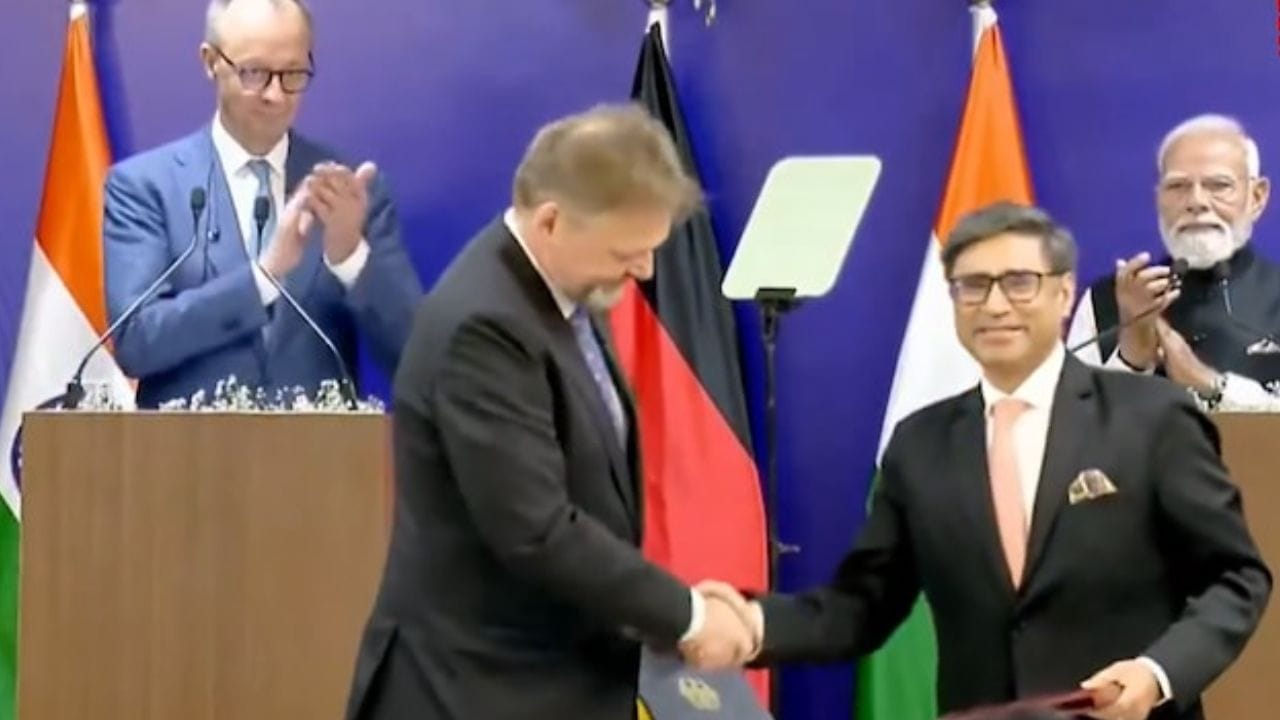
4 historical agreements between India and Germany
The day of January 12 was very important in terms of India’s diplomacy and future strategies. On one hand, the whole country was celebrating the birth anniversary of Swami Vivekananda, while on the other hand, a new chapter in the relations between India and Germany was being written in New Delhi. During the visit of the German Chancellor to India, both the countries have signed some agreements which are directly related to our security, education and technological development. In this meeting between Prime Minister Narendra Modi and the German Chancellor, not only talks took place, but a complete blueprint was prepared to deal with future challenges from defense to semiconductors.
The picture will change with these 4 important agreements
The biggest achievement of this high-profile meeting is the four major agreements (MoUs) that have been signed by both the countries. The most important agreement has been reached on ‘Critical Minerals and Semiconductors’. In today’s digital era, semiconductors are needed everywhere, from mobile phones to missiles, and Germany’s support will give a new boost to India’s technological capability.
In addition, a joint declaration on defense cooperation has been issued. PM Modi clearly said that mutual cooperation in defense and security is the biggest symbol of our mutual trust. Both the countries will now prepare a concrete roadmap to take forward defense trade. The third agreement has been signed in the field of higher education, which is expected to open new opportunities for Indian students. At the same time, both the countries have joined hands to take Ayurveda to the global stage.
serious discussion on terrorism
The talks were not limited to trade only. Prime Minister Modi also held in-depth discussions with the German Chancellor on issues of global peace and security. Both the leaders discussed the ongoing conflicts in Ukraine and Gaza. During this, PM Modi took a tough stance on terrorism and called it a threat to the entire humanity. This was a clear indication that India considers Germany an important partner in its campaign to unite the world on security issues. PM Modi also reminded that more than 2000 German companies have been working in India for a long time, which shows the depth of our economic relations.
Linking the German Chancellor’s visit with Swami Vivekananda’s birthday, PM Modi said that Swamiji had advocated relations of philosophy and justice between India and Germany. While sharing his experience, the German Chancellor said that he visited the place associated with Mahatma Gandhi in the morning itself. He recalled Gandhiji’s famous statement “Be the change you want to see in the world.” The Chancellor described Ahmedabad as the cradle of modern India and said that Gandhi had started his struggle from here.